Key Findings
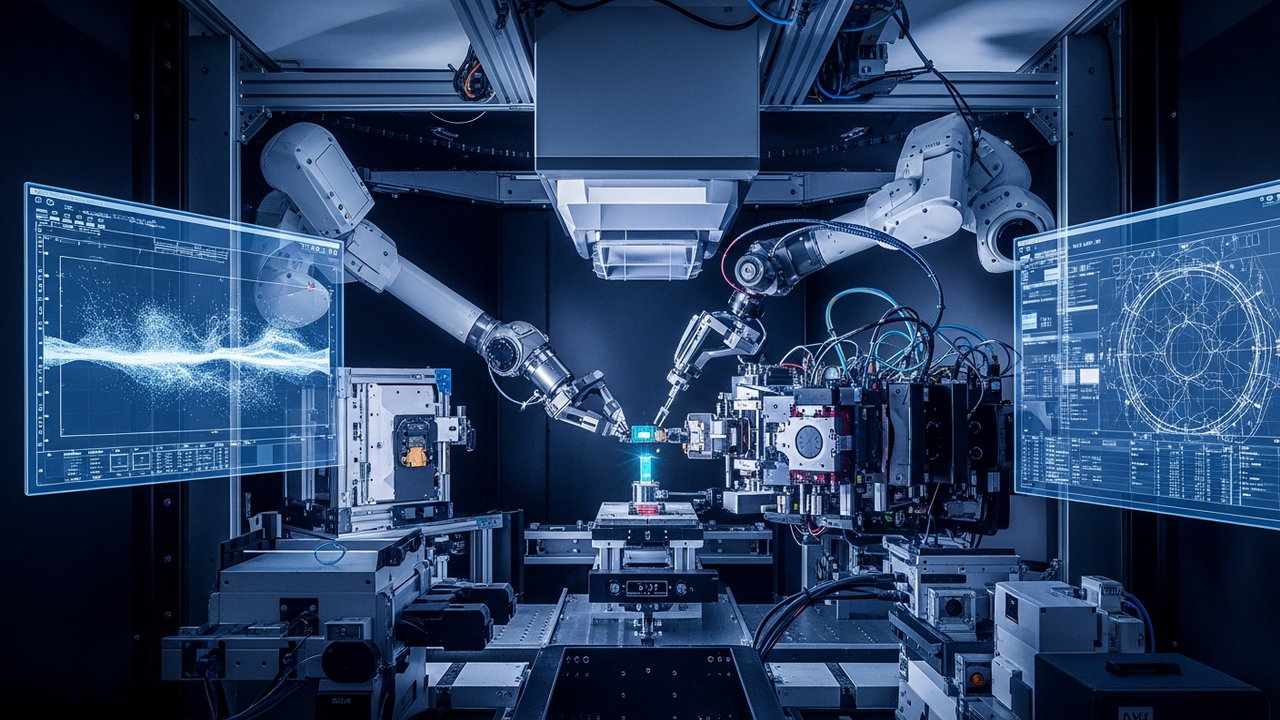
Argonne National Laboratory has dramatically accelerated the pace of discovery in materials science by implementing ‘DONUT,’ a real-time X-ray data analysis system. This system is a core component of an autonomous discovery program that integrates robotics, machine learning, and artificial intelligence, enabling AI agents to autonomously execute cycles of physical experimentation and hypothesis generation, driving new material R&D at unprecedented speeds.
Technical / Clinical Details
The DONUT system analyzes vast datasets from advanced X-ray scattering experiments on the fly, allowing researchers to gain critical insights as experiments progress. Specifically, it processes raw data from X-ray detectors in real-time, providing immediate visualization and analysis of material structural changes and compositional information. This real-time feedback loop is integrated with AI agents, which use the analytical results to optimize subsequent experimental conditions or generate new hypotheses. For example, the system can autonomously explore optimal growth conditions by monitoring the crystalline growth process of a material in real-time. This closed-loop system empowers scientists to rapidly screen thousands of experimental conditions and efficiently pinpoint optimal outcomes, potentially increasing discovery efficiency by several to tens of times compared to traditional manual data collection and offline analysis.
Background & Context
The discovery of novel functional materials is key to technological innovation across diverse sectors, including energy storage, quantum computing, and advanced medicine. However, conventional materials science research has traditionally been a time-consuming and resource-intensive bottleneck. Large-scale research facilities like Argonne National Laboratory possess advanced analytical instrumentation and computational resources, but their maximal utilization demands automation. The combination of AI and robotics is gaining global attention as a promising solution to this challenge, establishing a new paradigm of automated and accelerated research, thereby creating an environment where scientists can focus on more complex scientific problems.
Strategic Significance & Outlook
The evolution of Argonne National Laboratory’s autonomous discovery program and real-time analytical tools like DONUT is critically important for shaping the future of materials science. This technology enables high-throughput screening and deepens the understanding of complex material systems that were previously difficult to explore. Future expectations include the creation of a ‘fully autonomous lab ecosystem’ where humans set objectives, and AI independently handles material design, synthesis, evaluation, and optimization. This promises to bring about new breakthroughs more rapidly and contribute significantly to solving societal challenges.
Source: https://www.anl.gov/autonomous-discovery
Get our weekly technology intelligence — free
Receive an infographic that lets you judge at a glance whether each field’s analysis report is worth reading.
Subscribe Free — Weekly Tech Intelligence
By subscribing, you’ll receive Troy-Technical’s weekly technology intelligence newsletter.
- Your email and selected fields are used only to deliver the newsletter.
- We never share your information with third parties.
- You can unsubscribe anytime via the link in each email.
See our Privacy Policy for details.
Takes about a minute · Unsubscribe anytime