Key Findings
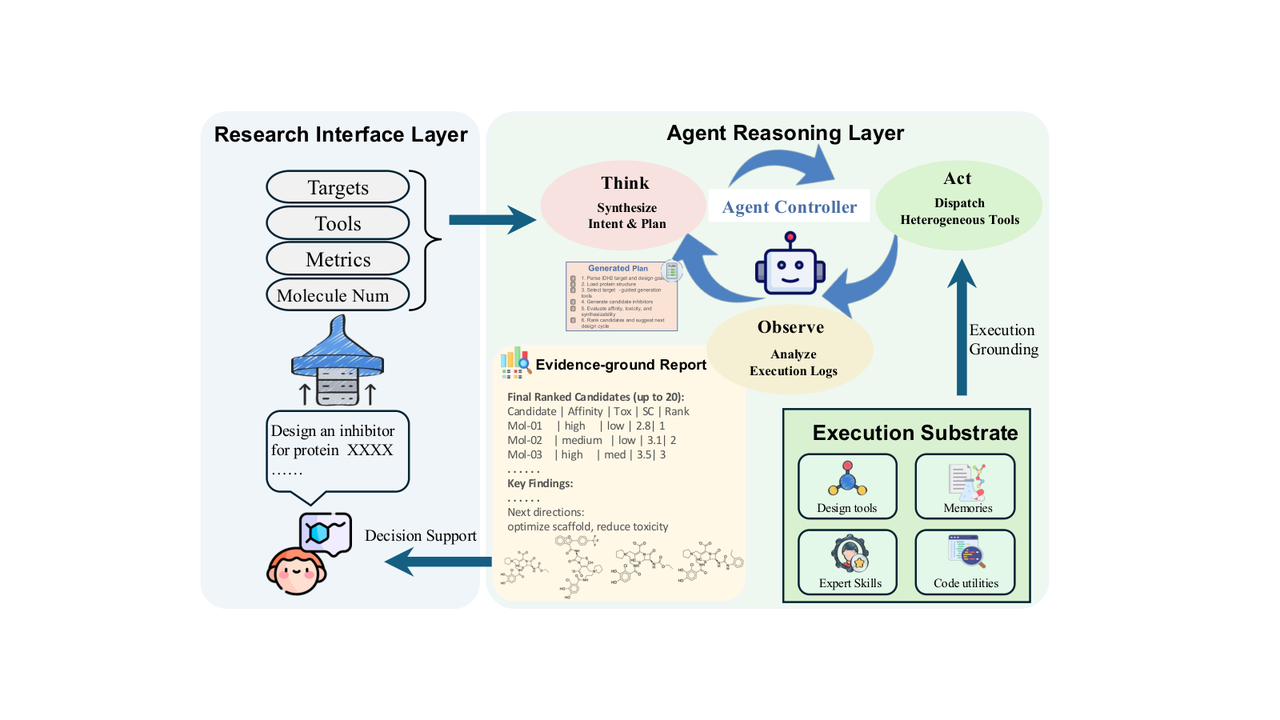
CAi Copilot has been introduced as an agentic workflow system designed to substantially reduce the operational burden in the early stages of molecular design. The system achieves this by transforming researchers’ intentions into adaptive and traceable molecular computations, thereby automating and streamlining the drug discovery workflow. This advancement is expected to enable scientists to dedicate more time to complex scientific problems, ultimately accelerating the pace of discovery.
Technical / Clinical Details
CAi Copilot intelligently orchestrates a suite of specialized AI tools for molecular generation, optimization, property prediction, and docking simulations. This agentic approach allows the system to interpret high-level instructions from researchers and autonomously execute relevant computational tasks. Each decision point within the workflow is transparent and traceable, facilitating easy validation of results and continuous model improvement. Specifically in lead identification and optimization, this technology automates repetitive manual efforts, saving significant time and resources. Its modular architecture also allows for seamless integration of new AI models and computational methods as they emerge.
Background & Context
The initial phase of molecular design in drug discovery is a complex and time-consuming process, requiring diverse computational tools and specialized expertise. Researchers often encounter operational challenges, such as data conversion between different software packages and the coordination of multiple simulations. CAi Copilot aims to bridge this ‘operational valley’ by integrating these fragmented workflows and enabling AI agents to execute them autonomously. This capability leads to more rapid and reproducible molecular designs with minimal human intervention, addressing a critical bottleneck in the drug development pipeline.
Strategic Significance & Outlook
The implementation of CAi Copilot marks a significant step forward in AI-driven drug discovery, empowering researchers to focus on more strategic decision-making. In the future, this system is anticipated to become more sophisticated, with potential applications extending to broader drug development phases, including preclinical and clinical trial planning assistance. Furthermore, continuous integration of new AI tools and enhanced capabilities to handle more complex research intentions are expected. This will accelerate drug discovery research, paving the way for new therapies to reach patients more quickly and efficiently across the globe.
Source: https://arxiv.org/html/2608.06961v1
Get our weekly technology intelligence — free
Receive an infographic that lets you judge at a glance whether each field’s analysis report is worth reading.
Subscribe Free — Weekly Tech Intelligence
By subscribing, you’ll receive Troy-Technical’s weekly technology intelligence newsletter.
- Your email and selected fields are used only to deliver the newsletter.
- We never share your information with third parties.
- You can unsubscribe anytime via the link in each email.
See our Privacy Policy for details.
Takes about a minute · Unsubscribe anytime