Key Findings
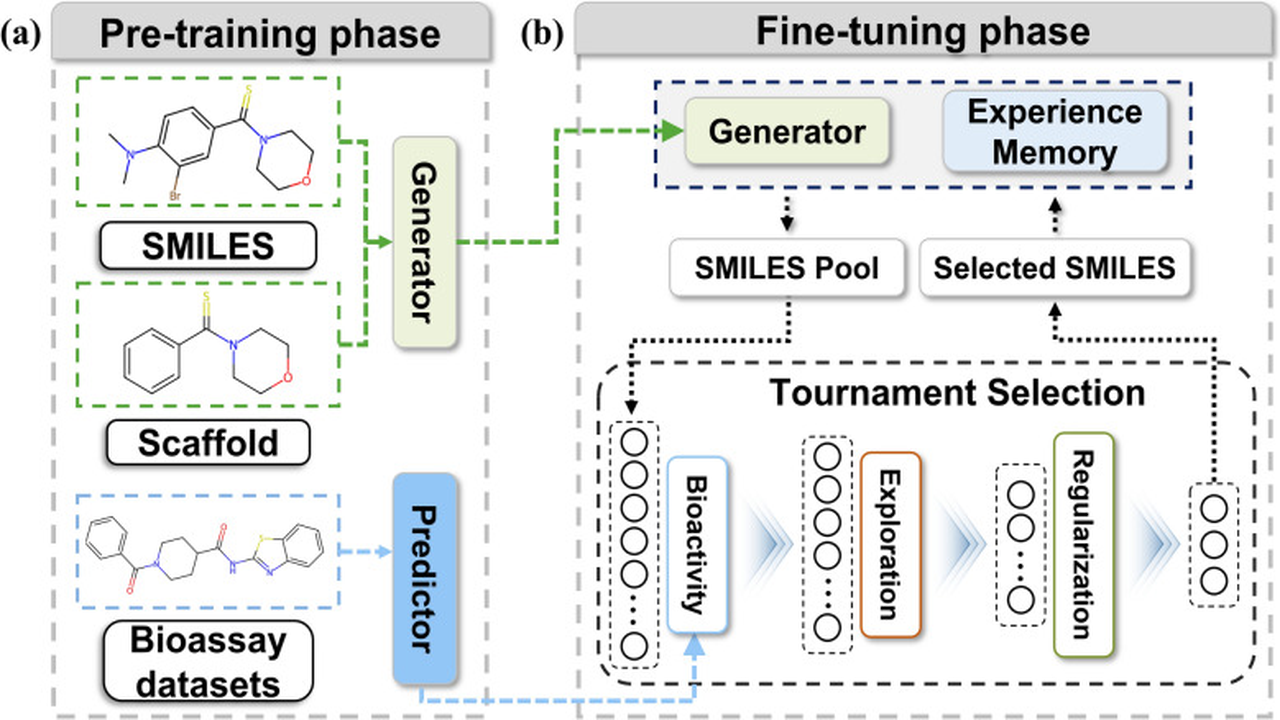
A new molecular design framework has been developed, integrating transformer-based generative models with graph attention network-based prediction models. This scaffold-aware transformer is capable of efficiently generating novel molecules that possess both desired structural characteristics and high binding affinity. The approach has demonstrated its ability to identify promising candidate molecules more rapidly and accurately compared to traditional methods, offering a significant advancement in AI-driven drug discovery.
Technical / Clinical Details
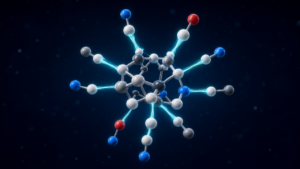
The core of this innovation lies in its capacity to recognize existing scaffold structures and then build new molecular components upon them. Utilizing multi-scale attention mechanisms, the model considers both local and global molecular architectures during the design process, enabling a more diverse and optimized exploration of chemical space. Molecules generated by this framework are optimized to meet stringent pharmacological properties and binding affinity requirements, contributing to a reduction in the time from design conception to synthesis. This method provides an interpretable tool for understanding the molecular generation process, which is crucial for validating and refining drug candidates.
Background & Context
Traditional molecular design approaches face challenges such as high computational costs and lengthy timelines when searching for promising molecules within vast chemical spaces. The evolution of AI-driven drug discovery, particularly generative models, is seen as key to overcoming these hurdles. The scaffold-aware approach presented in this research allows for design based on specific binding sites or known pharmacologically active structures, thereby improving the efficiency of drug repositioning and lead optimization. This technology is poised to alleviate bottlenecks in the early stages of the drug discovery pipeline, leading to faster identification of candidate compounds.
Strategic Significance & Outlook
This scaffold-aware transformer has broad applicability beyond drug discovery, extending to fields such as materials science where rapid exploration and optimization of molecules with specific functional requirements are crucial. Its ability to provide interpretable insights into the generation process could foster greater trust and adoption within the scientific community. In the future, the integration of this model with experimental data to support a seamless workflow from in silico design to in vitro/in vivo validation could further accelerate the entire drug development lifecycle, potentially delivering novel therapeutics to patients much faster.
Source: https://pmc.ncbi.nlm.nih.gov/articles/PMC13425956/
Get our weekly technology intelligence — free
Receive an infographic that lets you judge at a glance whether each field’s analysis report is worth reading.
Subscribe Free — Weekly Tech Intelligence
By subscribing, you’ll receive Troy-Technical’s weekly technology intelligence newsletter.
- Your email and selected fields are used only to deliver the newsletter.
- We never share your information with third parties.
- You can unsubscribe anytime via the link in each email.
See our Privacy Policy for details.
Takes about a minute · Unsubscribe anytime