Key Findings
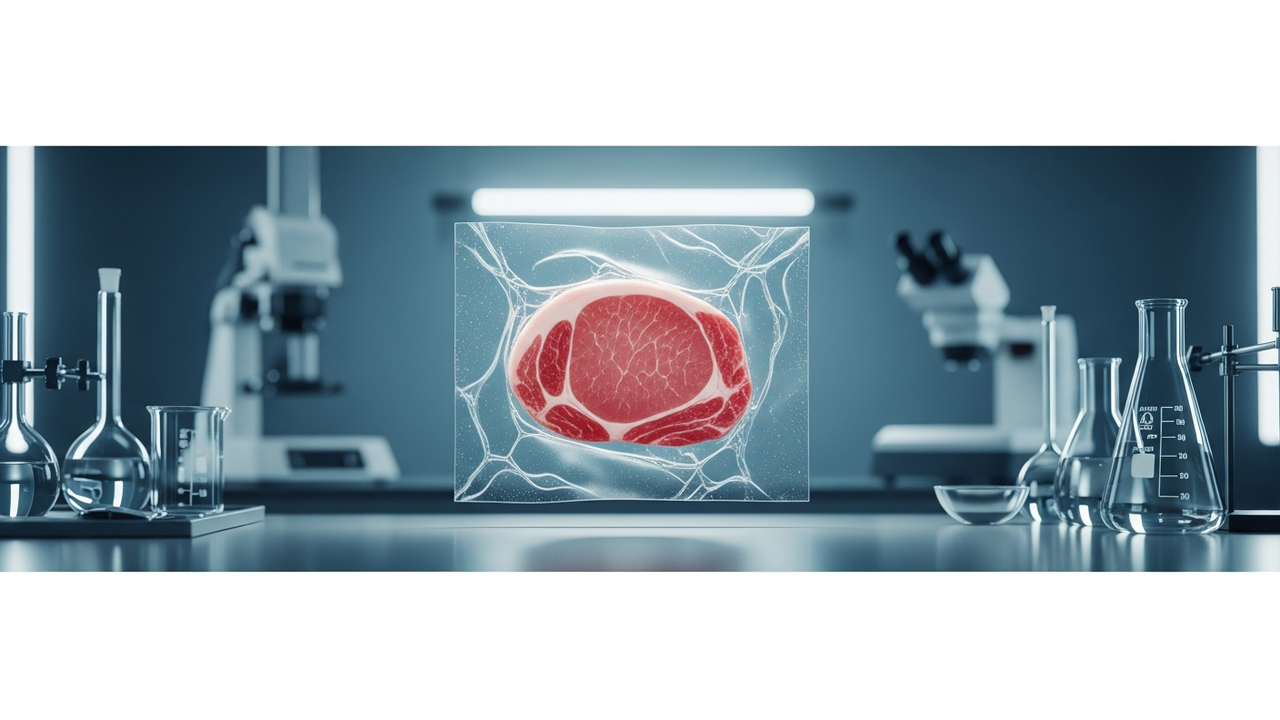
A research team at Kyushu University has successfully developed a groundbreaking self-healing hydrogel film that visually indicates food freshness through color changes. This innovative film exhibits an astonishing self-healing capacity, recovering 99% of its tensile strength shortly after being cut. Furthermore, it has been demonstrated to extend the shelf life of pork by approximately 12 hours. This represents a revolutionary food packaging technology with significant potential to reduce food waste and enhance food safety for consumers.
Technical / Clinical Details
The developed hydrogel film is realized by effectively incorporating anthocyanins, natural pigments extracted from purple sweet potatoes, within a metal-organic framework (MOF). The MOF possesses a porous structure that stably holds anthocyanins while leveraging its property to react with volatile organic compounds (VOCs), such as amines, generated during food spoilage. Upon contact with VOCs, the chemical structure of anthocyanins changes, causing the film’s color to shift from blue to green and then yellow, progressively indicating freshness. This visual indicator allows consumers to easily assess food spoilage. Additionally, the hydrogel, through a unique polymer network, rapidly recombines at room temperature when physically damaged (e.g., cuts), recovering 99% of its original mechanical properties. Packaging tests with pork confirmed an extension of shelf life by approximately 12 hours compared to conventional packaging, attributed to the film’s ability to inhibit microbial growth and maintain its barrier function.
Background & Context
Food spoilage and associated food waste represent a global societal challenge, posing significant environmental burdens and economic losses. Traditional shelf-life labeling does not always accurately reflect the actual condition of food, contributing to unnecessary consumer waste. Moreover, damage to packaging films increases the risk of food contamination. Kyushu University’s research proposes an ingenious approach to these challenges by offering a single material that combines a freshness indicator with self-healing capabilities. The use of natural pigments is also noteworthy for its environmental considerations, paving a new path in the smart packaging field.
Strategic Significance & Outlook
This self-healing hydrogel film has the potential to make a significant impact on the smart packaging market. Its ability to provide real-time freshness information and maintain packaging integrity will contribute to reducing food loss throughout the supply chain, proving particularly valuable in the distribution of perishable goods. In the future, optimizing anthocyanin sources and MOF structures for various foods and environmental conditions is expected to broaden its application to a wider range of food products. Furthermore, by allowing damaged films to self-repair rather than being discarded, it will contribute to reducing packaging material consumption, positioning it as a key technology for achieving a sustainable society.
Source: https://www.packaginginsights.com/news/self-healing-film-food-freshness.html
Get our weekly technology intelligence — free
Receive an infographic that lets you judge at a glance whether each field’s analysis report is worth reading.
Subscribe Free — Weekly Tech Intelligence
By subscribing, you’ll receive Troy-Technical’s weekly technology intelligence newsletter.
- Your email and selected fields are used only to deliver the newsletter.
- We never share your information with third parties.
- You can unsubscribe anytime via the link in each email.
See our Privacy Policy for details.
Takes about a minute · Unsubscribe anytime