Key Findings
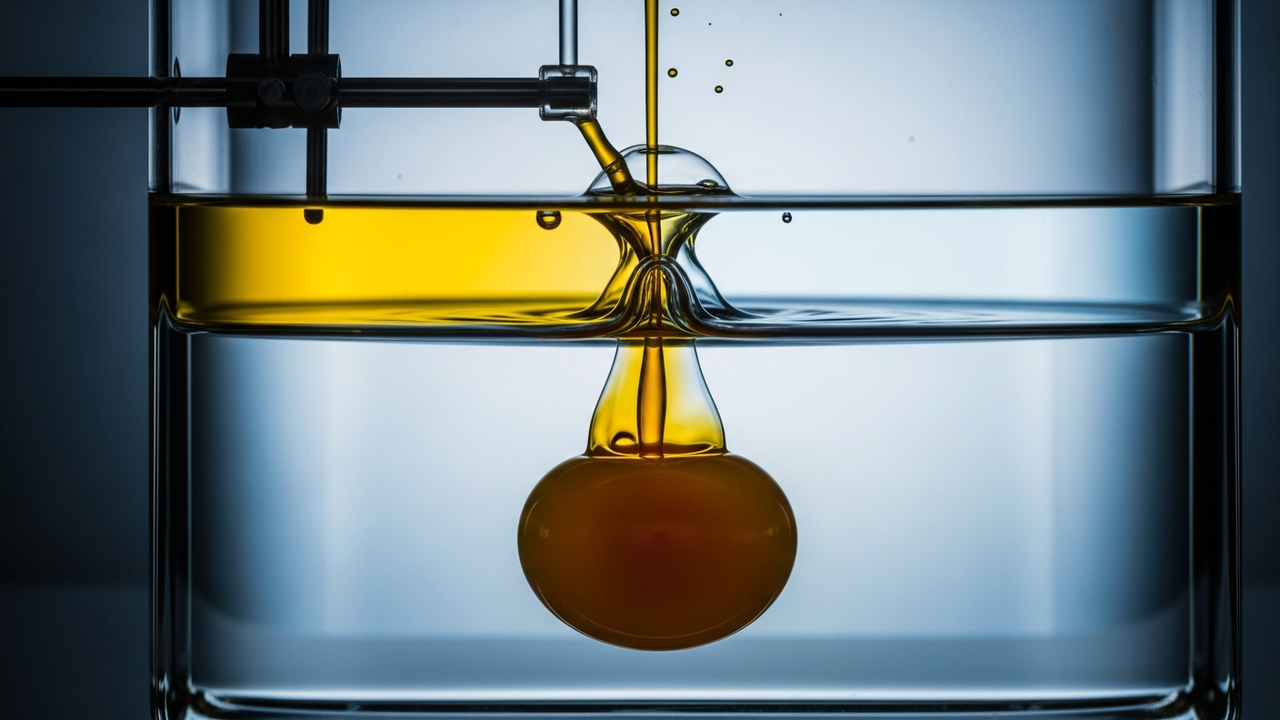
New research has elucidated the mechanism by which the assembly behavior and concomitant rheological properties of egg yolk protein (EYP) at a water-soybean oil interface are non-monotonically controlled by the amount of lipid present. This discovery deepens our understanding of how complex protein-lipid interactions affect interfacial properties and opens new avenues for designing functional materials in the food industry and biomaterials sector.
Technical / Clinical Details
The study involved introducing egg yolk protein at the interface formed between an aqueous phase and a soybean oil phase, then meticulously analyzing the protein’s adsorption behavior and interfacial rheology (viscoelasticity) upon adding varying concentrations of lipids (primarily phospholipids). While conventional expectations might suggest a monotonic change in protein assembly with increasing lipid concentration, this research observed a non-monotonic behavior: at low lipid concentrations, protein adsorption at the interface was promoted, forming aggregated structures, but beyond an optimal concentration, lipids inhibited protein assembly, softening the interfacial layer. This is attributed to lipids having a dual effect on protein unfolding and packing. Specifically, a moderate amount of lipid aids protein unfolding at the interface, forming a more robust network, whereas excessive lipids can disrupt protein-protein interactions and disorder the interfacial layer. This mechanism was thoroughly characterized using techniques such as interfacial tension measurements, interfacial shear rheology, and Atomic Force Microscopy (AFM).
Background & Context
Egg yolk protein is widely utilized in the food processing industry due to its excellent emulsifying, foaming, and gelling properties. Lipids are also indispensable components for food flavor, texture, and stability. Protein-lipid interactions play a central role in a wide range of applications, from the stability of emulsified foods like mayonnaise to pharmaceutical microencapsulation and cosmetic stability. The findings of this research suggest the possibility of optimizing the stability and functionality of these complex food systems and bio-interfaces by precisely adjusting lipid concentrations. This will enable food manufacturers to develop more stable products with desired textures.
Strategic Significance & Outlook
Understanding this non-monotonic control mechanism will be directly applicable to the development of egg yolk protein-based food additives, emulsifiers, and stabilizers. For example, it may become possible to precisely ‘tune’ the rheology of the protein film formed at an interface for specific food applications by adjusting the amount of lipid added. Furthermore, this insight may contribute to understanding other biological systems involving lipid-protein interactions (e.g., cell membrane function, liposomal formulations). In the future, it is expected to lead to the development of bio-based interfacial active materials with more advanced functionalities, novel emulsion systems with superior stability, and even efficient drug delivery systems and food preservation technologies. This research provides a crucial foundation for maximizing the potential of naturally derived components.
Source: #
Get our weekly technology intelligence — free
Receive an infographic that lets you judge at a glance whether each field’s analysis report is worth reading.
Subscribe Free — Weekly Tech Intelligence
By subscribing, you’ll receive Troy-Technical’s weekly technology intelligence newsletter.
- Your email and selected fields are used only to deliver the newsletter.
- We never share your information with third parties.
- You can unsubscribe anytime via the link in each email.
See our Privacy Policy for details.
Takes about a minute · Unsubscribe anytime