Key Findings
NASA and Northrop Grumman have decided to redirect technologies developed for the originally planned but later canceled Habitation And Logistics Outpost (HALO) module of the lunar Gateway space station towards the active Artemis program’s lunar surface base construction. This strategic pivot ensures that previous investments in HALO technology are leveraged to accelerate critical infrastructure development for a sustained human presence on the Moon.
Technical / Clinical Details
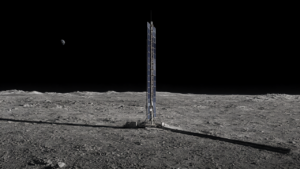
The HALO-derived technologies will be deployed across three distinct Lunar Infrastructure Demo (LID) missions, focusing on the Moon’s South Pole region. These missions are designed to demonstrate lunar surface power generation, test advanced thermal management systems capable of enduring extreme lunar temperature swings, develop autonomous operational capabilities to minimize human intervention, and establish robust communication links with Earth. The lunar South Pole is particularly significant due to its permanently shadowed regions, believed to harbor water ice, but it also presents severe cold challenges. The LID missions will validate the resilience of these technologies under such harsh conditions, providing invaluable data for the protection of robotic assets and human crews. This data will be instrumental in laying the groundwork for future in-situ resource utilization (ISRU), especially for extracting water ice to produce propellants and life support consumables.
Background & Context
The Artemis program represents NASA’s ambitious plan to return humans to the Moon by the late 2020s, establishing a sustainable lunar presence as a stepping stone for future Mars missions. The HALO module was initially conceived as a central habitation component for the Gateway station orbiting the Moon. However, due to various factors including development timelines and budget realignments, its role was re-evaluated. This decision highlights NASA’s flexible approach to maximize existing assets and strategically reorient efforts to directly support lunar surface operations. The collaboration with Northrop Grumman, a key commercial partner, further exemplifies the increasing trend of public-private partnerships in accelerating space exploration and development.
Strategic Significance & Outlook
The insights and data gleaned from the LID missions will directly inform the design and operation of NASA’s planned “Moon Base” at the lunar South Pole. Successful demonstrations of these technologies will mark a significant step towards creating a more resilient and autonomous lunar infrastructure, ultimately supporting scientific research, commercial ventures, and long-term preparations for human missions to Mars. The establishment of sustainable power generation and resource utilization capabilities in the polar regions is paramount for achieving a truly self-sufficient lunar outpost, and this repurposing of HALO technology provides a concrete pathway towards that goal.
Get our weekly technology intelligence — free
Receive an infographic that lets you judge at a glance whether each field’s analysis report is worth reading.
Subscribe Free — Weekly Tech Intelligence
By subscribing, you’ll receive Troy-Technical’s weekly technology intelligence newsletter.
- Your email and selected fields are used only to deliver the newsletter.
- We never share your information with third parties.
- You can unsubscribe anytime via the link in each email.
See our Privacy Policy for details.
Takes about a minute · Unsubscribe anytime