Key Findings
NASA’s Artemis program is steadily progressing towards its ambitious goal of returning humans to the Moon and eventually Mars, achieving key milestones along the way. Notably, in April 2026, Artemis II successfully completed the first crewed circumlunar flight of the Orion spacecraft, marking a crucial validation step for future human missions.
Technical / Clinical Details
The Artemis program is systematically maturing its technologies and operational capabilities through a series of phased missions:
- Artemis II (Completed April 2026): Astronauts aboard the Orion spacecraft orbited the Moon, demonstrating the performance of critical human deep-space flight systems, including life support, communications, guidance, and navigation. This was an essential preparatory phase for human journeys to the Moon and beyond.
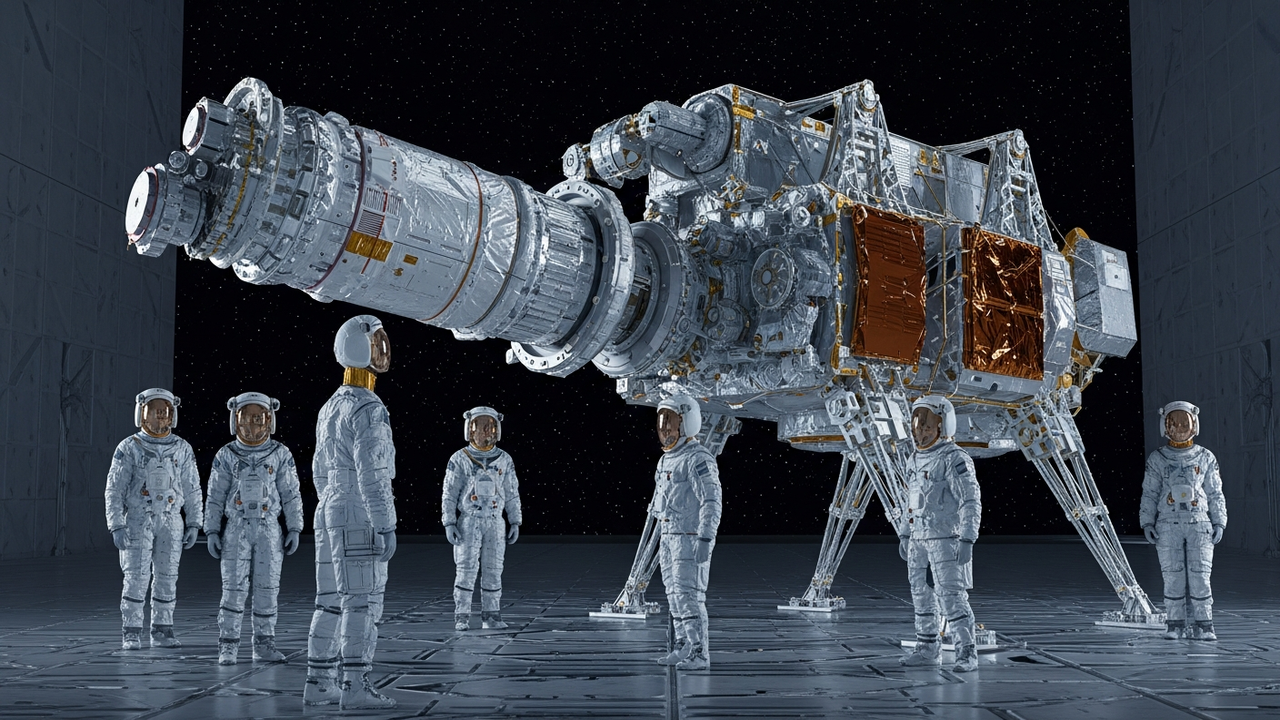
- Artemis III (Planned 2027): This mission will conduct a low Earth orbit (LEO) demonstration of commercial human landing systems (HLS) developed by SpaceX and Blue Origin, evaluating their operational capabilities and safety. This is a key step in NASA’s strategy to rely on commercial providers for lunar surface access and return.
- Artemis IV (Planned 2028): This mission targets the first crewed lunar landing and will simultaneously standardize the Space Launch System (SLS) rocket in its Block 1B configuration. The mission plans to land at a specific location near the lunar South Pole, conducting scientific exploration and initial surveys for future lunar base construction.
These missions aim to establish the technological and operational foundations for humans to return to the Moon and sustain activities there.
Background & Context
The Artemis program represents the U.S. national objective to return humans to the Moon for the first time in half a century since the Cold War-era Apollo program. It positions the Moon as a “proving ground” for deep-space exploration, accumulating technological and operational experience for human missions to Mars. By actively engaging commercial companies, the program embodies the “New Space” philosophy of reducing space development costs and fostering innovation. The mention of China’s plans for its own robotic research station at the lunar South Pole in the 2020s underscores the intensifying international competition for strategically important lunar resources, especially water ice, giving the progress of the Artemis program significant geopolitical implications.
Strategic Significance & Outlook
If the Artemis program proceeds as planned, humans will once again land on the Moon in 2028, commencing construction of a permanent lunar base at the South Pole. This signifies not merely a mission to “plant a flag and leave footprints,” but the beginning of sustainable lunar activities focused on scientific research, in-situ resource utilization, and commercial opportunities. NASA seeks to further strengthen international cooperation and commercial partnerships through this plan to realize its long-term vision of extending human presence to the Moon and Mars.
Source: https://www.nasa.gov/humans-in-space/artemis/
Get our weekly technology intelligence — free
Receive an infographic that lets you judge at a glance whether each field’s analysis report is worth reading.
Subscribe Free — Weekly Tech Intelligence
By subscribing, you’ll receive Troy-Technical’s weekly technology intelligence newsletter.
- Your email and selected fields are used only to deliver the newsletter.
- We never share your information with third parties.
- You can unsubscribe anytime via the link in each email.
See our Privacy Policy for details.
Takes about a minute · Unsubscribe anytime