Key Findings
A new analysis supported by the U.S. Department of Defense (DOD) has revealed that microgravity environments offer significant advantages over terrestrial manufacturing for advanced materials, particularly protein crystals and semiconductors. This finding is accelerating the trend to view space not merely as a domain for exploration but as a new frontier for industrial production.
Technical / Clinical Details
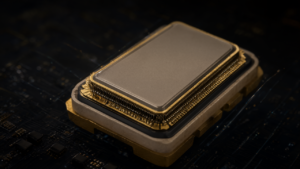
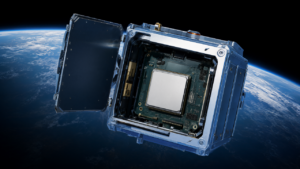
This meta-analysis, which comprehensively evaluated data from numerous microgravity experiments, found that over 70% of protein crystals grown in space exhibit superior quality in terms of size, structural regularity, and overall uniformity compared to those grown on Earth. Such high-quality protein crystals are crucial for pharmaceutical development, especially for high-resolution structural analysis of target proteins and the design of novel drugs. In the semiconductor sector, innovative companies like Space Forge are actively engaging in orbital semiconductor production. They have demonstrated plasma generation technology leveraging the microgravity and vacuum of space, enabling fully automated, human-free manufacturing. In microgravity, convection during material melting and solidification processes is suppressed, which is expected to yield purer and more uniform semiconductor materials, as well as new materials with specific properties. This could lead to advancements vital for next-generation electronics, including AI chips and high-performance sensors.
Background & Context
The U.S. has designated strengthening domestic semiconductor production capabilities and enhancing supply chain resilience as national security priorities. Simultaneously, as competitor nations like China accelerate investments in in-space manufacturing, the U.S. is also focusing on securing strategic manufacturing capabilities in space. Manufacturing in microgravity offers unique material properties and production processes unattainable on Earth, potentially providing a new competitive edge in the semiconductor industry. The DOD’s interest in this area is driven by a strong awareness of the impact that innovative space-manufactured technologies—such as high-performance sensors, communication devices, and AI processors for military applications—could have on national defense.
Strategic Significance & Outlook
The commercial realization of microgravity manufacturing could revolutionize diverse industries, including pharmaceuticals, aerospace, and electronics. Particularly, advances in protein crystallization technology will significantly improve drug discovery efficiency and accelerate the development of treatments for intractable diseases. In the semiconductor sector, specialized materials produced in space may enable devices with performance characteristics unobtainable through terrestrial manufacturing processes. This trend is expected to further stimulate investment in orbital factories and space infrastructure, solidifying the establishment of a “space economy” that embraces space as a new frontier. However, significant technical barriers and cost challenges still persist in space manufacturing, making sustained collaboration and investment from both government and the private sector essential.
Get our weekly technology intelligence — free
Receive an infographic that lets you judge at a glance whether each field’s analysis report is worth reading.
Subscribe Free — Weekly Tech Intelligence
By subscribing, you’ll receive Troy-Technical’s weekly technology intelligence newsletter.
- Your email and selected fields are used only to deliver the newsletter.
- We never share your information with third parties.
- You can unsubscribe anytime via the link in each email.
See our Privacy Policy for details.
Takes about a minute · Unsubscribe anytime