Key Findings
Organ-on-a-chip (OoC) systems are gaining significant attention as innovative technologies capable of faithfully replicating the key structural and functional characteristics of human organs on a micro-scale chip. Particularly, the utilization of induced pluripotent stem cells (iPSCs) provides an ideal platform for constructing patient-specific OoC models, holding the potential to revolutionize the fields of personalized medicine and drug testing.
Technical & Clinical Details
- Functionality of OoC Systems: OoC systems combine microfluidic and cell culture technologies to mimic the in vivo microenvironment of organs. This includes providing tissue-specific cell types, fluid delivery that simulates blood or lymphatic flow, mechanical stimuli, and extracellular matrix (ECM) components. This enables more accurate in vitro evaluation of complex biological responses such as drug metabolism, absorption, toxicity, and disease progression.
- Utilization of iPSCs: iPSCs are generated from a patient’s somatic cells, allowing for the creation of cell models that reflect the patient’s unique genetic background. This capability enables the construction of OoC models that exhibit patient-specific physiological characteristics, making them optimal tools for personalized drug screening and disease mechanism research. For instance, an OoC model of the liver or heart can be created for a patient with a specific genetic disease to identify optimal drug candidates for that individual.
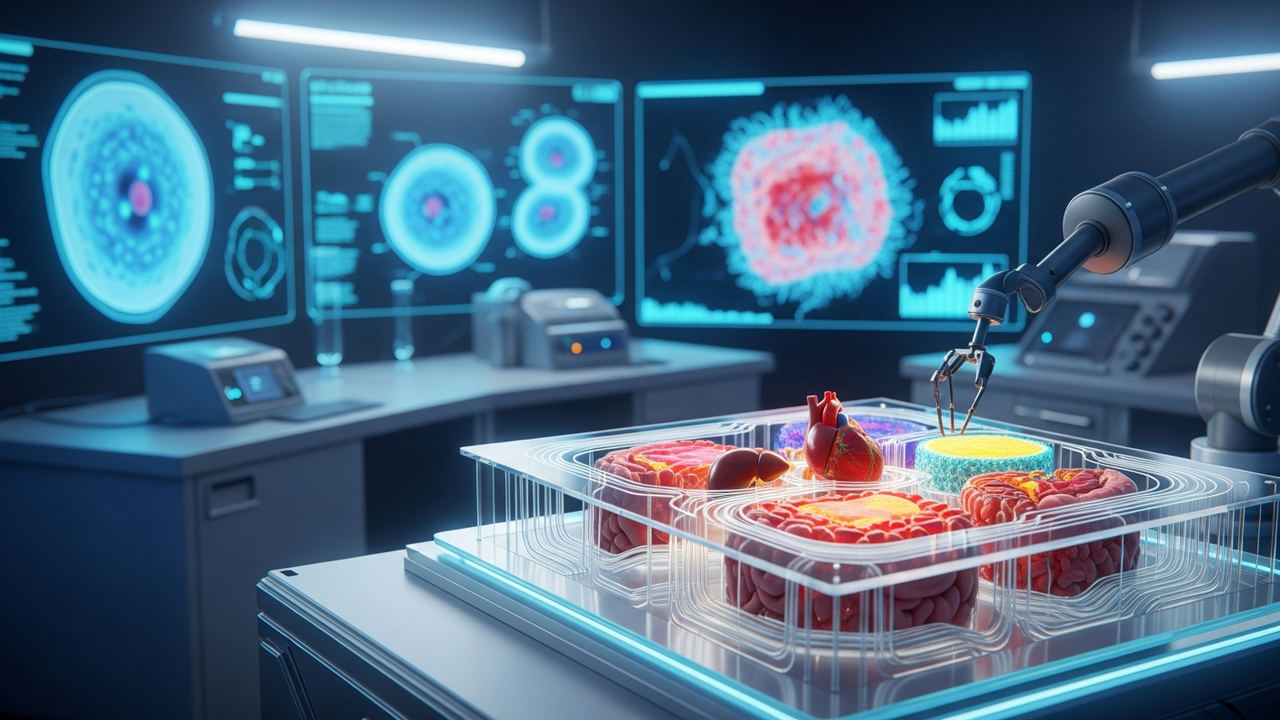
- Personalized Scaffold Design: In the future, it is anticipated that even more advanced and functional OoC systems will be developed by combining patient-specific iPSC technology with personalized biomaterial scaffold designs, potentially leveraging technologies like 3D bioprinting. This approach aims to more accurately replicate the in vivo environment, enabling more precise drug response predictions and disease modeling.
Background & Industry Context
Traditional drug development processes have heavily relied on animal testing and 2D cell cultures, but these models have limitations in adequately reproducing human physiological responses. This has contributed to high drug development costs and low success rates. OoC systems are rapidly evolving as ‘human-relevant’ in vitro models to overcome these challenges, expected to streamline drug discovery and reduce animal testing on ethical grounds. Integration with iPSCs is an essential step for the advancement of personalized medicine.
Strategic Significance & Outlook
The development of next-generation OoC systems utilizing patient-specific iPSCs will significantly transform the future of personalized medicine and drug testing. This technology will enable the faster and more accurate identification of optimal treatments tailored to individual patient genetic characteristics and disease states. By reducing drug development lead times and costs while improving drug safety and efficacy, it is expected to have a major economic and social impact on the pharmaceutical industry. In the long term, OoC systems may also play a crucial role as research platforms for the development of transplantable artificial organs, marking a new era in biomedical engineering.
Source: https://pmc.ncbi.nlm.nih.gov/articles/PMC13367027/
Get our weekly technology intelligence — free
Receive an infographic that lets you judge at a glance whether each field’s analysis report is worth reading.
Subscribe Free — Weekly Tech Intelligence
By subscribing, you’ll receive Troy-Technical’s weekly technology intelligence newsletter.
- Your email and selected fields are used only to deliver the newsletter.
- We never share your information with third parties.
- You can unsubscribe anytime via the link in each email.
See our Privacy Policy for details.
Takes about a minute · Unsubscribe anytime