Key Findings
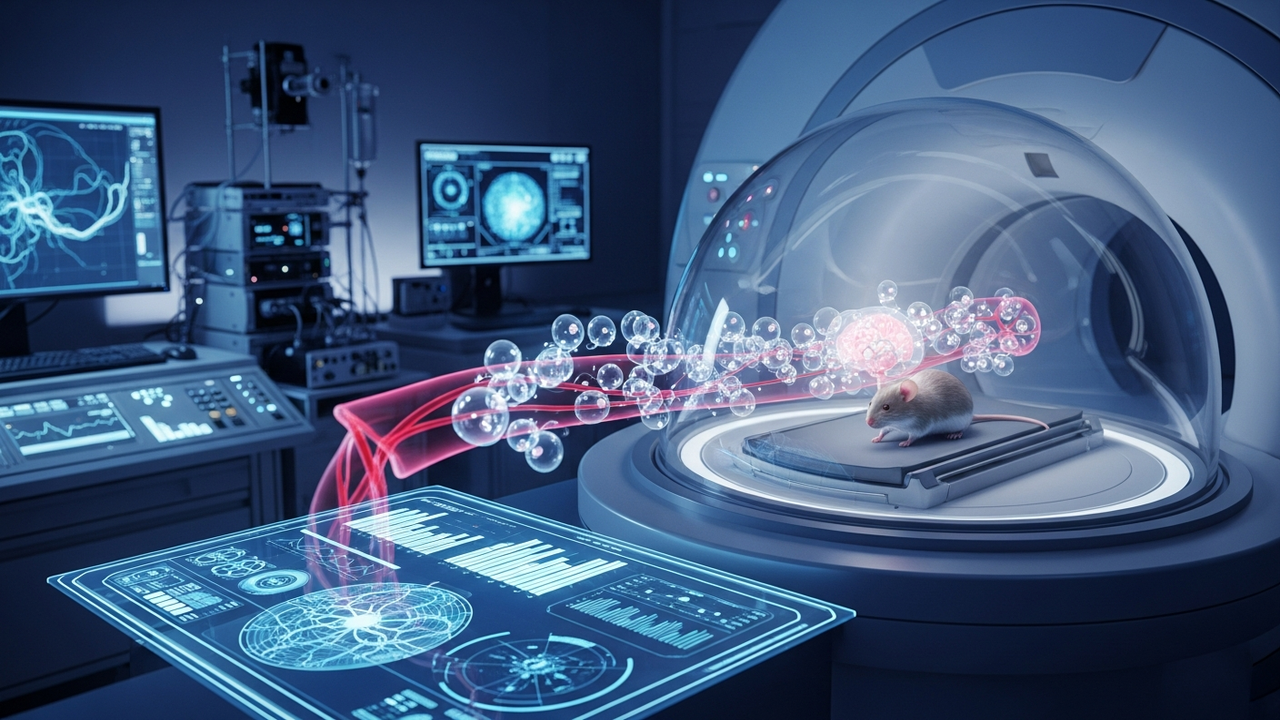
A collaborative team of engineers from the University of Pennsylvania and researchers from the University of Maryland School of Medicine has developed small, MRI-compatible elastic microballoons designed for soft robotics applications. This innovative device enables the observation of the earliest moments of stroke in mouse models with unprecedented detail, providing a critical tool for understanding stroke pathophysiology and developing new therapeutic approaches.
Technical / Clinical Details
The developed microballoons are ultra-miniature, measuring only a few hundred micrometers in diameter, and are crafted from highly flexible, biocompatible polymers. These materials possess non-magnetic properties, allowing for their use in MRI environments, enabling researchers to track changes in brain tissue after balloon-induced ischemia (cessation of blood flow) through high-resolution imaging in real-time. Specifically, it can visualize very early stroke dynamics, such as blood flow occlusion in the brain’s microvasculature, changes in oxygen levels, and the initiation of cellular-level damage processes. Observing such detailed and non-invasive early changes was challenging with conventional stroke models. This soft robotics technology provides a new experimental platform for reproducing various types of stroke (e.g., ischemic, hemorrhagic) and accurately evaluating subsequent tissue responses by manipulating microballoons to temporarily occlude or apply pressure to blood vessels.
Background & Context
Stroke is a leading cause of death and severe disability globally, and its pathogenesis is complex, making the development of effective treatments a long-standing challenge. Understanding the pathophysiological changes during the earliest stages of stroke is particularly crucial for optimizing therapeutic intervention timing and strategies. Soft robotics, due to its flexibility and biocompatibility, is an emerging field that enables delicate interactions with biological tissues that were difficult with traditional rigid medical devices. This research represents an original approach to applying soft robotics technology to stroke research, marking a significant advancement at the intersection of neuroscience, biomedical engineering, and robotics.
Strategic Significance & Outlook
The introduction of this small, MRI-compatible elastic microballoon is set to revolutionize fundamental stroke research, fostering a deeper understanding of disease mechanisms. This will accelerate the evaluation and development of new therapeutic strategies, including neuroprotective agents, thrombolytic drugs, or regenerative medicine approaches. In the future, this technology also holds the potential to evolve beyond mouse models to larger animal models and even human medical diagnostics and therapeutics. For example, it might be applied in precise interventions during endovascular surgery or targeted drug delivery to specific brain regions. The fusion of soft robotics and MRI technology indicates a highly promising direction for shaping the future of neurological disease diagnosis and treatment.
Get our weekly technology intelligence — free
Receive an infographic that lets you judge at a glance whether each field’s analysis report is worth reading.
Subscribe Free — Weekly Tech Intelligence
By subscribing, you’ll receive Troy-Technical’s weekly technology intelligence newsletter.
- Your email and selected fields are used only to deliver the newsletter.
- We never share your information with third parties.
- You can unsubscribe anytime via the link in each email.
See our Privacy Policy for details.
Takes about a minute · Unsubscribe anytime