Background
While AI adoption promises enhanced business efficiency, it simultaneously introduces novel security challenges. Traditional perimeter-based security models struggle to effectively monitor and defend against the vast volumes of data generated by AI and the dispersed access patterns of AI agents. To harness the benefits of AI while managing its inherent risks, enterprises must position endpoint security not merely as a protective layer, but as an integrated defense mechanism across the entire AI ecosystem.
Key Findings
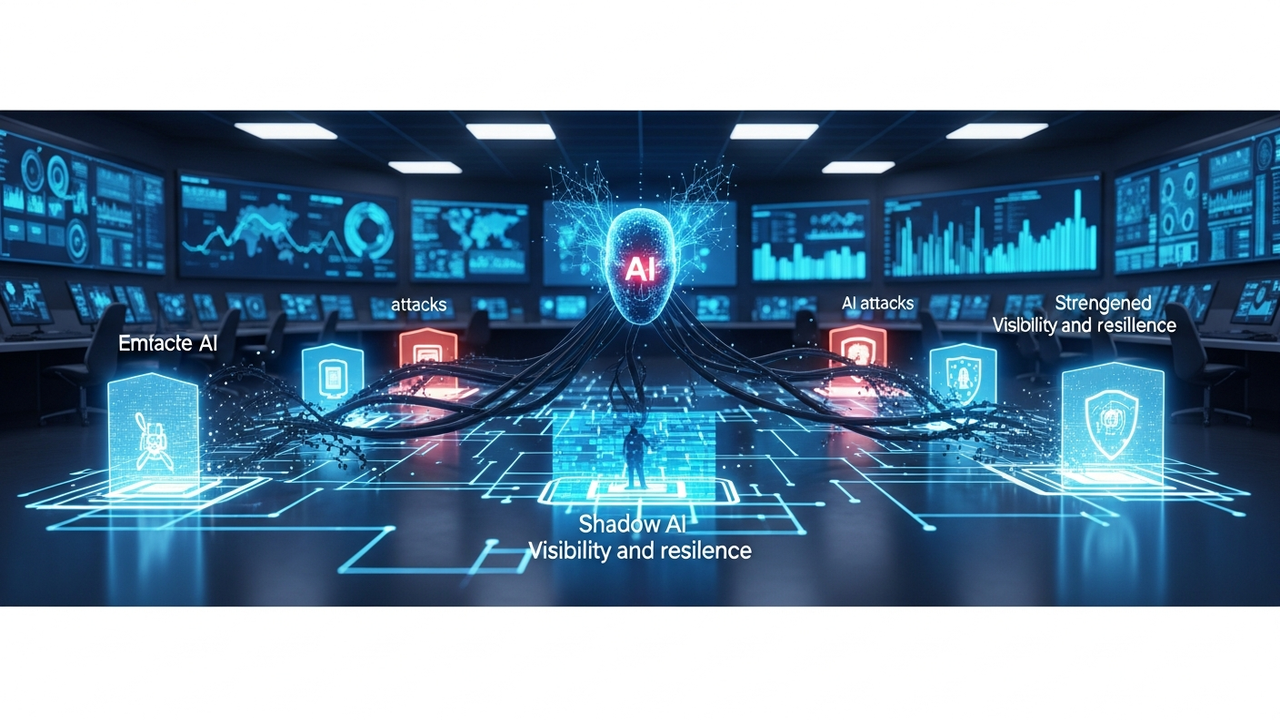
With the widespread adoption of AI, enterprises are urgently required to fundamentally rethink their endpoint security strategies. Endpoints now serve as critical convergence points for users, identities, data, and AI tools, creating new vulnerabilities. The extensive use of unauthorized AI tools by employees (‘shadow AI’) and the increasing sophistication of AI-powered attacks significantly amplify cybersecurity risks for organizations. To counteract this evolving AI-driven threat landscape, it is imperative for organizations to bolster visibility, threat correlation capabilities, and system resilience within their endpoint security frameworks.
Technical Details
‘Shadow AI’ refers to AI tools utilized personally by employees outside corporate security policies, raising risks of sensitive data leakage and unauthorized AI model usage. Conversely, attackers are leveraging AI to deploy more sophisticated phishing schemes, malware, and social engineering attacks. To counter these, next-generation endpoint security solutions demand the integration of AI-driven anomaly detection, behavioral analytics, and threat intelligence. Specifically, this requires comprehensive visibility into all endpoint activities, the ability to automatically identify correlations across multiple security data points, and a robust architecture that allows systems to recover quickly in the event of an attack.
Strategic Significance & Outlook
Endpoint security in the AI era will evolve into dynamic defense strategies characterized by continuous learning and adaptation. This includes implementing AI-driven threat intelligence platforms, strengthening automated incident response capabilities, and ensuring thorough security awareness training for employees. Enterprises are compelled to increase investment in endpoint security and adopt more integrated, intelligent approaches to maximize AI’s benefits while safeguarding themselves from potential cyber threats. In the future, ‘AI vs. AI’ cyber warfare, where defensive AIs confront offensive AIs, may become the norm.
Get our weekly technology intelligence — free
Receive an infographic that lets you judge at a glance whether each field’s analysis report is worth reading.
Subscribe Free — Weekly Tech Intelligence
By subscribing, you’ll receive Troy-Technical’s weekly technology intelligence newsletter.
- Your email and selected fields are used only to deliver the newsletter.
- We never share your information with third parties.
- You can unsubscribe anytime via the link in each email.
See our Privacy Policy for details.
Takes about a minute · Unsubscribe anytime