Key Findings
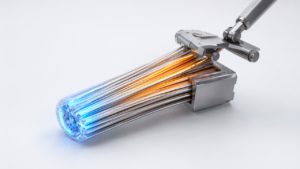
Researchers have meticulously elucidated the spatially heterogeneous relaxational dynamics and the subsequent evolution of recoverable strain observed in ductile nanocolloidal glasses after the cessation of shear flow. This groundbreaking discovery offers unprecedented deep insights into how soft matter materials reconstruct their internal structure and release mechanical energy once external perturbations (flow) are removed.
Technical / Clinical Details
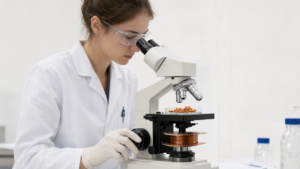
Ductile nanocolloidal glasses are materials composed of nanoscale particles dispersed in a solvent, forming dense, glassy structures. These materials exhibit plastic deformation (ductility) under certain shear stresses, but once the stress is removed, some recoverable strain remains. This study combined rheological measurements with advanced imaging techniques (e.g., confocal microscopy, X-ray photon correlation spectroscopy) to track particle movements and structural changes within the colloidal glass in real-time after flow cessation. The results revealed that the material does not relax uniformly; instead, regions with spatially varying relaxation rates (spatial heterogeneity) exist. Notably, it was shown that ‘strain memory’ induced by the flow history significantly influences the magnitude of recoverable strain and its relaxation rate. This heterogeneity is believed to originate from differing stress distributions and free volumes within the material. This work microscopically unravels the dynamic process of how recoverable strain arises and how it ‘fades away’ over time.
Background & Context
Soft matter materials, particularly colloidal glasses, are used in a wide range of industrial products, including paints, foods, cosmetics, and adhesives. The quality and performance of these materials strongly depend on their manufacturing processes (shearing, mixing, etc.) and subsequent stability (storage, transport). Understanding the rheological behavior of materials after flow cessation (e.g., thixotropy and recovery) is critical for optimizing product processability, stability, and ultimate functionality. The findings of this research contribute to solving long-standing problems in the fundamental science of soft matter, such as ‘flow memory’ and ‘structural reorganization,’ enabling the design of more robust and predictable soft matter products.
Strategic Significance & Outlook
The insights gained from this research will be directly applicable to the design and processing of ductile nanocolloidal glasses and other soft matter materials. Engineers will be able to more accurately predict the recovery behavior of materials after flow cessation and develop products with tailored mechanical stability for specific applications. For example, it could contribute to the development of inks for 3D printing, high-performance coatings, or composite materials with self-healing capabilities. In the future, it is expected to lead to the development of ‘smart colloidal materials’ where the amount of recoverable strain can be precisely controlled by external stimuli. This research represents a significant advance bridging fundamental soft matter science and applied engineering.
Source: #
Get our weekly technology intelligence — free
Receive an infographic that lets you judge at a glance whether each field’s analysis report is worth reading.
Subscribe Free — Weekly Tech Intelligence
By subscribing, you’ll receive Troy-Technical’s weekly technology intelligence newsletter.
- Your email and selected fields are used only to deliver the newsletter.
- We never share your information with third parties.
- You can unsubscribe anytime via the link in each email.
See our Privacy Policy for details.
Takes about a minute · Unsubscribe anytime