Key Findings: AI Accelerates Innovation in Bioprocesses, Genome Analysis, and Protein Prediction
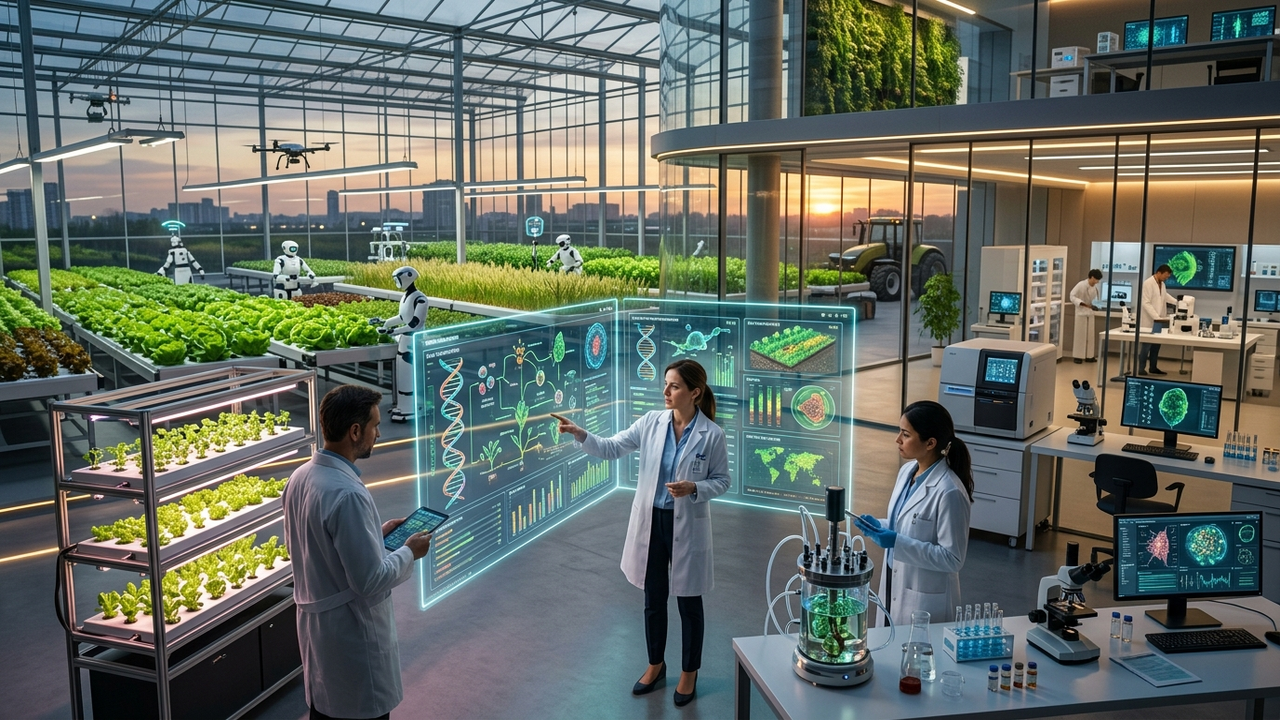
Artificial Intelligence (AI) is catalyzing groundbreaking advancements across multiple biotechnology sectors, demonstrating particular efficacy in bioprocess optimization, genome analysis, and protein structure prediction. This technological synergy holds substantial promise for applications in precision agriculture and human healthcare, potentially contributing significantly to food security, enhanced medical provision, and the realization of sustainable agricultural practices.
Technical and Clinical Details: AI-Driven Efficiencies and Discoveries
- Bioprocess Optimization: AI enhances production yields and reduces manufacturing costs by optimizing bioreactor operating conditions, media composition, and cell line selection. This dramatically improves the commercial production efficiency of biopharmaceuticals and biofuels.
- Genome Analysis: AI rapidly and accurately analyzes vast genomic datasets to identify disease-associated genes, drug targets, and genetic mutations. This accelerates the development of personalized medicine and novel therapeutic strategies.
- Protein Structure Prediction: AI has significantly advanced the ability to predict protein three-dimensional structures from amino acid sequences, aiding in lead compound selection for drug discovery and enzyme design. This dramatically boosts the efficiency of drug development.
- Precision Agriculture: AI maximizes crop yields and improves resource utilization efficiency through crop monitoring, early detection of pests and diseases, and recommendations for optimal irrigation and fertilization.
- Human Healthcare: AI is leveraged to enhance diagnostic accuracy, personalize treatment plans, screen novel drug candidates, and analyze medical images, enabling more effective healthcare delivery.
Background and Industry Context: Complex Data Challenges and Ethical/Regulatory Hurdles
Biotechnology inherently generates massive amounts of complex data, demanding sophisticated computational capabilities for analysis and interpretation. While AI is a powerful tool to accelerate this data-driven approach, it simultaneously faces critical challenges such as data privacy, algorithmic bias, limitations in existing infrastructure, ethical concerns, and regulatory uncertainties. These issues can impede the widespread adoption and societal integration of AI technologies.
Future Outlook: Overcoming Challenges for Broad Societal Benefits
To fully realize the potential benefits of the AI-biotechnology convergence, establishing secure frameworks for data sharing, ensuring transparency and fairness in algorithms, developing robust computational infrastructure, and formulating clear ethical guidelines and regulations are indispensable. If these challenges are effectively addressed, AI is expected to play a decisive role in strengthening food security, revolutionizing healthcare delivery, and fostering a more sustainable global environment.
Source: https://publications.umyu.edu.ng/conference/index.php/umyunas/article/view/248
Get our weekly technology intelligence — free
Receive an infographic that lets you judge at a glance whether each field’s analysis report is worth reading.
Subscribe Free — Weekly Tech Intelligence
By subscribing, you’ll receive Troy-Technical’s weekly technology intelligence newsletter.
- Your email and selected fields are used only to deliver the newsletter.
- We never share your information with third parties.
- You can unsubscribe anytime via the link in each email.
See our Privacy Policy for details.
Takes about a minute · Unsubscribe anytime