Key Findings
The prospects for ammonia co-firing technology in thermal power plants are facing significant setbacks in both Japan and South Korea. South Korea has officially withdrawn its support for the technology, while Japan has reduced its budget allocation for ammonia co-firing within its Green Innovation Fund. These policy reversals are largely attributed to the high costs associated with implementing the technology, the technical challenges encountered during testing, and broader concerns about its overall climate benefits.
Technical / Clinical Details
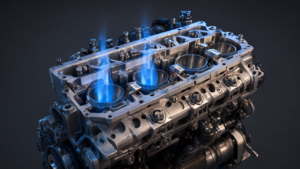
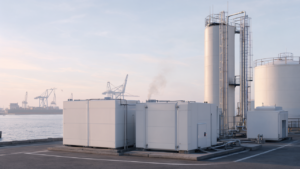
Ammonia co-firing aims to reduce CO2 emissions by replacing a portion of coal with ammonia in power generation. However, this technology presents several complex hurdles. Firstly, the distinct combustion properties of ammonia compared to coal necessitate substantial capital expenditure for boiler modifications and intricate technical adjustments. Secondly, ammonia combustion can potentially increase NOx (nitrogen oxide) emissions, requiring additional and costly post-combustion treatment systems for abatement. Furthermore, the immense cost of establishing the necessary infrastructure for large-scale ammonia procurement, storage, and transportation poses a significant economic barrier, undermining the overall cost-effectiveness of the approach.
Background & Context
Both Japan and South Korea, due to their limited indigenous renewable energy resources, had initially viewed ammonia co-firing as a viable strategy for decarbonizing existing coal-fired power plants while ensuring energy security. However, independent analyses by organizations such as the Institute for Energy Economics and Financial Analysis (IEEFA) have consistently highlighted concerns about the cost-efficiency of co-firing and the limited actual emission reduction benefits, especially when relying on ‘grey ammonia’ derived from fossil fuels. The current lack of a robust international supply chain for ‘green ammonia’ (produced from renewable hydrogen) further complicates its clean energy credentials, leading to the recent policy reconsiderations.
Strategic Significance & Outlook
These policy shifts in Japan and South Korea are likely to impact the pace of ammonia co-firing adoption across the Asia-Pacific region. Both nations may now pivot towards more direct investments in renewable energy, grid modernization, and other decarbonization solutions like battery storage. For ammonia co-firing technology to regain traction, a dramatic reduction in the production cost of green ammonia and proven, cost-effective NOx abatement technologies are essential. Without these critical advancements, ammonia co-firing is likely to remain a niche bridging technology or be superseded by more competitive clean energy alternatives in the long run.
Source: https://gasoutlook.com/analysis/ammonia-co-firing-faces-setback-in-japan-and-south-korea/
Get our weekly technology intelligence — free
Receive an infographic that lets you judge at a glance whether each field’s analysis report is worth reading.
Subscribe Free — Weekly Tech Intelligence
By subscribing, you’ll receive Troy-Technical’s weekly technology intelligence newsletter.
- Your email and selected fields are used only to deliver the newsletter.
- We never share your information with third parties.
- You can unsubscribe anytime via the link in each email.
See our Privacy Policy for details.
Takes about a minute · Unsubscribe anytime