Key Findings
NASA’s Jet Propulsion Laboratory (JPL) has commenced testing of its groundbreaking High Performance Spaceflight Computing (HPSC) processor, which demonstrates performance 500 times faster than existing radiation-hardened chips used in spaceflight. This significant leap in computational power for space applications promises to fundamentally transform in-orbit computing, paving the way for unprecedented levels of autonomy and real-time decision-making in future missions.
Technical / Clinical Details
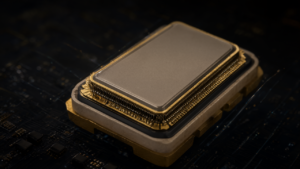
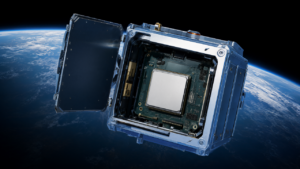
The HPSC processor, designed to be no larger than the palm of a hand, combines formidable computational capabilities with robust resilience against the extreme conditions of space, including high radiation levels and severe temperature fluctuations. Historically, the limited processing power of space-grade chips has been a bottleneck for deep-space exploration and complex scientific experiments. The HPSC aims to overcome this by enabling rapid, on-board processing of vast datasets and the execution of sophisticated AI algorithms. This capability will allow spacecraft to autonomously assess situations and make optimal mission-critical decisions without being hampered by communication delays with Earth. Such advancements are particularly revolutionary for missions to Mars, asteroids, and other distant celestial bodies where real-time human intervention is impractical.
Background & Context
As space missions become increasingly complex and the volume of data collected continues to grow exponentially, the demand for high-performance, on-board computing has intensified. Traditional spacecraft architectures heavily rely on ground control, where communication latencies can significantly impede mission efficiency and responsiveness. The development of AI-ready processors like HPSC is a pivotal step in addressing these challenges, evolving spacecraft into more autonomous and intelligent systems. This will enable scientists to gather and analyze more data, leading to new discoveries, and reducing the operational burden on ground teams. Furthermore, the burgeoning commercial space industry, characterized by a race to develop highly autonomous satellites and probes, stands to gain substantial competitive advantage from such technologies.
Strategic Significance & Outlook
The operationalization of the HPSC processor is poised to equip future NASA missions with levels of autonomy and intelligence previously unimaginable. This will not only expand the horizons of deep-space exploration and foster new scientific breakthroughs but also reduce mission risks and costs by minimizing human intervention in space. HPSC is set to become a foundational technology in shaping the future of AI in spaceflight, potentially ushering in a new golden age of space exploration. Following further rigorous testing and refinement, its deployment in upcoming missions is highly anticipated, marking a critical transition towards more independent and capable space assets.
Get our weekly technology intelligence — free
Receive an infographic that lets you judge at a glance whether each field’s analysis report is worth reading.
Subscribe Free — Weekly Tech Intelligence
By subscribing, you’ll receive Troy-Technical’s weekly technology intelligence newsletter.
- Your email and selected fields are used only to deliver the newsletter.
- We never share your information with third parties.
- You can unsubscribe anytime via the link in each email.
See our Privacy Policy for details.
Takes about a minute · Unsubscribe anytime