Key Findings
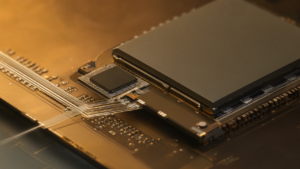
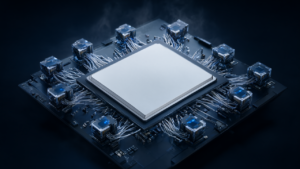
Amidst the challenges faced by Co-Packaged Optics (CPO) in large-scale commercialization, including yield issues, complex thermal management, and mass production verification hurdles, Near-Packaged Optics (NPO) is rapidly gaining prominence as a more flexible and lower-risk transitional optical packaging architecture. NPO successfully leverages mature, existing packaging processes by placing optical engines on independent engine boards in close proximity to ASICs. This approach significantly reduces associated technical barriers and production costs while retaining the crucial benefits of high-performance optical interconnects.
Technical / Clinical Details
- Addressing CPO Challenges: While CPO aims for ultimate power efficiency and bandwidth density through maximum optical-electrical integration, its extremely high integration level presents ‘growing pains’ such as low manufacturing yields, complex thermal design, and significant testing and verification difficulties. NPO circumvents these immediate challenges, offering a more practical deployment pathway.
- Advantages of NPO Architecture: NPO physically separates optical engines from switch ASICs while keeping them in close proximity, providing the following benefits:
- Leveraging Mature Packaging Processes: The ability to utilize existing standard semiconductor packaging technologies reduces development risks and costs.
- Maintaining High-Performance Optical Interconnects: Although the electrical path between the optical engine and the ASIC is not as short as in CPO, it is significantly shorter than traditional pluggable transceivers, offering superior power efficiency and performance.
- Reduced Technical Barriers and Costs: Compared to the complex integration of CPO, NPO simplifies design, manufacturing, and testing, allowing for quicker and more cost-effective market entry.
- Improved Serviceability: Treating the optical engine as an independent module facilitates easier replacement in case of failure, reducing overall system operational costs.
Background & Context
The explosive growth of AI workloads has placed unprecedented demands on data center interconnects, making the optimization of bandwidth, power consumption, and latency urgent priorities. Co-Packaged Optics (CPO) is seen as the long-term solution to these challenges, but its technical complexity is expected to delay large-scale deployment. In this context, NPO has emerged as a pragmatic and attractive alternative for data center operators and hyperscalers who wish to benefit from high-performance optical interconnects without waiting for CPO’s full maturity.
Strategic Significance & Outlook
The rapid rise of NPO indicates a critical interim phase in the evolution of optical communication technology. It is poised to play an indispensable role in meeting the escalating needs of AI data centers while CPO technology matures and its mass production challenges are resolved. NPO acts as a ‘bridge’ from traditional pluggable optical transceivers to CPO, providing a smoother transition path for the entire industry towards more high-performance and energy-efficient optical infrastructure. This flexible approach holds the potential to redefine data center design standards in the AI era.
Source: https://eu.36kr.com/en/p/3947164368075907
Get our weekly technology intelligence — free
Receive an infographic that lets you judge at a glance whether each field’s analysis report is worth reading.
Subscribe Free — Weekly Tech Intelligence
By subscribing, you’ll receive Troy-Technical’s weekly technology intelligence newsletter.
- Your email and selected fields are used only to deliver the newsletter.
- We never share your information with third parties.
- You can unsubscribe anytime via the link in each email.
See our Privacy Policy for details.
Takes about a minute · Unsubscribe anytime