Background
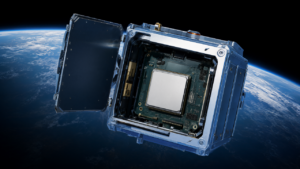
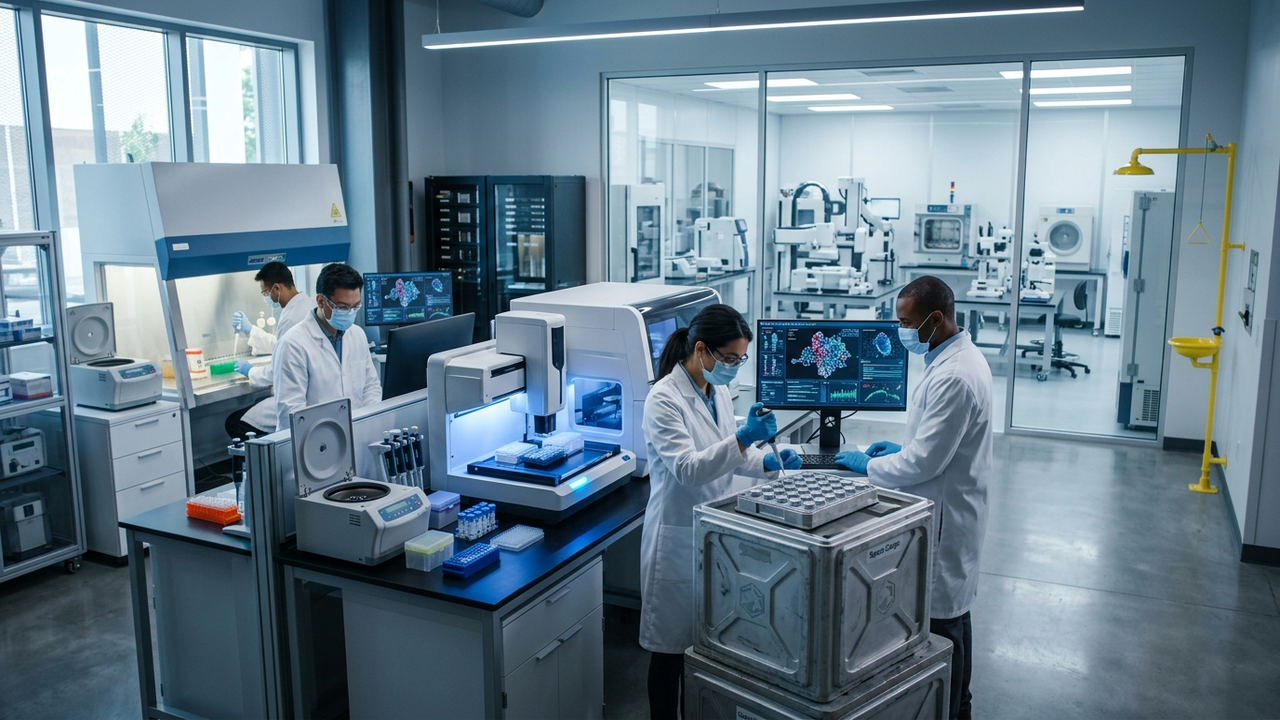
Space Cargo Unlimited from Luxembourg and Transcell Biologics from India have formed a groundbreaking strategic partnership to explore how microgravity research can fundamentally transform drug and vaccine development. The primary goal of this alliance is to verify whether on-orbit research can provide more predictive data on human biological behavior, which is difficult to replicate with traditional Earth-based models.
Scientific Approach and Technical Details
At the core of this partnership is the study of biological samples—such as cell cultures, tissue models, and microorganisms—in a microgravity environment. On Earth, gravity-induced convection, sedimentation, and mechanical stress significantly affect cellular processes, including growth, differentiation, and gene expression. In microgravity, these effects are eliminated, potentially allowing for the observation of purer biological processes. This is expected to improve the reproducibility of disease models and yield more precise and predictive data in drug candidate screening and vaccine efficacy evaluation compared to terrestrial experiments. Specifically, the collaboration aims to analyze various biological phenomena, such as cancer cell proliferation mechanisms, immune cell responses, and microbial drug resistance acquisition mechanisms, in the space environment, and to apply these insights to terrestrial drug discovery. Space Cargo Unlimited provides the necessary space transport and experimental platforms, while Transcell Biologics contributes specialized biological expertise and research protocols.
Industry Landscape and Strategic Context
The pharmaceutical industry faces significant challenges, including escalating drug development costs and timelines, alongside low success rates in clinical trials. A major bottleneck is the lack of preclinical research models that can accurately represent complex human biology. In recent years, orbital platforms, including the International Space Station (ISS), have garnered attention as unique experimental environments for life science research. Microgravity environments are increasingly recognized for their potential to reveal novel aspects of biological processes at the cellular level and revolutionize drug discovery. This international partnership symbolizes the fusion of the space and biotechnology industries, expanding the potential use of space to address critical global health challenges.
Future Prospects and Overcoming Challenges
This strategic partnership aims to streamline drug discovery pipelines and provide better treatment options for patients on Earth. If on-orbit research is proven to deliver highly predictive data and new biological insights, microgravity environments could become a standard tool for novel drug and vaccine development. Short-term goals include successful proof-of-concept demonstrations and establishing the superiority of space-based research for specific disease models. Long-term, this collaboration may evolve into in-space pharmaceutical manufacturing and the development of personalized medical solutions. However, challenges such as the cost and complexity of space experiments, and the efficient transmission and analysis of data back to Earth, will need to be overcome. This partnership serves as a crucial test case for the impact of this new frontier—space—on terrestrial life sciences.
Get our weekly technology intelligence — free
Receive an infographic that lets you judge at a glance whether each field’s analysis report is worth reading.
Subscribe Free — Weekly Tech Intelligence
By subscribing, you’ll receive Troy-Technical’s weekly technology intelligence newsletter.
- Your email and selected fields are used only to deliver the newsletter.
- We never share your information with third parties.
- You can unsubscribe anytime via the link in each email.
See our Privacy Policy for details.
Takes about a minute · Unsubscribe anytime