Key Findings
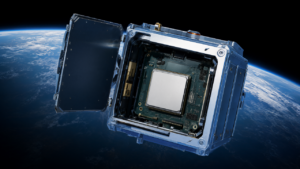
Serendipity Space, an Indian space-pharma startup headquartered in Bhubaneswar, has successfully operated and recovered its orbital-class satellite prototype. The prototype demonstrated drug crystallization processes using its onboard autonomous pharmaceutical factory, “Alchemy.” This achievement marks a significant milestone towards manufacturing high-quality pharmaceutical crystals in a microgravity environment.
Technical Details
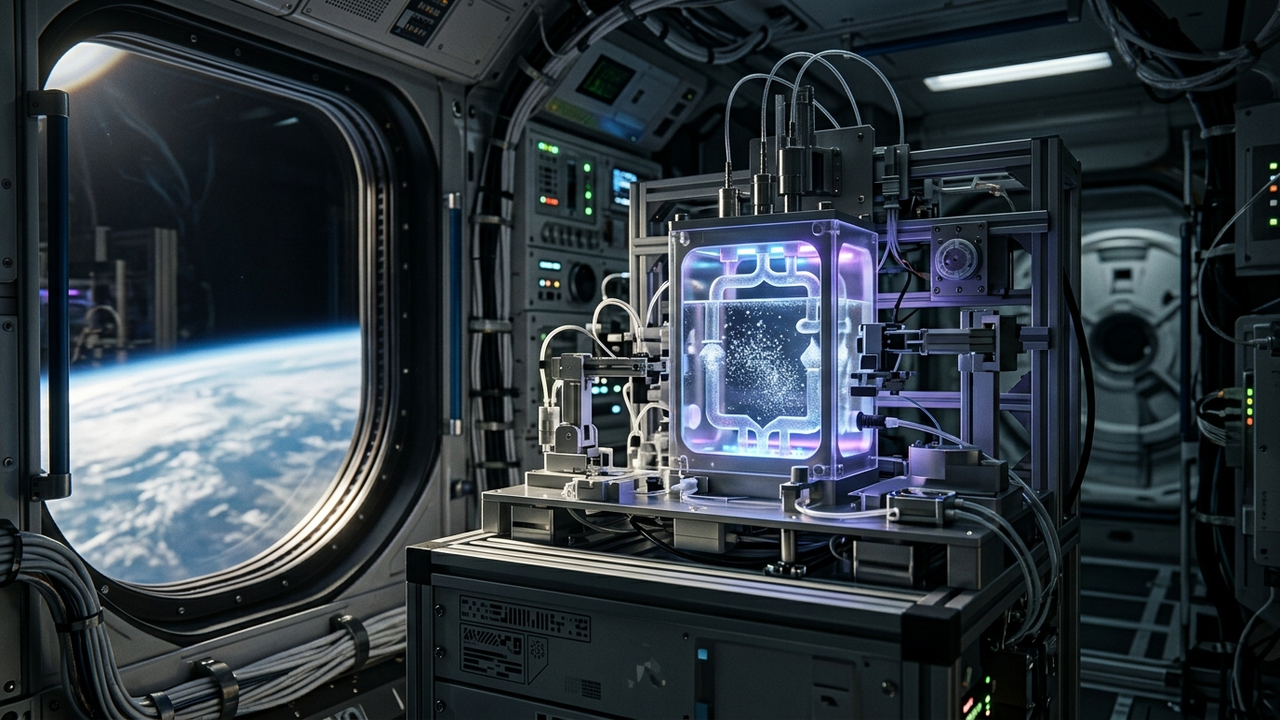
For this mission, Serendipity Space’s “Alchemy” system was launched via a stratospheric balloon from the TIFR Balloon Facility in Hyderabad, India. Within the stratospheric microgravity environment, Alchemy autonomously executed drug crystallization processes. Crucially, the system successfully maintained crystal integrity throughout the controlled return, touchdown, and recovery phases. The “Alchemy” system is specifically engineered to enable drug molecules to form crystals in the absence of gravitational forces, thereby aiming to mitigate crystal structure defects typically caused by convection and sedimentation on Earth. Consequently, drug crystals produced in microgravity are anticipated to exhibit a more uniform particle size distribution, higher purity, and more stable structures. These enhanced properties could lead to improved drug solubility, stability, and bioavailability for therapeutic applications. This successful demonstration underscores the inherent advantages of the space environment for pharmaceutical manufacturing and is poised to enhance the efficiency of future drug development and production workflows.
Background and Industry Context
The emerging field of space pharmaceuticals is predicated on the understanding that microgravity environments offer unique advantages for specific materials science and biological processes. Drug crystallization, in particular, is a critical step influencing the stability, pharmacokinetics, and manufacturability of active pharmaceutical ingredients, thus making the production of high-quality crystals paramount. India has recently seen a significant push to encourage private sector participation in space activities, with startups like Serendipity Space emerging as key drivers of innovation in this domain. The company’s recent success highlights the Indian space industry’s growing role in global technological innovation and commercialization. This burgeoning sector holds considerable potential to introduce novel solutions to the manufacturing challenges prevalent within the traditional pharmaceutical industry.
Future Outlook
This successful demonstration by Serendipity Space unequivocally establishes the technical feasibility of in-space pharmaceutical manufacturing. Future efforts will concentrate on conducting long-duration manufacturing trials in actual orbital environments, expanding applications to a wider array of drug compounds, and developing large-scale production technologies for eventual commercialization. Should commercial-level operations be successfully established, this technology could emerge as a novel source for specialized pharmaceuticals, including drugs for rare diseases and high-functional compounds that are challenging to produce on Earth. Furthermore, this capability could be vital for use cases such as on-demand drug manufacturing for astronauts during extended space exploration missions. As a pioneering entity in India’s rapidly evolving space industry, Serendipity Space is well-positioned to create significant new value within the global pharmaceutical market.
Get our weekly technology intelligence — free
Receive an infographic that lets you judge at a glance whether each field’s analysis report is worth reading.
Subscribe Free — Weekly Tech Intelligence
By subscribing, you’ll receive Troy-Technical’s weekly technology intelligence newsletter.
- Your email and selected fields are used only to deliver the newsletter.
- We never share your information with third parties.
- You can unsubscribe anytime via the link in each email.
See our Privacy Policy for details.
Takes about a minute · Unsubscribe anytime