Background and Industry Context
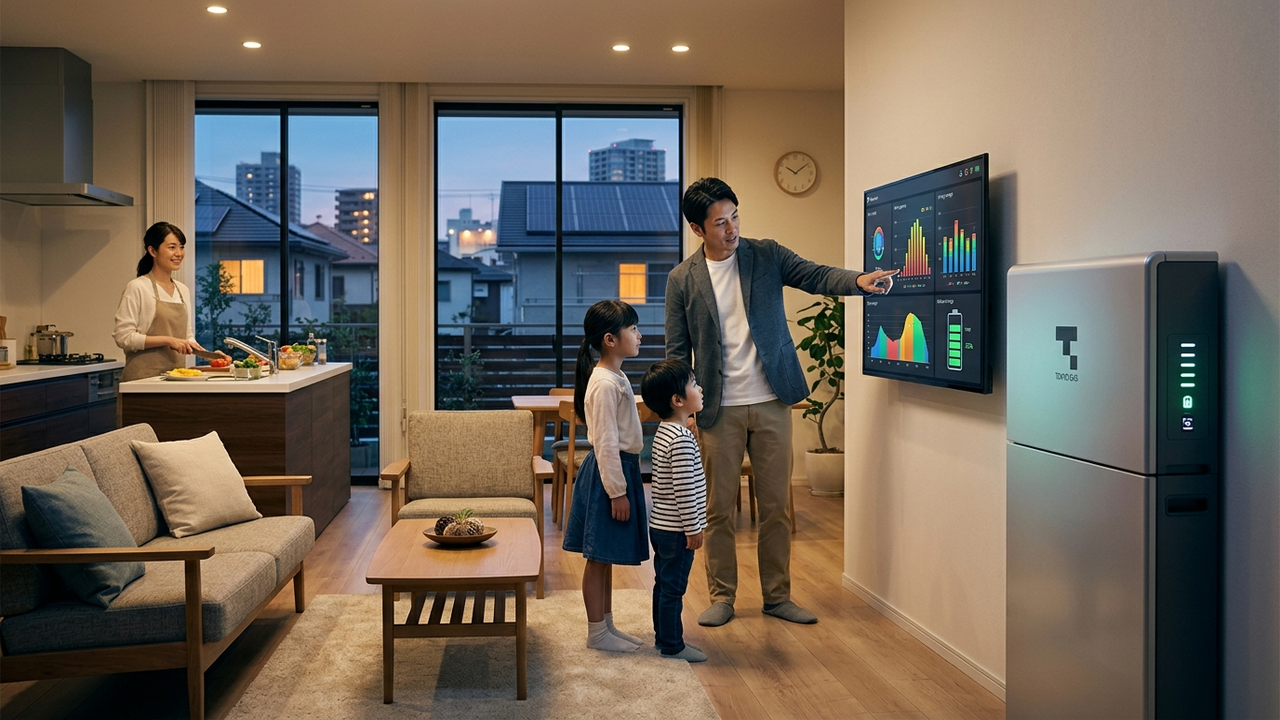
Demand for residential battery storage systems has seen a consistent annual increase, propelled by escalating electricity prices, national energy policies targeting a decarbonized society, and the critical need to bolster resilience against disaster-induced power outages. These systems offer multifaceted benefits, including reducing electricity bills through the self-consumption of solar-generated power and enabling peak demand shifting by storing cheaper off-peak electricity for daytime use. Furthermore, they serve as vital emergency power sources during blackouts, enhancing household security and energy independence. Consequently, robust subsidy programs are indispensable for mitigating the substantial initial investment barrier, which is key to accelerating widespread adoption.
Key Findings
Tokyo Gas has released a comprehensive compilation of the latest subsidy information for consumers planning residential battery installations in Japan’s 2026 fiscal year (Reiwa 8). This data reveals a diverse array of national and local government subsidy programs, with the Tokyo Metropolitan Government’s Demand Response (DR) subsidy standing out by offering substantial support, reaching up to ¥600,000 per application.
Subsidy Details
- Tokyo Metropolitan Government Subsidies: Tokyo is spearheading the “FY2026 Home Battery System Promotion Project,” which provides partial subsidies for the installation costs of residential battery systems. A key component is the subsidy contingent upon participation in demand response (DR) programs. This offers additional financial support to households that actively contribute to grid stabilization by discharging stored electricity during periods of peak demand. The 2026 DR subsidy is notably projected to offer up to ¥600,000 per eligible application.
- National and Other Municipal Subsidies: Nationally, subsidies from the Ministry of Economy, Trade and Industry (METI) target battery installations that promote energy conservation and efficiency, while the Ministry of the Environment (MOE) supports those tied to renewable energy integration. Beyond Tokyo, numerous other local governments implement bespoke subsidy programs, each finely tuned to their specific regional needs and conditions. Collectively, these initiatives play a critical role in alleviating the upfront capital expenditure for homeowners.
- Tax Incentives: Complementing direct subsidies, qualifying home battery installations may also be eligible for various tax incentives. These include reductions in fixed asset tax and income tax deductions, which collectively enhance the long-term financial viability and attractiveness of residential energy storage solutions.
Strategic Significance and Outlook
Comprehensive subsidy information, as meticulously compiled by Tokyo Gas, is invaluable for consumers navigating the array of available programs and facilitating informed installation decisions. Incentives such as the DR subsidy are particularly pivotal, accelerating the realization of the “Virtual Power Plant (VPP)” concept, wherein individual households collectively function as distributed energy resources, actively contributing to overall grid stability and resilience. Moving forward, these subsidy frameworks are subject to potential revisions, driven by evolving energy policy mandates and dynamic market shifts. Informed consumers who strategically adopt residential battery storage systems are positioned to achieve more sustainable and economically advantageous lifestyles.
Source: https://solar-battery.tokyo-gas.co.jp/column/0071/
Get our weekly technology intelligence — free
Receive an infographic that lets you judge at a glance whether each field’s analysis report is worth reading.
Subscribe Free — Weekly Tech Intelligence
By subscribing, you’ll receive Troy-Technical’s weekly technology intelligence newsletter.
- Your email and selected fields are used only to deliver the newsletter.
- We never share your information with third parties.
- You can unsubscribe anytime via the link in each email.
See our Privacy Policy for details.
Takes about a minute · Unsubscribe anytime