Key Findings
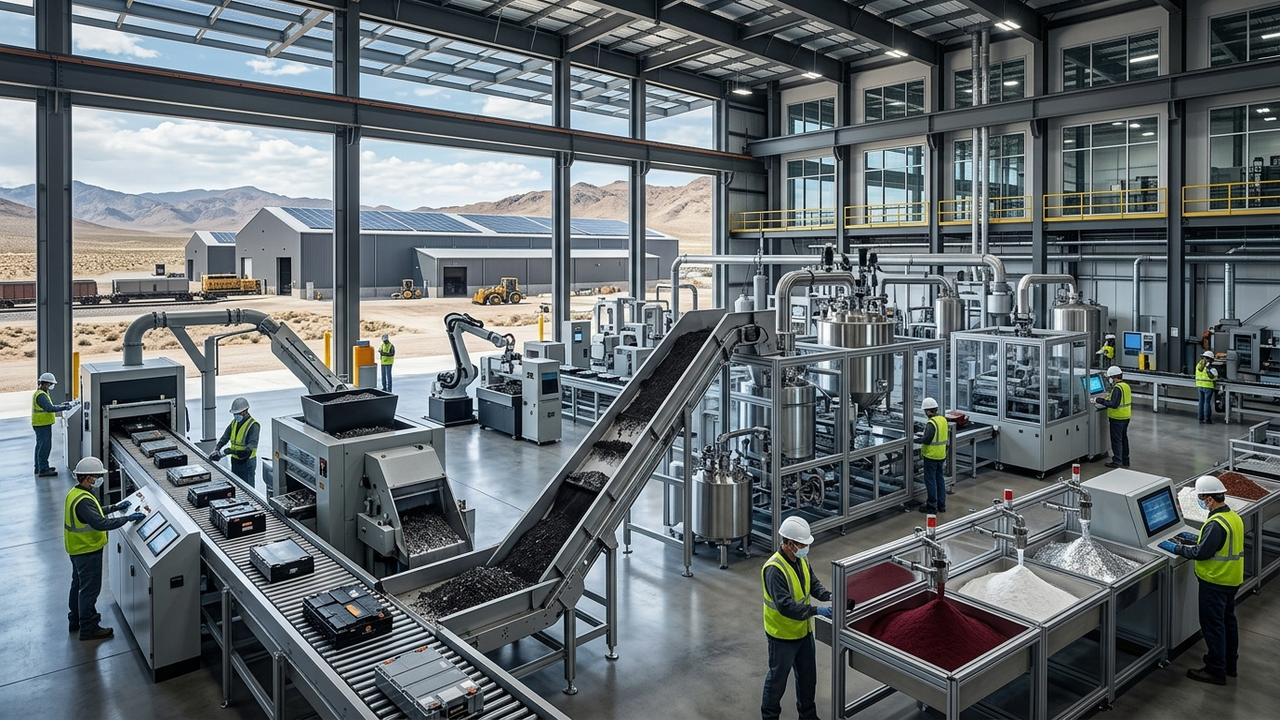
Redwood Materials has secured a $2 billion conditional loan commitment from the U.S. Department of Energy (DOE)’s Loan Programs Office (LPO) for the construction and expansion of its battery materials campus in Nevada. This substantial financing will significantly bolster the company’s goal of establishing a “fully closed-loop lithium-ion battery manufacturing process that produces anode copper foil and cathode active materials from end-of-life batteries and production scrap.” This initiative will help the U.S. build a sustainable and resilient battery supply chain capable of supporting the production of over one million electric vehicles (EVs) annually.
Technical Details
- **Closed-Loop Recycling Process**: Redwood Materials has developed proprietary technology to recover over 95% of key materials, including lithium, nickel, cobalt, and copper, from used lithium-ion batteries. These recovered metals are then refined to high purity and reintroduced into battery manufacturing, reducing reliance on external resources and minimizing environmental impact.
- **Nevada Campus**: The company’s facility in Nevada is one of the largest battery recycling operations in the U.S., with the capacity to produce anode copper foil and cathode active materials from recycled materials. This localized production ensures that the battery materials supply chain is completed within North America, reducing geographical risks.
- **Supporting Over 1 Million EVs Annually**: The expanded campus is designed to supply the critical materials needed for batteries powering over one million EVs annually, making it an essential infrastructure component for achieving U.S. EV production targets.
- **Strategic Partnerships**: Redwood Materials is also collaborating with major automakers like General Motors on projects to repurpose used EV batteries for large-scale energy storage systems in data centers, aiming to maximize value across the entire battery lifecycle.
Background and Industry Context
With the rapid adoption of electric vehicles (EVs), the demand for lithium-ion batteries has surged. However, concerns over the supply of critical minerals, environmental issues associated with mining, and geopolitical risks pose significant challenges. The U.S. is strategically promoting the establishment of domestic battery manufacturing and recycling capabilities as a national strategy to strengthen its supply chains and accelerate the transition to a clean energy economy. The DOE’s loan to Redwood Materials is a vital part of realizing this strategy.
Strategic Significance and Outlook
The $2 billion loan will play a decisive role in Redwood Materials’ ability to scale its recycling operations and enhance the self-sufficiency of the U.S. battery supply chain. The establishment of a fully closed-loop recycling system will significantly reduce the environmental footprint of battery manufacturing, contributing substantially to a sustainable mobility society. Furthermore, increased domestic material production capacity will create new jobs and investments in the U.S. economy, strengthening its global competitiveness. Redwood’s efforts have the potential to set a new benchmark for recycling and sustainability in the global battery industry.
Source: https://www.energy.gov/edf/articles/sector-spotlight-critical-materials
Get our weekly technology intelligence — free
Receive an infographic that lets you judge at a glance whether each field’s analysis report is worth reading.
Subscribe Free — Weekly Tech Intelligence
By subscribing, you’ll receive Troy-Technical’s weekly technology intelligence newsletter.
- Your email and selected fields are used only to deliver the newsletter.
- We never share your information with third parties.
- You can unsubscribe anytime via the link in each email.
See our Privacy Policy for details.
Takes about a minute · Unsubscribe anytime