Key Findings
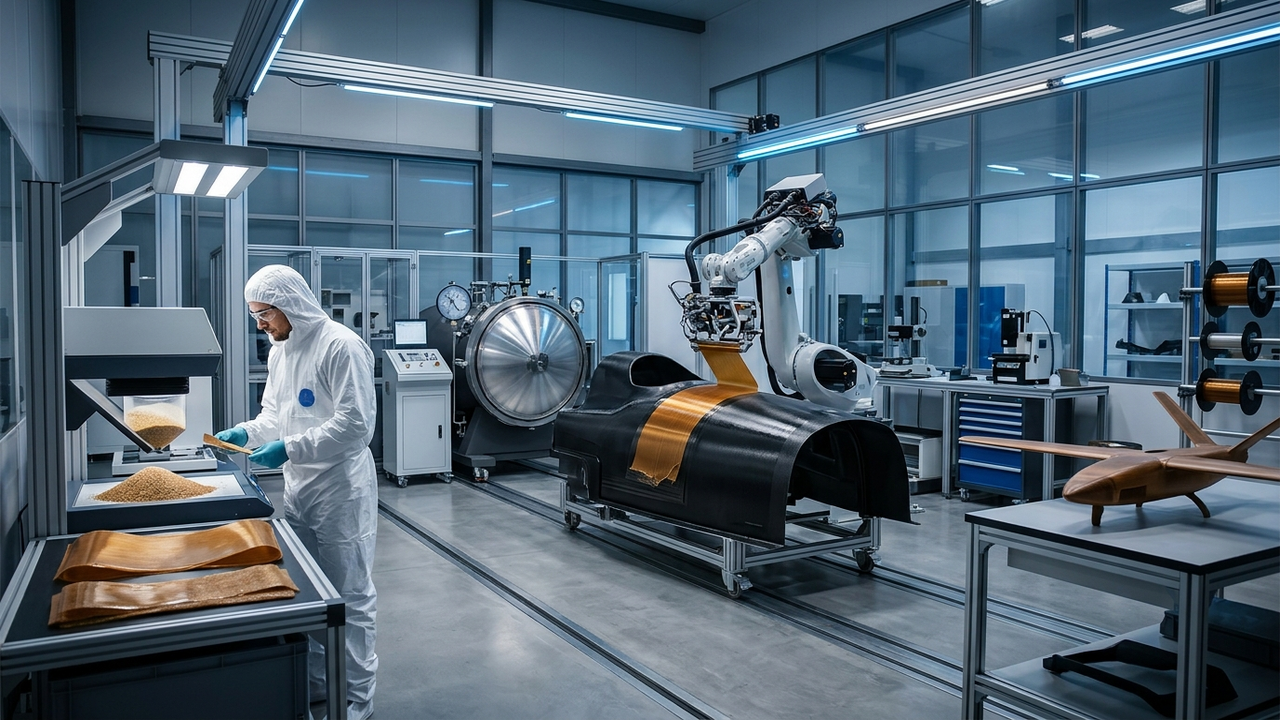
Z-Polymers has engineered ‘Tullomer,’ a groundbreaking proprietary polymer poised to revolutionize the aerospace and drone industries. This new material uniquely combines superior thermal performance and radar transparency, outperforming carbon fiber, while also demonstrating exceptional toughness and fire resistance. Positioned as a fiber with properties comparable to or exceeding Kevlar, Tullomer is anticipated to find broad application across various manufacturing processes, including 3D printing.
Technical / Clinical Details
Tullomer is based on a novel polymeric structure developed by Z-Polymers, designed at the molecular level to overcome the limitations of conventional high-performance materials. Specifically, it maintains the high strength and stiffness characteristic of carbon fiber while achieving reduced thermal expansion and a broader operational temperature range. Its excellent radar transparency makes it valuable for stealth applications and enhancing communication system performance. The material’s toughness and fire resistance provide superior safety and durability for structural components in drones and aircraft. Tullomer is envisioned for use in fiber form, compatible with various additive manufacturing techniques, including 3D printing, and conventional composite manufacturing processes.
Background & Context
Modern manufacturing, particularly in the aerospace and defense sectors, consistently demands materials that offer lightweighting, enhanced performance, and reliability under extreme conditions. While traditional materials like carbon fiber excel in many aspects, they present challenges regarding thermal performance in specific environments and radar absorption characteristics. As Mike Zimmerman, CEO of Z-Polymers, emphasizes, new material development is key to manufacturing innovation, and breakthroughs like Tullomer are designed to fill these existing gaps.
Strategic Significance & Outlook
The advent of Tullomer polymer has the potential to significantly impact the design and manufacturing of drones, aircraft, and spacecraft. The unique properties of this material can contribute to the integration of higher-performance sensors, improved fuel efficiency through lightweighting, and the attainment of higher safety standards. In the future, Tullomer is expected to expand beyond aerospace into numerous other industrial sectors requiring toughness, lightweight properties, and heat resistance, such as automotive, sporting goods, and protective gear. Its versatility in manufacturing processes also promises rapid deployment across a wide range of products.
Get our weekly technology intelligence — free
Receive an infographic that lets you judge at a glance whether each field’s analysis report is worth reading.
Subscribe Free — Weekly Tech Intelligence
By subscribing, you’ll receive Troy-Technical’s weekly technology intelligence newsletter.
- Your email and selected fields are used only to deliver the newsletter.
- We never share your information with third parties.
- You can unsubscribe anytime via the link in each email.
See our Privacy Policy for details.
Takes about a minute · Unsubscribe anytime