Key Findings
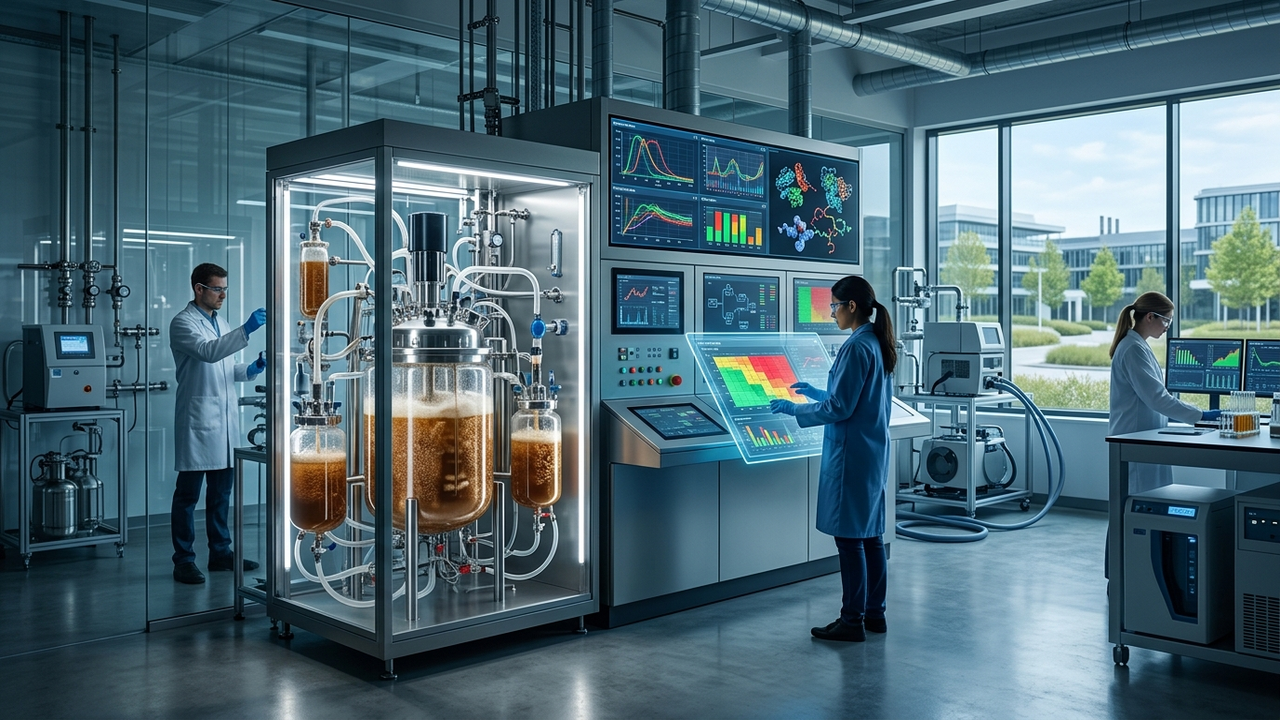
A study published in Frontiers introduces “FERM-AI,” an innovative risk-aware machine learning framework aimed at optimizing microbial cellulase fermentation. FERM-AI integrates yield prediction, contamination risk assessment, and an interactive decision support interface, uniquely capable of simultaneously modeling both productivity and contamination risk. This enables a risk-aware evaluation of fermentation operating conditions, significantly contributing to improved efficiency and safety in industrial biotechnology.
Technical & Clinical Details
Microbial fermentation processes play a crucial role in the production of biofuels, bioplastics, and pharmaceuticals. However, their optimization is complex, requiring a balance between enhancing yield and minimizing contamination risk, which are often conflicting objectives. FERM-AI is a multi-functional framework designed to address this challenge.
- Yield Prediction Module: This module accurately predicts cellulase production yield from various parameters within the fermenter (e.g., temperature, pH, media composition, oxygen supply). Machine learning models learn from historical and real-time process data to identify optimal production conditions.
- Contamination Risk Assessment Module: This component evaluates the risk of microbial contamination in the fermentation process in real-time. By analyzing sensor data and culture broth analyses, it detects early signs of contamination and predicts its probability and potential impact. This allows for proactive measures to be taken before contamination occurs.
- Interactive Decision Support Interface: Based on predicted yield and contamination risk, FERM-AI provides an intuitive tool for operators to determine optimal fermentation operating conditions. For example, if pursuing high yield increases contamination risk, FERM-AI offers recommendations that balance both factors. This enables not only experienced operators but also new engineers to manage processes efficiently.
- Concurrent Optimization Capability: The key feature of FERM-AI is its ability to simultaneously optimize multiple objectives, such as increasing productivity and reducing contamination risk. This enables more comprehensive process management than traditional single-objective optimization methods.
Background & Industry Context
The industrial biotechnology sector demands process efficiency improvements to maintain competitiveness and reduce environmental impact. Fermentation technology plays a central role in the drive to increase production from renewable resources, but its robustness and economic viability have been challenges. The introduction of AI and machine learning is crucial to overcoming these hurdles and accelerating the realization of a sustainable bioeconomy.
Strategic Significance & Outlook
Risk-aware machine learning frameworks like FERM-AI have the potential to fundamentally transform how microbial fermentation processes are designed, operated, and monitored. Further development and application of this technology across a wide range of industrial sectors will significantly contribute to enhancing biofuel production efficiency, accelerating the development of new bio-based products, and improving the sustainability of manufacturing processes. For researchers, it offers a more predictable and controllable experimental environment; for engineers, automated and optimized production systems; and for investors, new opportunities for efficient resource utilization and higher profitability.
Get our weekly technology intelligence — free
Receive an infographic that lets you judge at a glance whether each field’s analysis report is worth reading.
Subscribe Free — Weekly Tech Intelligence
By subscribing, you’ll receive Troy-Technical’s weekly technology intelligence newsletter.
- Your email and selected fields are used only to deliver the newsletter.
- We never share your information with third parties.
- You can unsubscribe anytime via the link in each email.
See our Privacy Policy for details.
Takes about a minute · Unsubscribe anytime








Comments