Background & Context
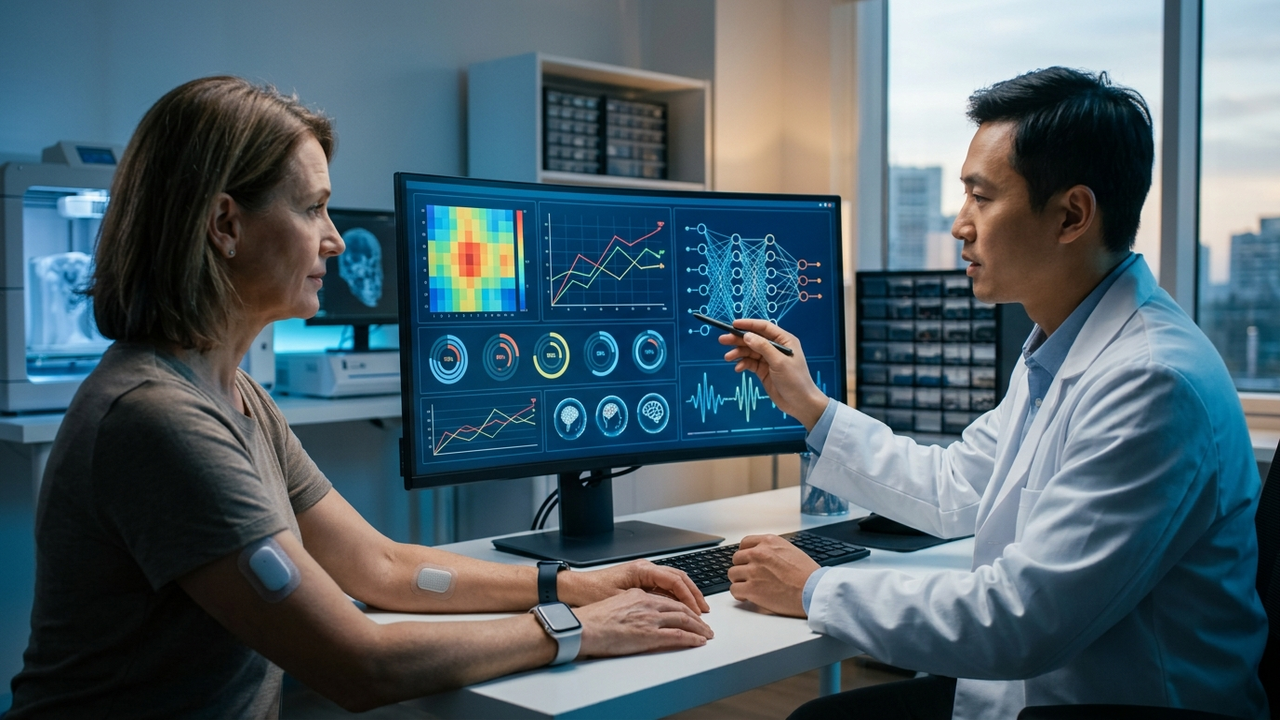
Over the past decade, wearable technologies have achieved widespread public adoption, paralleled by significant advancements in their technological maturity and reliability. This broad acceptance has paved the way for their expansive application within the medical field. Accelerating this trend are global demographic shifts, including an aging population and increasing prevalence of chronic diseases, alongside a growing demand for remote healthcare solutions. Consequently, the adoption of wearables as tools for digital biomarker collection is rapidly expanding. Pharmaceutical companies and healthcare providers are also significantly increasing their investment in wearable devices, leveraging them for critical applications such as endpoint measurements in clinical trials, real-world data collection, and enhancing patient engagement. This collective momentum is building a robust foundation for the realization of truly personalized medicine.
Key Findings
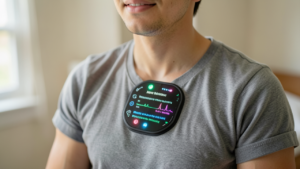
Wearable technologies have evolved dramatically from their origins as consumer-focused fitness gadgets into sophisticated and indispensable instruments for modern clinical research and healthcare. Contemporary wearable systems, encompassing smartwatches, advanced fitness trackers, specialized biosensor patches, and continuous glucose monitors (CGMs), are now capable of continuously collecting an unprecedented spectrum of physiological and behavioral data. This rich dataset includes heart rate, physical activity levels, sleep patterns, body temperature, blood glucose concentrations, and oxygen saturation. Such a wealth of information creates immense opportunities for the development of ‘digital biomarkers’ – quantifiable physiological and behavioral data that are collected and measured by digital health technologies. When these digital biomarkers are integrated with artificial intelligence (AI), they enable precise prediction of disease progression and the identification of subtle, clinically significant changes in physiological patterns. This capability represents a critical stride towards achieving truly personalized and preventive medical interventions.
Technical & Clinical Insights
The efficacy of wearable devices stems from their incorporation of diverse biosensors, which include micro-electromechanical systems (MEMS) sensors, optical sensors (such as photoplethysmography, PPG), and electrochemical sensors. These advanced sensors acquire a wide array of biological information non-invasively or minimally invasively, typically from sweat, the skin surface, or interstitial fluid. The true transformative power of these devices is unlocked when the massive, high-dimensional datasets they collect are integrated with sophisticated AI and machine learning algorithms. AI possesses the unique capability to sift through complex physiological patterns and identify subtle disease indicators or anomalous trends that might elude conventional clinical assessments. For example, long-term analysis of heart rate variability can offer predictive insights into cardiovascular disease risk, while shifts in sleep quality patterns can serve as early markers for the onset of certain neurodegenerative conditions.
Strategic Outlook & Future Impact
The evolution of wearable technologies as digital biomarkers is projected to continue at an accelerated pace. Future developments will likely involve the simultaneous measurement of an even greater number of biomarkers, seamless integration of data from multi-modal sensors, and continuous advancements in AI models. These innovations will facilitate ultra-early disease prediction and the provision of more precise preventive and interventional strategies. As wearables continuously feed biometric data and AI robustly analyzes it, the construction of personalized ‘digital twin’ models of individuals’ health could become a reality. These digital twins would optimize personalized health management and treatment pathways by simulating responses to various interventions. This paradigm shift is poised to profoundly impact all facets of healthcare, from comprehensive disease prevention and acute treatment to long-term health maintenance, ushering in a new era of predictive and proactive health management.
Source: https://ceapress.org/index.php/cpgdpe/article/view/416
Get our weekly technology intelligence — free
Receive an infographic that lets you judge at a glance whether each field’s analysis report is worth reading.
Subscribe Free — Weekly Tech Intelligence
By subscribing, you’ll receive Troy-Technical’s weekly technology intelligence newsletter.
- Your email and selected fields are used only to deliver the newsletter.
- We never share your information with third parties.
- You can unsubscribe anytime via the link in each email.
See our Privacy Policy for details.
Takes about a minute · Unsubscribe anytime





Comments