
Key Findings
The Japanese government has announced the introduction of a new autonomous system, ‘MADI (Materials Acceleration Design Intelligence),’ with the ambitious goal of accelerating materials development tenfold through the use of artificial intelligence (AI). This project aims for the rapid creation of novel materials, which are crucial for strengthening Japan’s industrial competitiveness and realizing a sustainable society.
Technical / Clinical Details
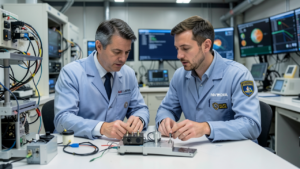
The MADI system represents an integration of several cutting-edge technologies. At its core are precise robotic arms, capable of operating with the dexterity of an experienced researcher, automating the material synthesis process. These robotic arms are coupled with real-time spectroscopy, allowing for immediate analysis of material property changes during synthesis. Furthermore, the system is powered by a high-performance machine learning brain, trained on decades of vast chemical data. This AI brain autonomously analyzes experimental data, proposes next experimental conditions, and predicts material properties. MADI boasts the capability to execute over 1,000 synthesis experiments per week, far exceeding the speed of traditional human-led research. This rapid iterative learning and experimentation cycle enables the discovery of new materials with desired properties in a fraction of the time previously required.
Background & Context
In the field of materials science, the discovery of new functional materials drives innovation across all industries, including electronics, energy, automotive, and medicine. However, traditional materials development has largely relied on trial-and-error experimentation and expert experience, making the process highly time-consuming and costly. Western countries and China are also investing heavily in AI-driven materials development, intensifying international competition in this sector. Japan’s introduction of an autonomous AI system like MADI is a strategic move to establish a competitive edge and maintain leadership in advanced materials.
Strategic Significance & Outlook
The implementation of MADI signifies a paradigm shift in Japan’s materials development landscape. This system is expected to drive breakthroughs particularly in strategically important areas such as high-performance battery materials, next-generation semiconductors, environmental catalysts, and renewable energy-related materials. In the future, MADI could be deployed across multiple research institutions and companies, forming the foundation of Japan’s overall materials innovation ecosystem. This will dramatically shorten material development cycles and significantly contribute to the creation of new industries and the resolution of societal challenges. Through this AI-driven approach, Japan aims to strengthen its position as a global leader in materials science and technology.
Source: https://www.roic.ai/news/japan-to-tap-ai-to-speed-up-materials-development-10-fold—nikkei-08-24-2026
Get our weekly technology intelligence — free
Receive an infographic that lets you judge at a glance whether each field’s analysis report is worth reading.
Subscribe Free — Weekly Tech Intelligence
By subscribing, you’ll receive Troy-Technical’s weekly technology intelligence newsletter.
- Your email and selected fields are used only to deliver the newsletter.
- We never share your information with third parties.
- You can unsubscribe anytime via the link in each email.
See our Privacy Policy for details.
Takes about a minute · Unsubscribe anytime







Comments