Key Findings
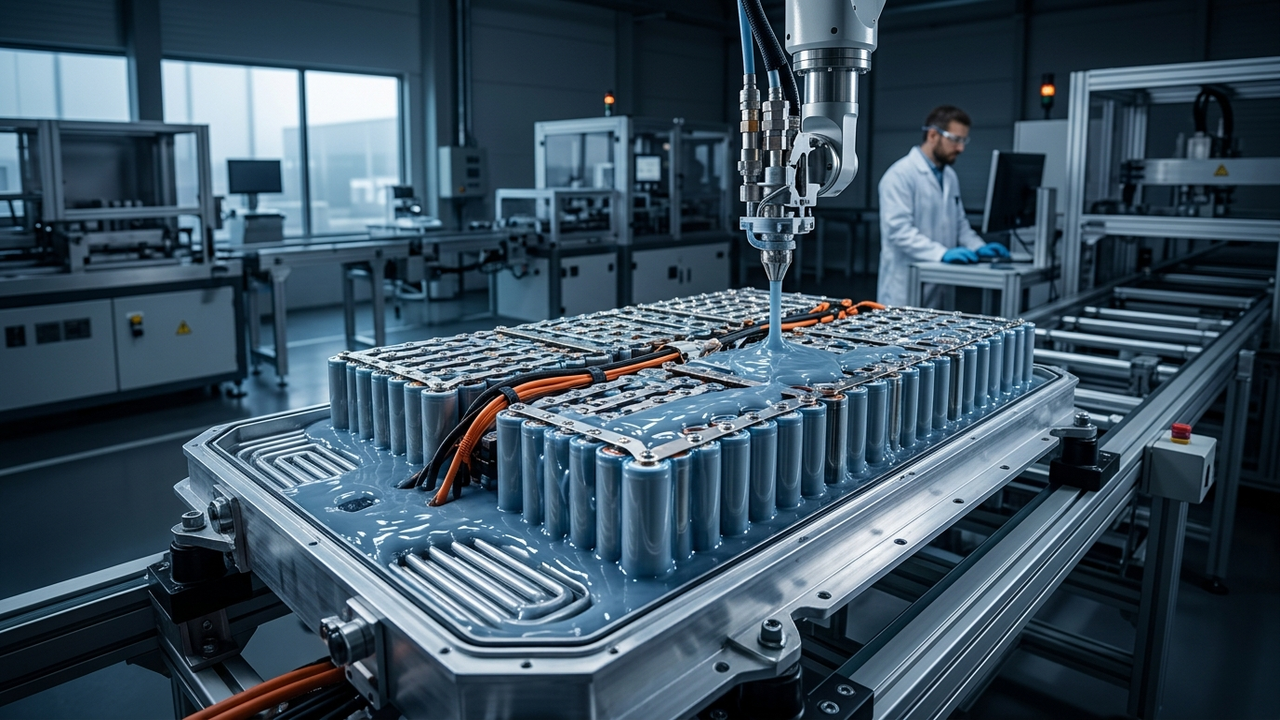
Kootai Chemicals is enhancing its high-performance silicone potting compound solutions for electric vehicle (EV) battery packs, focusing on superior thermal management and physical protection. These materials are crucial for mitigating thermal runaway risks and safeguarding battery components from harsh environmental stressors like vibration, moisture, and electrical stress.
Technical / Clinical Details
Kootai Chemicals’ silicone potting compounds feature extremely low viscosity, enabling deep and uniform penetration into minute gaps and voids around battery cells and circuitry. This ensures efficient heat distribution throughout the battery pack, preventing localized hot spots. Once cured, the compound transforms into a flexible elastomer that effectively absorbs thermal expansion and vibrations generated during battery charge-discharge cycles, thus reducing mechanical stress on solder joints and other delicate components. Furthermore, the material provides excellent dielectric insulation, minimizing the risk of electrical shorts in high-voltage battery systems operating at 800V or higher. The compounds meet critical safety standards such as UL94 flame retardancy and are halogen-free, protecting battery packs from moisture, dust, and chemical ingress in applications ranging from EVs to industrial battery systems and e-bikes.
Background & Context
With the rapid expansion of the EV market, battery pack safety and reliability have become paramount design requirements. Thermal runaway, in particular, poses a severe safety threat to EVs, driving increased demand for effective thermal management and protective materials. Beyond traditional cooling plates, thermal interface materials (TIMs), and gap fillers, potting materials offer a crucial layer of protection by encapsulating battery cells. Kootai Chemicals, with its extensive experience and technological expertise in this field, has been developing innovative materials to meet these stringent market demands. Developments like SkyBoys’ Aerogel Fiberglass Automotive Battery Thermal Barrier and Xydar® LCP G-330 HH for high-temperature resistance further underscore the growing importance of advanced thermal management in this sector.
Strategic Significance & Outlook
Kootai Chemicals’ silicone potting technology is poised to be an indispensable element in shaping the future of battery design for EVs and other New Energy Vehicles (NEVs). As an integrated solution for thermal management, mechanical protection, and electrical insulation, it will contribute to enhancing the safety and performance of increasingly dense and powerful next-generation battery systems. The company aims to continue its R&D efforts to improve thermal conductivity, reduce weight, and enhance compatibility with automated dispensing systems, thereby streamlining battery manufacturing processes and reducing costs. This approach also indirectly contributes to extended battery lifespan and improved recyclability, accelerating the realization of sustainable mobility.
Get our weekly technology intelligence — free
Receive an infographic that lets you judge at a glance whether each field’s analysis report is worth reading.
Subscribe Free — Weekly Tech Intelligence
By subscribing, you’ll receive Troy-Technical’s weekly technology intelligence newsletter.
- Your email and selected fields are used only to deliver the newsletter.
- We never share your information with third parties.
- You can unsubscribe anytime via the link in each email.
See our Privacy Policy for details.
Takes about a minute · Unsubscribe anytime






Comments