Key Findings
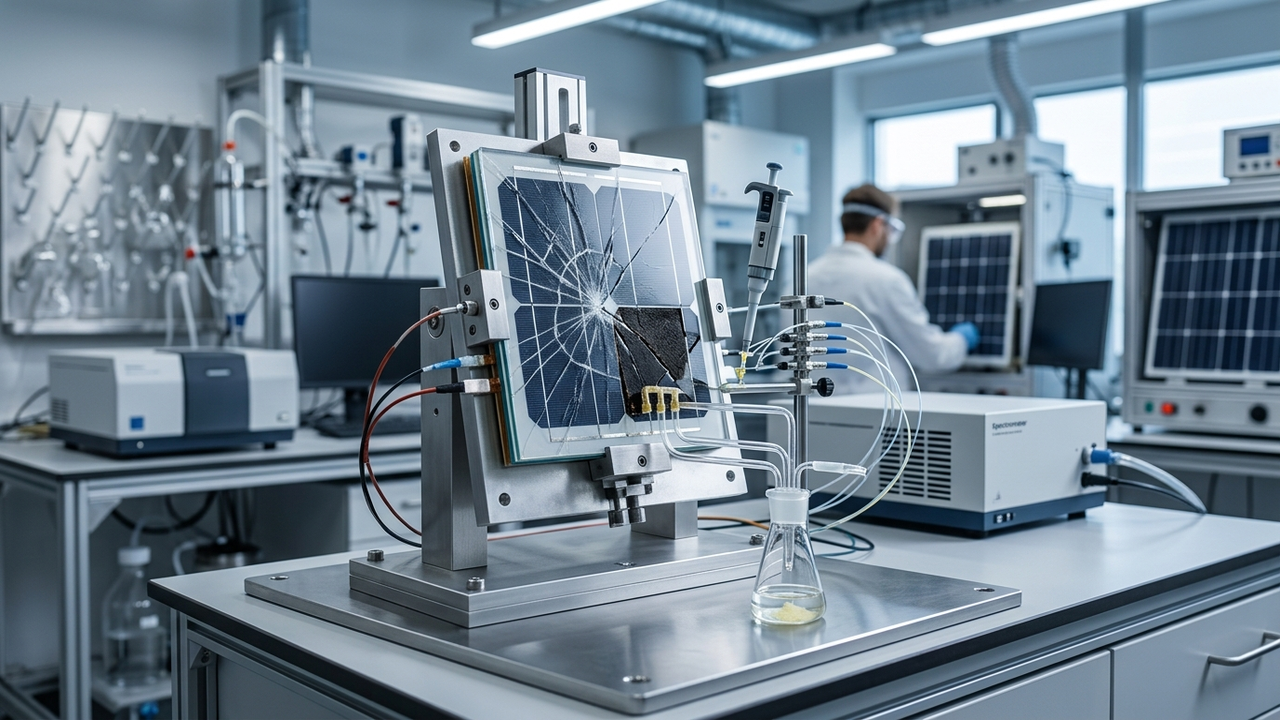
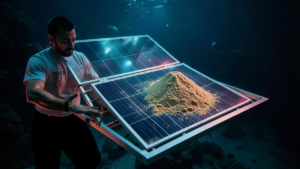
Groundbreaking research conducted in Switzerland has demonstrated that lead leakage from a roof-mounted, laminated perovskite solar cell module damaged by hail was exceptionally low, registering just 0.07% over a nine-month observation period. This result represents a dramatic improvement compared to the 4.81% lead release from unlaminated laboratory devices tested under identical conditions, strongly indicating significant advancements in the environmental safety of perovskite solar cells.
Technical / Clinical Details
The study focused on a perovskite solar cell module that was actually installed on a roof in Switzerland and subsequently subjected to hail damage. The measured lead leakage of 0.07% suggests that the release of lead into the environment, even under physically damaged conditions, is effectively suppressed by advanced lamination (encapsulation) technologies. These encapsulation techniques are designed not only to protect the perovskite material from degradation due to moisture and air but also to minimize the outflow of hazardous substances in the event of physical damage. When contrasted with the high leakage rate of 4.81% observed in earlier unlaminated laboratory devices, it becomes clear that lead containment technologies in laminated, commercial-grade modules have undergone a significant leap forward. This effectively demonstrates that concerns regarding the environmental impact of lead can be substantially mitigated through robust technical solutions.
Background & Context
Perovskite solar cells hold immense promise as a next-generation photovoltaic technology due to their high power conversion efficiency and potential for low-cost manufacturing. However, the toxicity of lead, a key constituent in many perovskite formulations, has been a primary concern. This has driven extensive research into lead-free perovskites, while simultaneously making the development of stringent containment technologies for lead-containing perovskites indispensable. The findings of this study reinforce confidence within the industry that even existing lead-containing perovskite solar cells can have their environmental risks effectively managed through appropriate design and manufacturing processes, thus bolstering their path to commercialization.
Strategic Significance & Outlook
This research demonstrating significantly reduced lead leakage is critically important for allaying environmental safety concerns and promoting wider market adoption of perovskite solar cells. Safety is a paramount selection criterion, particularly when considering installations in residential and public areas, such as in building-integrated photovoltaics (BIPV). This technical advancement could positively influence regulatory approval processes, potentially accelerating the market introduction of perovskite solar cells. For investors and policymakers, this data provides compelling justification for continued investment and support in perovskite technology, paving the way for more sustainable and high-performance solar energy solutions in the future.
Source: https://energiesmedia.com/built-harvest-light-record-efficiency-perovskite/
Get our weekly technology intelligence — free
Receive an infographic that lets you judge at a glance whether each field’s analysis report is worth reading.
Subscribe Free — Weekly Tech Intelligence
By subscribing, you’ll receive Troy-Technical’s weekly technology intelligence newsletter.
- Your email and selected fields are used only to deliver the newsletter.
- We never share your information with third parties.
- You can unsubscribe anytime via the link in each email.
See our Privacy Policy for details.
Takes about a minute · Unsubscribe anytime



Comments