Key Findings
Synthego has demonstrated that utilizing CRISPR gene-editing technology can significantly boost the proliferation efficiency of cell lines in cultivated meat production, offering a potential solution to major challenges such as high production costs and bioreactor scalability. This highlights a crucial technological breakthrough for the commercialization of cultivated meat.
Technical & Clinical Details
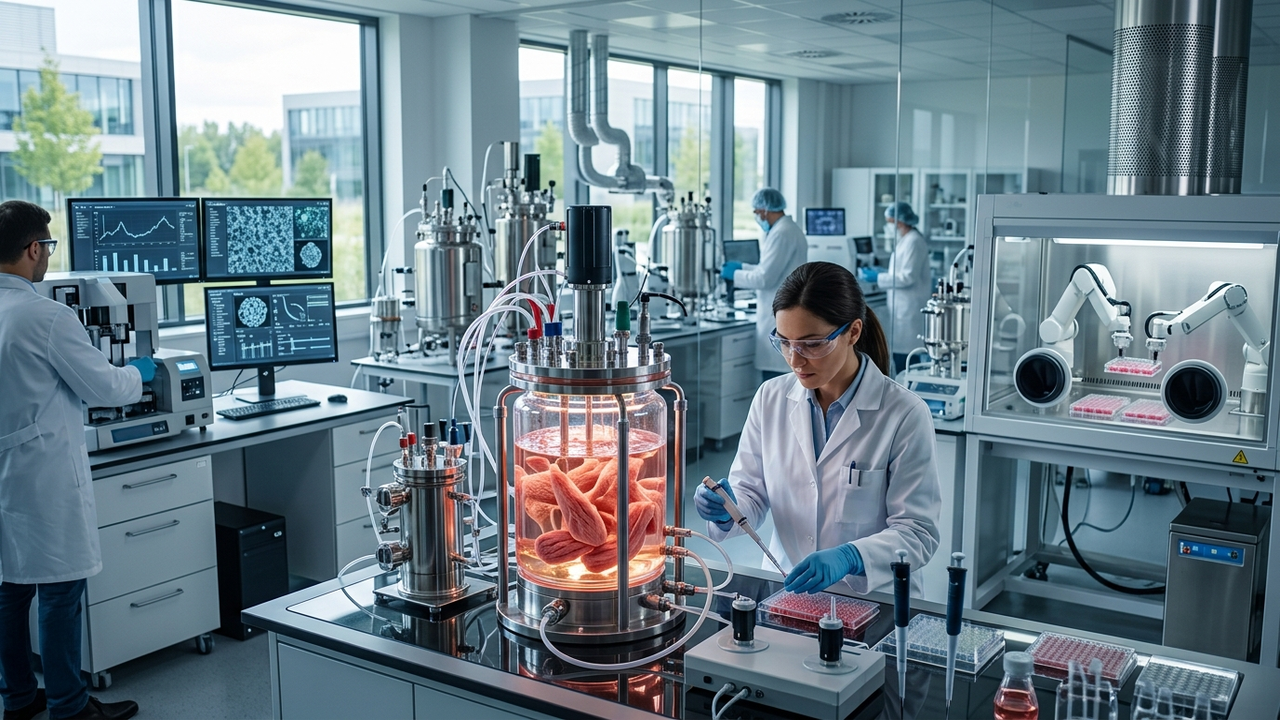
Cultivated meat production involves growing animal cells in a sterile environment to form muscle tissue, drastically reducing land, water, and feed usage compared to traditional livestock farming, making it a sustainable and environmentally friendly food source. However, efficient cell proliferation, the cost of culture media, and maintaining uniform cell growth in large-scale bioreactors have been major industrial hurdles.
- CRISPR’s Contribution: Synthego has developed strategies using CRISPR genome editing to target specific genes, thereby improving cell growth rates and increasing cell viability. This enables the production of more meat cells with fewer raw materials and reduced time.
- Cost Reduction & Scalability: Enhanced cell proliferation efficiency allows for a reduction in the use of expensive culture media and maximizes bioreactor capacity. This is vital for lowering cultivated meat manufacturing costs and bringing product prices to a level affordable for consumers.
- Comparison to Traditional Meat: Cultivated meat offers precise control over fat and muscle composition, enabling the optimization of nutritional value and the development of products with specific health benefits. It also avoids antibiotic use and animal welfare concerns.
Background & Industry Context
The cultivated meat industry is seen as a significant solution for global food security, driven by sustainability and ethical considerations. Beyond technical hurdles, consumer awareness, acceptance, and regulatory approval processes are key factors influencing its widespread adoption. While the US FDA has approved the safety of some cultivated meat products, enabling limited sales, global expansion requires country-specific approvals.
Strategic Significance & Outlook
The introduction of advanced genome-editing tools like CRISPR is a critical step towards overcoming manufacturing challenges and enhancing the market competitiveness of cultivated meat. As further technological innovation and cost optimization progress, cultivated meat could achieve prices and quality comparable to traditional meat products, potentially appearing on global dinner tables soon. This innovation promises to fundamentally redefine the meat industry landscape.
Source: https://www.synthego.com/blog/lab-grown-meats/
Get our weekly technology intelligence — free
Receive an infographic that lets you judge at a glance whether each field’s analysis report is worth reading.
Subscribe Free — Weekly Tech Intelligence
By subscribing, you’ll receive Troy-Technical’s weekly technology intelligence newsletter.
- Your email and selected fields are used only to deliver the newsletter.
- We never share your information with third parties.
- You can unsubscribe anytime via the link in each email.
See our Privacy Policy for details.
Takes about a minute · Unsubscribe anytime



Comments