Key Findings
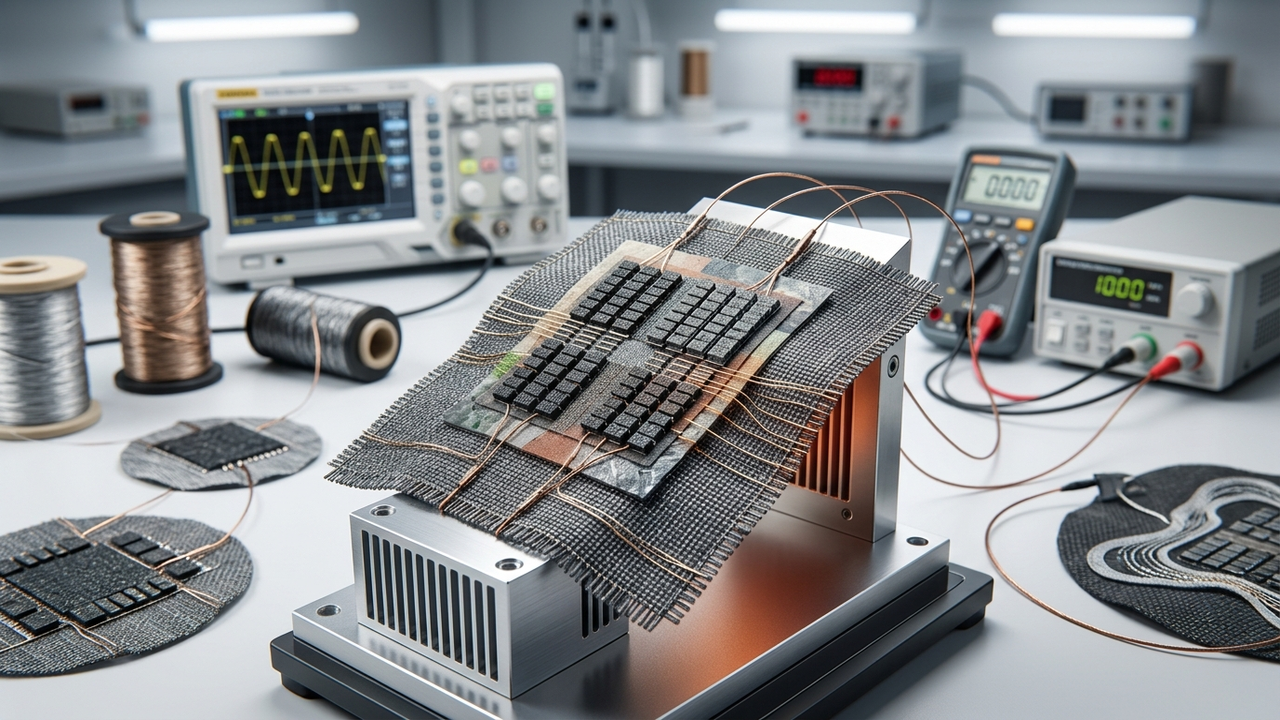
A proof-of-concept prototype for a flexible, lightweight, and sustainable thermoelectric voltage generator has been successfully fabricated from upcycled electronic and textile waste. This innovative device is capable of generating a maximum RMS open-circuit voltage of 180.75 mV from a mere 5.82 K body-to-ambient temperature difference, while demonstrating robust mechanical stability, retaining high voltage output even after numerous deformation cycles. This achievement marks a significant step towards low-cost, circular smart textile electronics.
Technical / Clinical Details
The prototype utilizes copper and aluminum foils repurposed from discarded phone batteries as thermoelectric materials, with apparel cutting waste serving as the substrate. Through ingenious material design and integration, a thermoelectric module was constructed that can efficiently convert minute temperature gradients into electrical energy. Specifically, it successfully and stably generated a maximum RMS open-circuit voltage of 180.75 mV at a small temperature difference of 5.82 K. This level is sufficient for powering wearable devices, potentially reducing or even eliminating the need for frequent battery changes. Being built on a flexible textile substrate, its performance does not degrade even after repeated bending and stretching, making it ideal for integration into smart clothing and medical sensors.
Background & Context
Modern society faces pressing challenges from the increasing volume of electronic waste (E-waste) and textile waste. Effective reuse of these wastes is critically important for both environmental protection and sustainable resource utilization. Concurrently, the wearable electronics market is experiencing rapid growth, driving demand for compact, flexible, and self-powered devices. This research offers a solution that simultaneously addresses these two major challenges: the waste problem and the need for sustainable energy supply.
Strategic Significance & Outlook
Thermoelectric voltage generators derived from upcycled waste will have a significant impact on smart textile electronics, wearable healthcare devices, and IoT sensors. This technology has the potential to reduce environmental impact throughout the product lifecycle and establish new circular economy models. In the future, self-powered smartwatches, medical patches, and even energy harvesting systems integrated into buildings or vehicles might be realized based on this technology. Investors and manufacturers should recognize the new market opportunities created by environmentally conscious technological innovation and the long-term value of sustainability.
Source: https://www.mdpi.com/2073-4360/18/9/1345
Get our weekly technology intelligence — free
Receive an infographic that lets you judge at a glance whether each field’s analysis report is worth reading.
Subscribe Free — Weekly Tech Intelligence
By subscribing, you’ll receive Troy-Technical’s weekly technology intelligence newsletter.
- Your email and selected fields are used only to deliver the newsletter.
- We never share your information with third parties.
- You can unsubscribe anytime via the link in each email.
See our Privacy Policy for details.
Takes about a minute · Unsubscribe anytime









Comments