
Key Findings
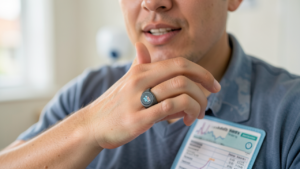
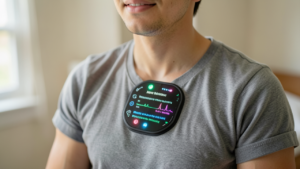
The integration of wearable biosensors with artificial intelligence (AI) is revolutionizing the healthcare landscape, empowering individuals to continuously monitor their health status in real-time. Wearable biosensors are capable of uninterruptedly measuring crucial physiological and biochemical parameters, such as heart rate, body temperature, blood oxygen saturation (SpO2), blood glucose levels, and physical activity, through non-invasive or minimally invasive means. Concurrently, AI technology efficiently processes and analyzes the vast and complex datasets generated by these devices, automatically producing meaningful clinical insights regarding potential health risks, early disease indicators, and individual treatment responses. This synergistic effect is accelerating the realization of both preventive and personalized medicine.
Technical / Clinical Details
Wearable biosensors incorporate a wide array of sensor technologies, including electrochemical sensors (for glucose, lactate, electrolytes, etc.), optical sensors (for heart rate, SpO2), accelerometers (for activity, sleep), and temperature sensors. These sensors collect data from sweat, the skin surface, or interstitial fluid. The collected data is then transmitted wirelessly, often via Bluetooth or Wi-Fi, to smartphones or cloud platforms, where AI algorithms perform the analysis. AI leverages machine learning (ML) models, such as deep learning and support vector machines, to identify deviations from an individual’s baseline, compare patterns to specific disease signatures, and predict future health events. For example, AI can identify early risks of cardiovascular disease from subtle changes in heart rate variability or sleep patterns, or detect mental health issues from a combination of reduced activity and mood data. This enables clinicians to make more objective and personalized, data-driven decisions.
Background & Context
Contemporary society faces significant challenges from the increasing prevalence of chronic diseases, an aging population, and soaring healthcare costs. Traditional healthcare models have predominantly focused on reactive interventions once a disease manifests, but there is a growing recognition of the importance of prevention and early intervention. Wearable biosensors empower patients to track their health data daily and receive feedback to improve health behaviors. The combination with AI imbues this data with intelligence, transforming it from mere raw numbers into actionable insights. This synergy is a key driving force behind the advancements in remote patient monitoring, telehealth, and precision medicine. Collaboration between technology companies and healthcare institutions is deepening, and regulatory frameworks concerning data privacy and security are evolving to support this transformative shift.
Strategic Significance & Outlook
The fusion of wearable biosensors and AI is poised to become an indispensable element in shaping the future of healthcare. It is anticipated that even more precise and multifunctional sensors will be developed, expanding the range of biomarkers that can be diagnosed. AI models will be integrated with individual genetic information, environmental factors, and lifestyle data to provide more comprehensive and personalized health risk predictions and preventive strategies. This is expected to prevent the onset of diseases and extend the duration for which patients can lead healthy, active lives. Furthermore, this technology will contribute to streamlining data collection in clinical trials and objective evaluation of treatment efficacy, potentially opening new frontiers in medical research, globally enhancing health outcomes and optimizing healthcare resource utilization.
Source: https://ijhespub.org/index.php/pub/article/view/214
Get our weekly technology intelligence — free
Receive an infographic that lets you judge at a glance whether each field’s analysis report is worth reading.
Subscribe Free — Weekly Tech Intelligence
By subscribing, you’ll receive Troy-Technical’s weekly technology intelligence newsletter.
- Your email and selected fields are used only to deliver the newsletter.
- We never share your information with third parties.
- You can unsubscribe anytime via the link in each email.
See our Privacy Policy for details.
Takes about a minute · Unsubscribe anytime






Comments