
Key Findings
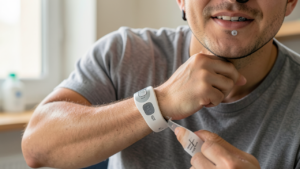
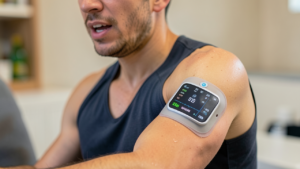
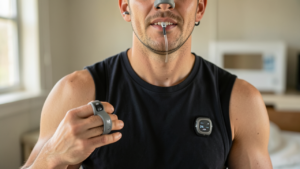
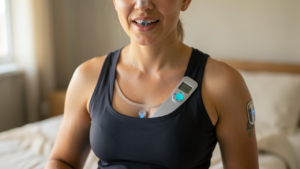
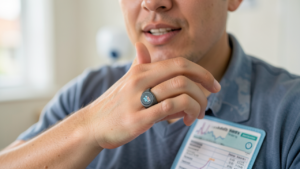
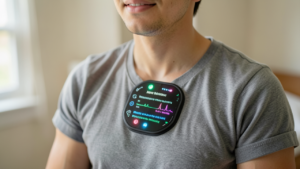
As of September 2026, the U.S. Food and Drug Administration (FDA) has explicitly reaffirmed that no non-invasive glucose monitoring devices have received its approval, issuing a public warning to consumers against purchasing smartwatches or smart rings that claim to measure blood sugar without puncturing the skin. This stance underscores the FDA’s stringent requirements for clinical efficacy in non-invasive blood glucose sensing technologies.
Technical / Clinical Details
Current FDA standards mandate rigorous accuracy requirements for diabetes management devices. Non-invasive technologies have yet to achieve the sub-5% Mean Absolute Relative Difference (MARD) routinely demonstrated by established invasive Continuous Glucose Monitoring (CGM) devices. The MARD values for current non-invasive prototypes remain high, indicating a critical need for further technological innovation and stringent validation to establish clinical reliability. In parallel, Apple and Google are deploying wearable features that “infer” metabolic status by combining various physiological data—such as heart rate, activity levels, and sleep patterns—rather than direct glucose measurement. While Apple has secured FDA 510(k) clearance for its blood pressure monitoring feature, these inferential capabilities are typically positioned as “wellness” products, explicitly not for diagnostic purposes.
Background & Context
With a globally escalating number of diabetes patients, the demand for easier, pain-free blood glucose monitoring methods is exceptionally high. Non-invasive glucose monitoring has long been considered the “holy grail” in diabetes care, yet its realization has proven immensely challenging. Numerous companies have previously unveiled non-invasive blood glucose measuring devices, none of which have successfully gained FDA approval. The FDA’s warning serves to protect consumers and prevent misinformation, emphasizing that current non-invasive technologies cannot yet replace clinically validated devices for diabetes management.
Strategic Significance & Outlook
Non-invasive blood glucose monitoring remains an active area of research and development, with future breakthroughs expected to dramatically improve MARD values. Research leveraging optical sensors, microwave technologies, and electrochemical approaches is ongoing. However, it is likely to take several more years before clinically effective and FDA-approved non-invasive devices become widely available. In the interim, companies like Apple and Google are anticipated to continue evolving their inferential wearable devices, focusing on health enhancement and lifestyle management rather than direct medical diagnosis.
Source: https://sahha.ai/blog/non-invasive-sensing-vs-inference-wearables/
Get our weekly technology intelligence — free
Receive an infographic that lets you judge at a glance whether each field’s analysis report is worth reading.
Subscribe Free — Weekly Tech Intelligence
By subscribing, you’ll receive Troy-Technical’s weekly technology intelligence newsletter.
- Your email and selected fields are used only to deliver the newsletter.
- We never share your information with third parties.
- You can unsubscribe anytime via the link in each email.
See our Privacy Policy for details.
Takes about a minute · Unsubscribe anytime


Comments