
Key Findings
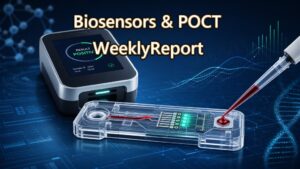
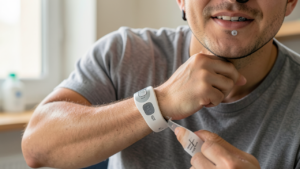
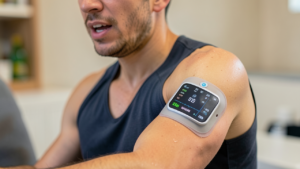
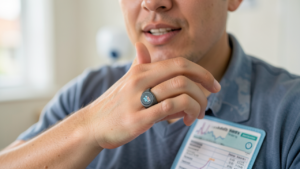
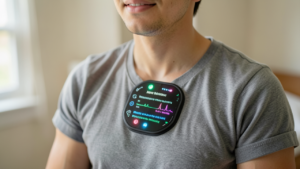
In 2026, wearable biosensors are fundamentally transforming the landscape of personal health monitoring, marking a distinct paradigm shift from intermittent clinical examinations to continuous physiological recording. These advanced devices possess the capability to seamlessly track a wide array of health conditions in real-time, including blood glucose levels, exercise recovery metrics, hydration status, indicators of inflammatory flares, and even early signs of cardiac congestion. Their form factors are highly diverse, ranging from ubiquitous smartwatches and chest straps to adhesive skin patches and biosensors seamlessly integrated into smart textiles.
Technical / Clinical Details
This technological revolution is underpinned by several specific advancements. For instance, a sweat lactate sensor has achieved an impressively low detection limit of 0.135 mM, enabling precise monitoring of athletic performance and recovery. Continuous ketone monitors are now capable of tracking beta-hydroxybutyrate levels for an extended period of 14 days, providing crucial data for diabetes management and diabetic ketoacidosis (DKA) prevention, as well as supporting ketogenic diet adherence. Furthermore, potentiometric microneedle arrays can non-invasively measure sodium concentrations in interstitial fluid within a range of 5-200 mM, offering valuable insights into fluid balance and kidney function. These biosensors employ electrochemical or optical detection principles to deliver highly accurate and reliable measurements of specific biomolecules.
Background & Context
Traditionally, health monitoring has relied on periodic blood tests and clinical examinations in healthcare settings, which can be burdensome for patients and limit the ability to capture dynamic changes in health status. The advent of wearable biosensors has democratized health data collection, allowing for continuous monitoring within an individual’s daily life, supporting early anomaly detection and proactive disease management. The rapid growth in this field is propelled by advancements in materials science, particularly flexible and nanomaterials, miniaturization techniques, and the increasing sophistication of artificial intelligence (AI) for data interpretation. A heightened focus on preventive healthcare and the rising prevalence of chronic diseases further fuel the market demand for these innovative solutions.
Strategic Significance & Outlook
Wearable biosensors are poised to continue their central role in personal health management. Future developments are expected to include the simultaneous measurement of an even broader spectrum of biomarkers, enhanced accuracy and long-term stability, and integration into more discreet or fully embedded forms within clothing. Further integration with AI will enable predictive analytics, transforming the vast amounts of collected data into actionable insights for personalized risk assessment and pre-emptive interventions, leading to what can be described as hyper-personalized preventive medicine. This not only promises to improve patient quality of life but also holds significant potential for reducing overall healthcare costs by preventing acute events and managing chronic conditions more effectively.
Source: https://www.azosensors.com/article.aspx?ArticleID=3354
Get our weekly technology intelligence — free
Receive an infographic that lets you judge at a glance whether each field’s analysis report is worth reading.
Subscribe Free — Weekly Tech Intelligence
By subscribing, you’ll receive Troy-Technical’s weekly technology intelligence newsletter.
- Your email and selected fields are used only to deliver the newsletter.
- We never share your information with third parties.
- You can unsubscribe anytime via the link in each email.
See our Privacy Policy for details.
Takes about a minute · Unsubscribe anytime




Comments