Key Findings
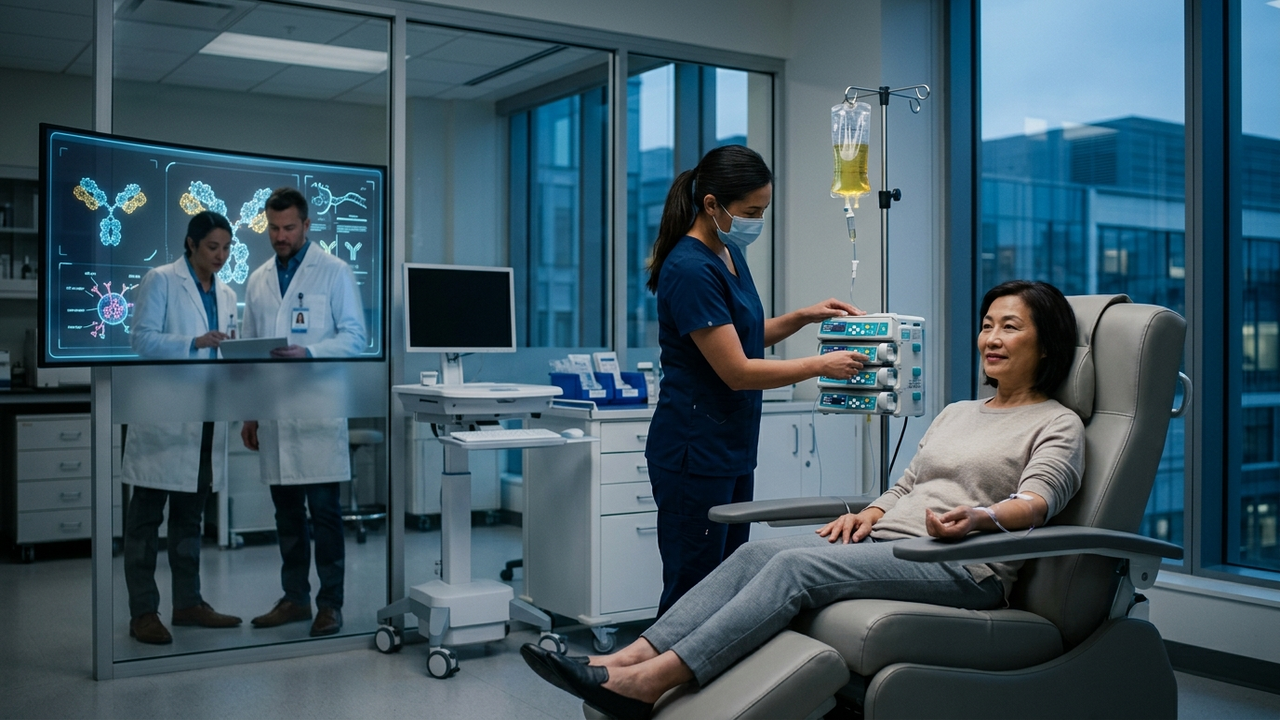
BigHat Biosciences announced the dosing of the first patient in a Phase 1 clinical trial for BHB810, a novel CDH17-directed VHH-Fc antibody-drug conjugate (ADC) developed using its AI-powered antibody design platform. This innovative therapeutic is being developed for gastric cancer and other advanced gastrointestinal tumors, engineered to combine potent anti-tumor activity with a favorable safety profile. This progression into clinical trials marks the first program to advance an AI-designed drug into human studies, underscoring the transformative potential of artificial intelligence in the drug discovery process.
Technical/Clinical Details
BHB810 is an ADC that couples a potent cytotoxic payload to a VHH-Fc antibody specifically designed to target CDH17, a cell adhesion molecule highly expressed in cancer cells. VHH (heavy chain-only antibodies) offer distinct advantages such as smaller size, improved tissue penetration, and superior stability compared to conventional antibodies. BigHat’s AI platform leverages vast amounts of antibody sequence and structural data to rapidly identify and design antibody candidates with optimized binding characteristics, stability, and manufacturability for specific target antigens. The Phase 1 trial is designed to evaluate the safety, tolerability, pharmacokinetics, and preliminary anti-tumor activity of BHB810 in patients with advanced gastric and other gastrointestinal cancers.
Background & Context
Gastric cancer remains one of the leading cancers worldwide, often associated with limited treatment options and often poor prognoses in advanced stages. CDH17 has emerged as a promising therapeutic target, showing overexpression in gastrointestinal cancers such as gastric and colorectal cancer. AI-driven drug discovery is garnering significant interest in the pharmaceutical industry due to its potential to identify and optimize drug candidates more rapidly and efficiently than traditional empirical, trial-and-error approaches. BigHat Biosciences’ entry of BHB810 into clinical trials is a crucial example of AI technology expanding its influence from early-stage to later-stage drug pipelines, validating its potential to accelerate therapeutic development.
Strategic Significance & Outlook
The results of the BHB810 Phase 1 trial will be pivotal for the future trajectory of AI-designed ADCs. Favorable safety and preliminary efficacy data would serve as a powerful validation that AI-powered antibody design can transcend previous drug discovery limitations and generate groundbreaking therapeutics for difficult-to-treat diseases. Should subsequent trials demonstrate significant clinical benefit for patients with advanced gastrointestinal cancers, BHB810 could become a paradigm for AI-driven drug discovery, further accelerating investment and development across the field. This advancement represents a significant step towards the realization of patient-centric, personalized medicine on a global scale.
Get our weekly technology intelligence — free
Receive an infographic that lets you judge at a glance whether each field’s analysis report is worth reading.
Subscribe Free — Weekly Tech Intelligence
By subscribing, you’ll receive Troy-Technical’s weekly technology intelligence newsletter.
- Your email and selected fields are used only to deliver the newsletter.
- We never share your information with third parties.
- You can unsubscribe anytime via the link in each email.
See our Privacy Policy for details.
Takes about a minute · Unsubscribe anytime









Comments