Key Findings
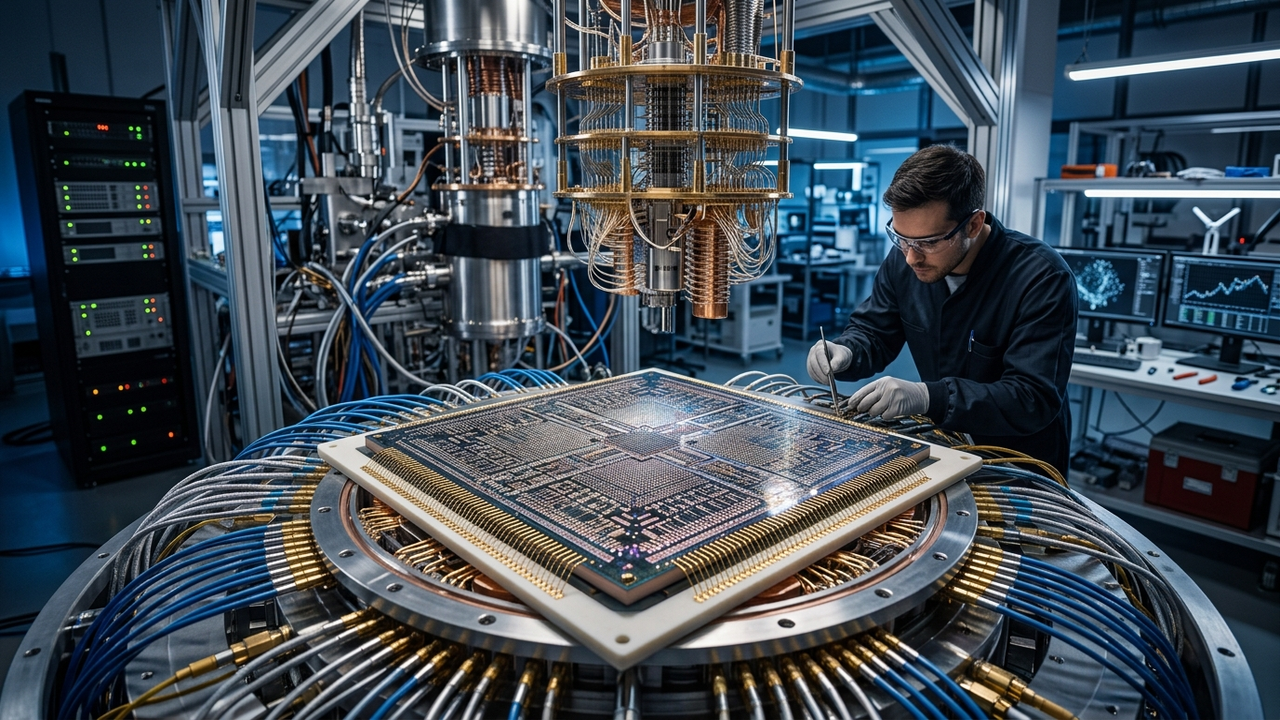
Diraq, a quantum computing company, has released an aggressive technological roadmap aiming to integrate over 2 million physical qubits on a single silicon chip by 2031. This strategy capitalizes on technologies compatible with existing semiconductor manufacturing processes, with the goal of creating massively parallel quantum computing processors. Such a large-scale integration effort could overcome current physical constraints in qubit technology, potentially paving the way for universal fault-tolerant quantum computers.
Technical Details
Diraq’s approach centers on silicon-based qubits (quantum dots), which offer high compatibility with modern CMOS semiconductor fabrication techniques, allowing for mass production using existing infrastructure. The roadmap outlines specific technical milestones for improving qubit density and control. Over 2 million physical qubits are considered necessary for efficient quantum error correction and the generation of practical logical qubits, which would dramatically reduce error rates and enable reliable execution of complex computations. The company also mentions novel designs for enhanced qubit interaction and integration with cooling systems.
Background & Context
Scalability is widely recognized as one of the primary challenges in the quantum computing industry. While many companies target processors with hundreds to thousands of qubits, Diraq’s objective of 2 million qubits is exceptionally ambitious. Silicon-based approaches are considered to have high scaling potential compared to other modalities like superconducting circuits or ion traps, with major semiconductor players like Intel and Qualcomm also investing heavily in this area. Diraq’s roadmap sets a new benchmark in this competitive field, raising expectations for practical quantum applications.
Strategic Significance & Outlook
Should Diraq achieve this roadmap, it would fundamentally transform the quantum computing landscape. A processor of 2 million qubits would provide a powerful tool for solving complex problems currently intractable for classical computers in fields such as drug discovery, materials science, financial modeling, and artificial intelligence. This technology also has the potential to enable cost-effective, large-scale manufacturing of quantum hardware, accelerating the democratization of quantum computing. Diraq’s progress will be a critical factor in shaping the future direction of quantum technology.
Source: https://quantumzeitgeist.com/diraq-aims-millions-qubits-single/
Get our weekly technology intelligence — free
Receive an infographic that lets you judge at a glance whether each field’s analysis report is worth reading.
Subscribe Free — Weekly Tech Intelligence
By subscribing, you’ll receive Troy-Technical’s weekly technology intelligence newsletter.
- Your email and selected fields are used only to deliver the newsletter.
- We never share your information with third parties.
- You can unsubscribe anytime via the link in each email.
See our Privacy Policy for details.
Takes about a minute · Unsubscribe anytime






Comments