Key Findings
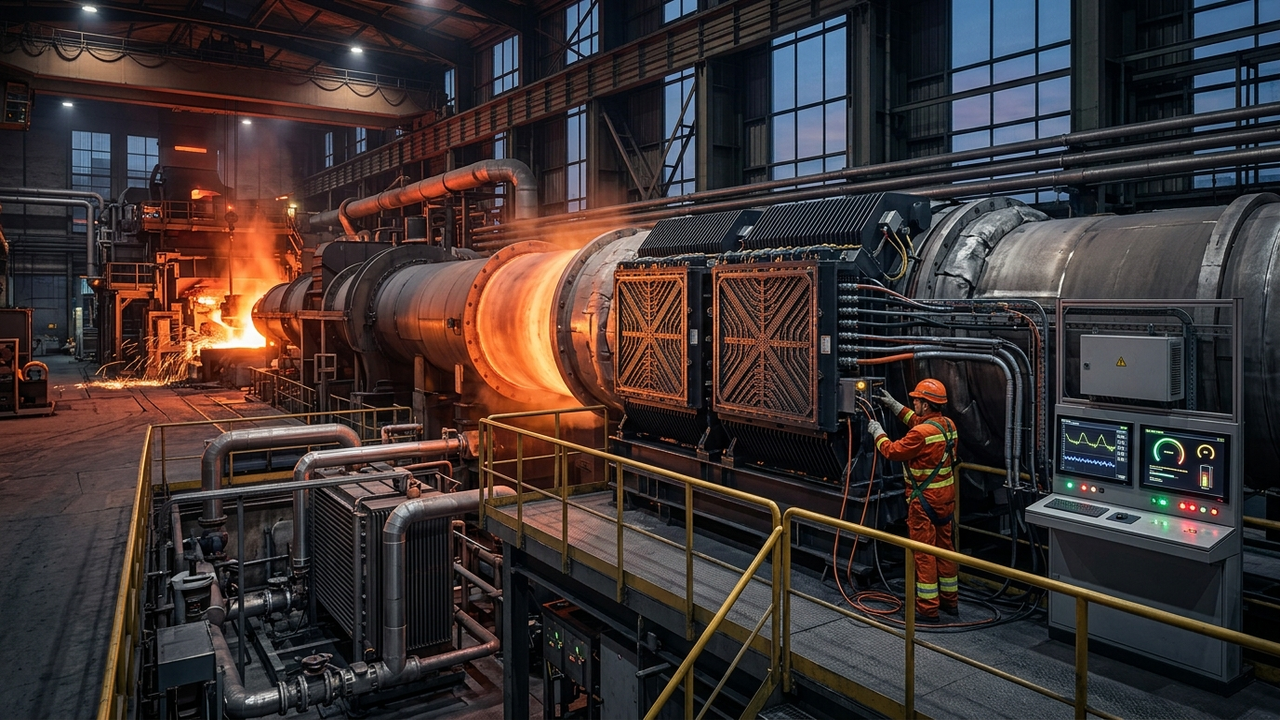
A research team has developed a novel graphene-composite thermoelectric material and demonstrated its capability to efficiently convert industrial waste heat into electrical power. This innovative material successfully achieves significantly improved thermoelectric conversion efficiency compared to conventional thermoelectric materials by simultaneously attaining excellent thermal and electrical conductivity. Notably, demonstration tests conducted in high-temperature industrial environments, such as steel mills and chemical plants, have been successfully completed, confirming its high practical utility.
Technical / Clinical Details
Thermoelectric materials are solid-state devices that convert a temperature difference directly into electricity, holding promise as a clean power generation technology for recovering unused waste heat energy. The thermoelectric conversion efficiency of a material is enhanced by balancing three factors at a high level: a high Seebeck coefficient, high electrical conductivity, and low thermal conductivity. However, these three factors are interdependent, making simultaneous optimization extremely challenging. The graphene-enhanced thermoelectric material developed in this research overcomes this challenge by uniformly dispersing graphene nanosheets at a nanoscale within an existing thermoelectric semiconductor matrix. Graphene, with its excellent electrical conductivity, high thermal conductivity, and very high surface area, dramatically improves the properties of composite materials. Specifically, the introduction of graphene succeeded in controlling electron scattering to enhance electrical conductivity while simultaneously promoting phonon scattering (phonons are elementary excitations that transmit heat) to reduce thermal conductivity. As a result, it is reported that the thermoelectric conversion efficiency has improved by several to tens of percent compared to conventional thermoelectric materials, meaning more electricity can be generated from the same temperature difference. In practical industrial demonstration tests, it was shown that stable power could be supplied by installing the material on surfaces like steel mill exhaust ducts or chemical reactor surfaces, confirming its robustness and reliability.
Background & Context
Waste heat from industrial activities accounts for a significant portion of global energy consumption, much of which is released into the atmosphere unused. This represents not only energy loss but also contributes to CO2 emissions, a cause of global warming. Waste heat recovery technology is crucial for both improving energy efficiency and reducing greenhouse gas emissions, and its development is strongly demanded amid tightening international environmental regulations. Thermoelectric power generation offers advantages such as no moving parts, easy maintenance, and direct power generation, but its widespread adoption has been limited due to challenges in conversion efficiency and cost. This research, applying cutting-edge material graphene, represents a major step towards solving these challenges.
Strategic Significance & Outlook
Graphene-enhanced thermoelectric materials hold the potential to significantly contribute to sustainable industrial processes by converting industrial waste heat into clean electricity. Adoption is anticipated in core industries that generate large amounts of heat, such as steel, cement, glass, and chemical manufacturing, supporting reductions in energy costs and achievement of CO2 emission targets. Future efforts will focus on establishing large-scale manufacturing techniques, further improving conversion efficiency, and evaluating adaptability to diverse industrial environments. In the long term, it is projected to contribute to the realization of ‘zero-emission factories’ by integrating entire plants into smart energy systems and maximizing waste heat utilization, thereby becoming a crucial foundational technology for innovation in the energy industry.
Source: #
Get our weekly technology intelligence — free
Receive an infographic that lets you judge at a glance whether each field’s analysis report is worth reading.
Subscribe Free — Weekly Tech Intelligence
By subscribing, you’ll receive Troy-Technical’s weekly technology intelligence newsletter.
- Your email and selected fields are used only to deliver the newsletter.
- We never share your information with third parties.
- You can unsubscribe anytime via the link in each email.
See our Privacy Policy for details.
Takes about a minute · Unsubscribe anytime








Comments