
Key Findings
Research published in National Science Review (Oxford Academic) has revealed that graphene fibers (GFs) are a critical driving force in the technological roadmap from fiber materials to fiber electronics. Due to their exceptional properties, GFs enable innovative advancements across a wide range of applications, from energy harvesting and advanced thermal management to, notably, enhancing the performance of biochemical sensors.
Technical & Clinical Details
Graphene fibers (GFs) are gaining significant attention as a core material for next-generation fiber electronics due to their superior characteristics, which include:
- **Exceptional Carrier Mobility**: This enables high-speed electron transport, improving sensor response time and efficiency.
- **High Specific Surface Area**: Provides numerous active sites, enhancing the immobilization of biomolecules and boosting detection sensitivity.
- **Chemical Inertness**: Ensures stable performance even under harsh conditions, thereby improving sensor durability and long-term reliability.
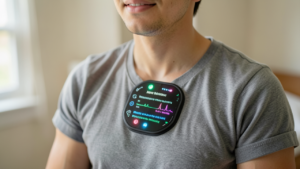
These properties allow GFs to function as efficient signal transducers in various fiber devices. Particularly in the field of biochemical sensors, the atomic-scale interface of GFs directly improves detection limits. For instance, in wearable sensors, GFs effectively mitigate signal attenuation in complex sweat environments (e.g., high salt content, low pH, proteins), enabling stable long-term data acquisition. This resolves a major bottleneck for the long-term reliability of integrated fiber electronic systems.
Background & Context
With the proliferation of wearable devices and the increasing demand for healthcare monitoring, there is a strong need for fiber-based electronics that combine flexibility, comfort, durability, and high performance. Traditional rigid electronic components have limitations in terms of conformability to the body and washability. Two-dimensional materials like graphene have been considered ideal candidates for fiber electronics due to their excellent electrical and mechanical properties, but challenges remained in fabricating them into actual fiber forms and maintaining stability in biological environments. The development of GFs overcomes these challenges, significantly impacting areas like smart textiles and electronic clothing.
Strategic Significance & Outlook
The technology roadmap for graphene fiber-based electronics points towards the realization of highly functional wearable devices. In the future, biochemical sensors using GFs are expected to be utilized for non-invasive detection of a wide range of biomarkers, including continuous glucose monitoring, heart rate, sweat electrolytes, and stress hormones. Furthermore, integration with energy harvesting capabilities could lead to self-powered wearable sensors. This technology will bring innovation to fields such as personalized medicine, sports science, and occupational safety, playing a central role in improving people’s quality of life. In the long term, these fiber electronic systems could evolve into ‘smart skin’ devices that collaborate with AI to enable more advanced health prediction and intervention.
Source: https://academic.oup.com/nsr/article/13/16/nwag368/8707251
Get our weekly technology intelligence — free
Receive an infographic that lets you judge at a glance whether each field’s analysis report is worth reading.
Subscribe Free — Weekly Tech Intelligence
By subscribing, you’ll receive Troy-Technical’s weekly technology intelligence newsletter.
- Your email and selected fields are used only to deliver the newsletter.
- We never share your information with third parties.
- You can unsubscribe anytime via the link in each email.
See our Privacy Policy for details.
Takes about a minute · Unsubscribe anytime








Comments