Key Findings
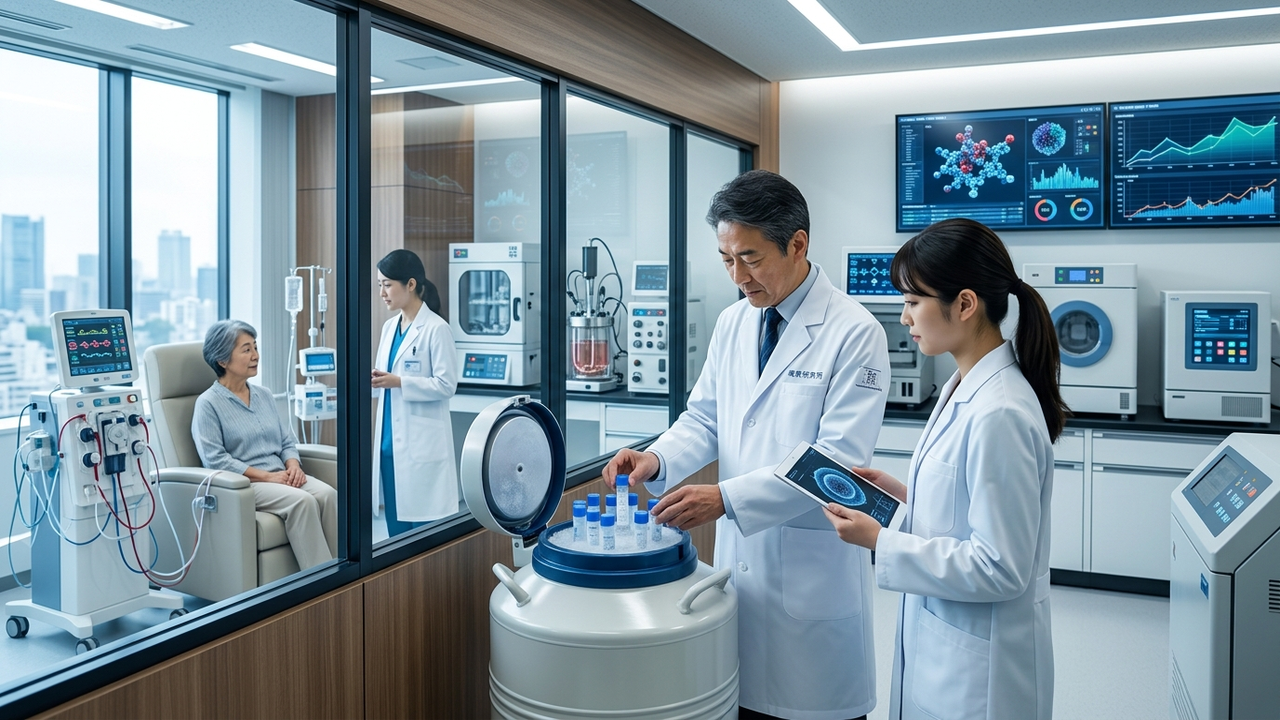
Japan boasts several advanced stem cell therapy clinics, including prominent centers like Cell Grand Clinic and Clinique Haru Osaka Umeda, which provide regenerative medicine solutions for a wide array of conditions such as joint and musculoskeletal disorders, diabetes, and Parkinson’s disease. These facilities operate under the stringent regulatory oversight of the Ministry of Health, Labour and Welfare (MHLW), primarily utilizing GMP-certified cell processing facilities for autologous mesenchymal stem cell (MSC) and exosome therapies. A distinguishing characteristic of these advanced treatments is their high cost, with fees typically ranging from $8,000 to $45,000 per session.
Technical / Clinical Details
In Japanese stem cell therapy clinics, the prevailing approach involves autologous transplantation, where mesenchymal stem cells (MSCs) are harvested from the patient’s own body, expanded in culture, and then administered to the affected area. MSCs are believed to contribute to damaged tissue repair, inflammation suppression, and tissue regeneration due to their multipotency and immunomodulatory properties. The range of target diseases is extensive, spanning chronic musculoskeletal conditions like osteoarthritis and spinal disorders, diabetic complications, and neurodegenerative diseases such as Parkinson’s disease, with ongoing research expanding their applications. Cell processing is conducted in GMP-certified facilities, ensuring strict quality control standards for cell safety, purity, and potency. Each clinic customizes treatment plans according to the patient’s symptoms and needs, proceeding with treatment after thorough counseling and informed consent.
Background & Context
In 2014, Japan implemented the “Act on Securing Safety of Regenerative Medicine, etc.” (Regenerative Medicine Safety Assurance Act), establishing a pioneering regulatory framework that balances rapid clinical application with strict oversight of regenerative medicine, including stem cell therapies. This legal system is considered one of the most advanced globally, introducing a framework for conditional and time-limited early approval once safety and efficacy are confirmed to a certain extent. This institutional support has propelled the development of stem cell research and clinical applications in Japan. However, the high costs associated with advanced cell processing technologies, specialized medical teams, and rigorous quality control processes contribute to the high treatment fees, which in turn limits access to these therapies for a subset of patients.
Strategic Significance & Outlook
The field of stem cell therapy in Japan is poised for further technological innovation and clinical expansion under MHLW regulations. Future discussions will likely focus on optimizing treatment costs and expanding insurance coverage, alongside the critical establishment of stable supply chains and standardized manufacturing processes for MSCs and exosomes. Furthermore, the practical application of allogeneic (third-party donor-derived) cell therapies and iPSC (induced Pluripotent Stem Cell)-derived cell therapies could lead to an expansion of eligible patients and a reduction in treatment costs. Continued advancements in research and development are expected to uncover new indications and enhance therapeutic efficacy, ensuring Japan maintains its leading role in the global regenerative medicine market. This will hopefully allow more patients to benefit from these innovative treatments.
Source: #
Get our weekly technology intelligence — free
Receive an infographic that lets you judge at a glance whether each field’s analysis report is worth reading.
Subscribe Free — Weekly Tech Intelligence
By subscribing, you’ll receive Troy-Technical’s weekly technology intelligence newsletter.
- Your email and selected fields are used only to deliver the newsletter.
- We never share your information with third parties.
- You can unsubscribe anytime via the link in each email.
See our Privacy Policy for details.
Takes about a minute · Unsubscribe anytime





Comments