Key Findings
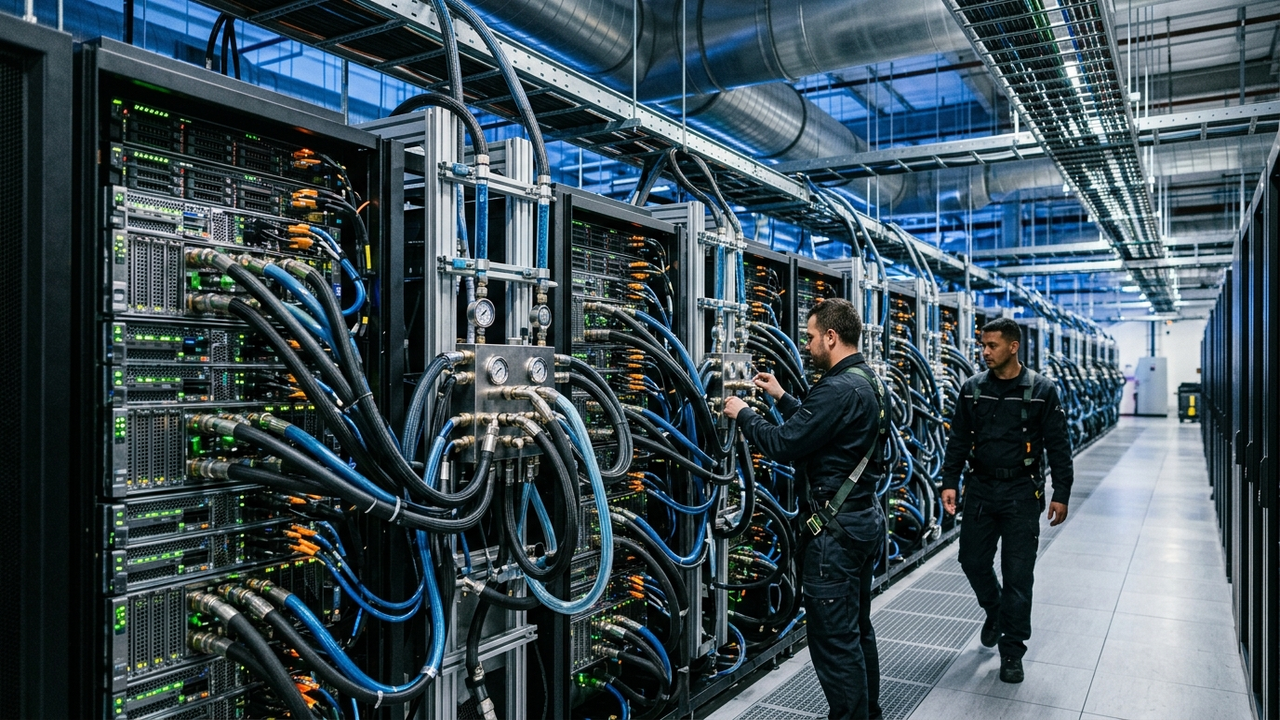
Amidst the explosive global growth of AI data centers, liquid cooling technology is rapidly becoming an indispensable infrastructure for next-generation data centers. This necessity is driven by the fact that high-density GPU clusters, such as NVIDIA’s GB200 NVL72 rack, consume over 130kW of power, generating vast amounts of heat that demand highly efficient thermal management.
Technical Details
In recent years, the integration density of GPUs has dramatically increased to boost the processing power for large language models (LLMs) and other complex AI workloads. NVIDIA’s latest GB200 NVL72 rack system exemplifies this trend, consuming over 130kW in a single rack and consequently generating substantial heat. In such high-heat-density environments, traditional air-cooling systems are insufficient, leading to performance degradation and increased risk of equipment failure. This situation has dramatically accelerated the demand for the following liquid cooling solutions:
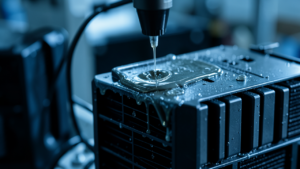
- Direct-to-Chip Liquid Cooling: This method involves bringing cooling fluid into direct contact with heat sources like CPUs and GPUs to efficiently remove heat.
- Immersion Cooling: Entire server racks are submerged in a non-conductive liquid, providing uniform and highly efficient cooling for the entire system.
- Coolant Distribution Units (CDUs): These systems manage the circulation, filtration, and temperature control of the cooling liquid, supporting the overall liquid cooling infrastructure of the data center.
- Rear-Door Heat Exchangers: Mounted on the back of server racks, these units exchange heat from exhausted air using a cooling liquid, preventing the rise of ambient data center temperatures.
These technologies not only enable the scaling of AI workloads but also enhance data center power efficiency and contribute to reduced operational costs.
Background & Context
The evolution of AI technology presents unprecedented challenges for data center design and operation. Specifically, the increasing computational density for AI training is pushing the limits of conventional data center cooling infrastructure, making thermal management a critical bottleneck. Liquid cooling technology, with its higher thermal conductivity compared to air cooling, is recognized as the most promising solution to efficiently dissipate larger amounts of heat. Leading global data center operators are accelerating investments in liquid cooling solutions to achieve both sustainability and high performance.
Strategic Significance & Outlook
The widespread adoption of liquid cooling technology will establish new standards for AI data center design and operation. This will enable further advancements in AI workload performance and efficiency, allowing for the development and deployment of larger and more complex AI models. Moreover, liquid cooling systems contribute to sustainable IT infrastructure by reducing data center energy consumption and carbon footprint. Moving forward, liquid cooling will become an essential strategic requirement for data center resilience and long-term operational sustainability, with its market size projected to expand even further.
Source: https://www.youtube.com/watch?v=CH7pcfobO2c
Get our weekly technology intelligence — free
Receive an infographic that lets you judge at a glance whether each field’s analysis report is worth reading.
Subscribe Free — Weekly Tech Intelligence
By subscribing, you’ll receive Troy-Technical’s weekly technology intelligence newsletter.
- Your email and selected fields are used only to deliver the newsletter.
- We never share your information with third parties.
- You can unsubscribe anytime via the link in each email.
See our Privacy Policy for details.
Takes about a minute · Unsubscribe anytime




Comments