Key Findings
ProLogium has officially commenced mass production of its advanced Gen 3.5 Lithium Ceramic Batteries (LCB) at its gigafactory located in Taiwan. These large-format cells have demonstrated exceptional performance, verified by multiple third-party organizations. According to TÜV test reports, the batteries achieve a gravimetric energy density of 381 Wh/kg and a volumetric energy density of 903 Wh/L, placing them among the top-tier performers in the current market. Notably, testing conducted by UL Solutions against China’s national standard GB/T 43568-2026 showed a mass loss of less than 0.05%, significantly below the strict 0.5% threshold for solid-state battery classification. This emphatically validates the high reliability and safety of ProLogium’s products as true solid-state batteries.
Technical and Manufacturing Details
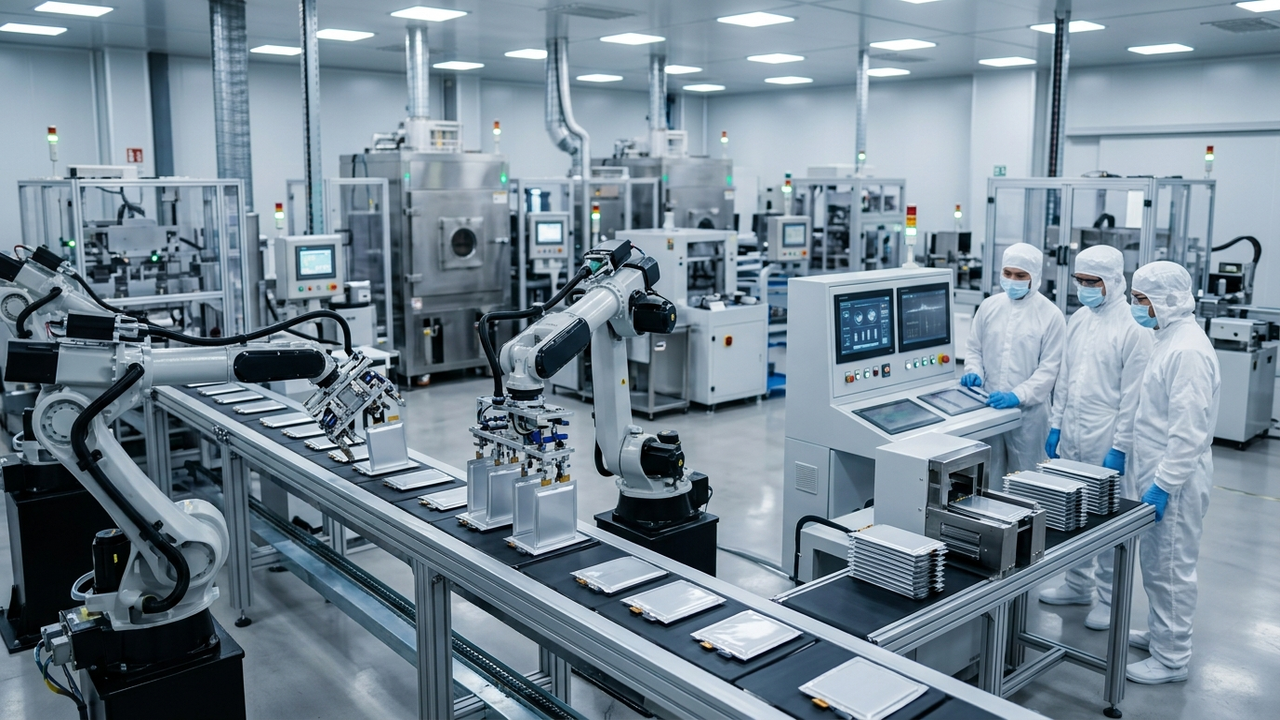
ProLogium’s Gen 3.5 LCBs are built upon proprietary lithium ceramic technology, leveraging solid electrolytes to establish advantages in both safety and energy density. The mass production facility is designed for gigawatt-hour (GWh) scale output and incorporates advanced automation and quality control systems. This ensures the consistent production of battery cells with stable quality and high energy density. Looking ahead, ProLogium is also progressing with the development of its Gen 4 LCB, which plans to introduce a fully inorganic superfluid electrolyte. The company states that its existing production lines can be adapted for Gen 4 with only approximately 10% modifications, underscoring the robustness of its technological roadmap.
Background and Industry Context
All-solid-state batteries are widely anticipated as a ‘game-changer’ for electric vehicles (EVs), promising extended driving range, faster charging times, and crucially, enhanced safety. Conventional liquid-electrolyte lithium-ion batteries carry risks of electrolyte leakage and thermal runaway, whereas solid-state batteries, by utilizing solid electrolytes, substantially mitigate such risks. ProLogium’s commencement of mass production signifies the transition of this next-generation technology from the R&D phase to commercial production, marking a major milestone for the entire industry. The mass production of products combining high energy density with safety validated against international standards will serve as a powerful impetus for accelerating the adoption of solid-state batteries in the EV market.
Future Outlook
The initiation of mass production for high-energy-density solid-state batteries by ProLogium offers an attractive option for EV manufacturers, potentially increasing design flexibility. This is expected to enable more performant EVs and open doors to new mobility sectors such as drones and robotics. The progress of Gen 4 LCB development will be a future focal point, with the introduction of superfluid electrolytes anticipated to deliver further performance enhancements. However, key factors determining future market competitiveness will include cost reduction with scaled production, establishment of robust supply chains, and demonstration of long-term reliability. ProLogium aims to leverage this production milestone to further strengthen its global market presence.
Get our weekly technology intelligence — free
Receive an infographic that lets you judge at a glance whether each field’s analysis report is worth reading.
Subscribe Free — Weekly Tech Intelligence
By subscribing, you’ll receive Troy-Technical’s weekly technology intelligence newsletter.
- Your email and selected fields are used only to deliver the newsletter.
- We never share your information with third parties.
- You can unsubscribe anytime via the link in each email.
See our Privacy Policy for details.
Takes about a minute · Unsubscribe anytime







Comments