Key Findings
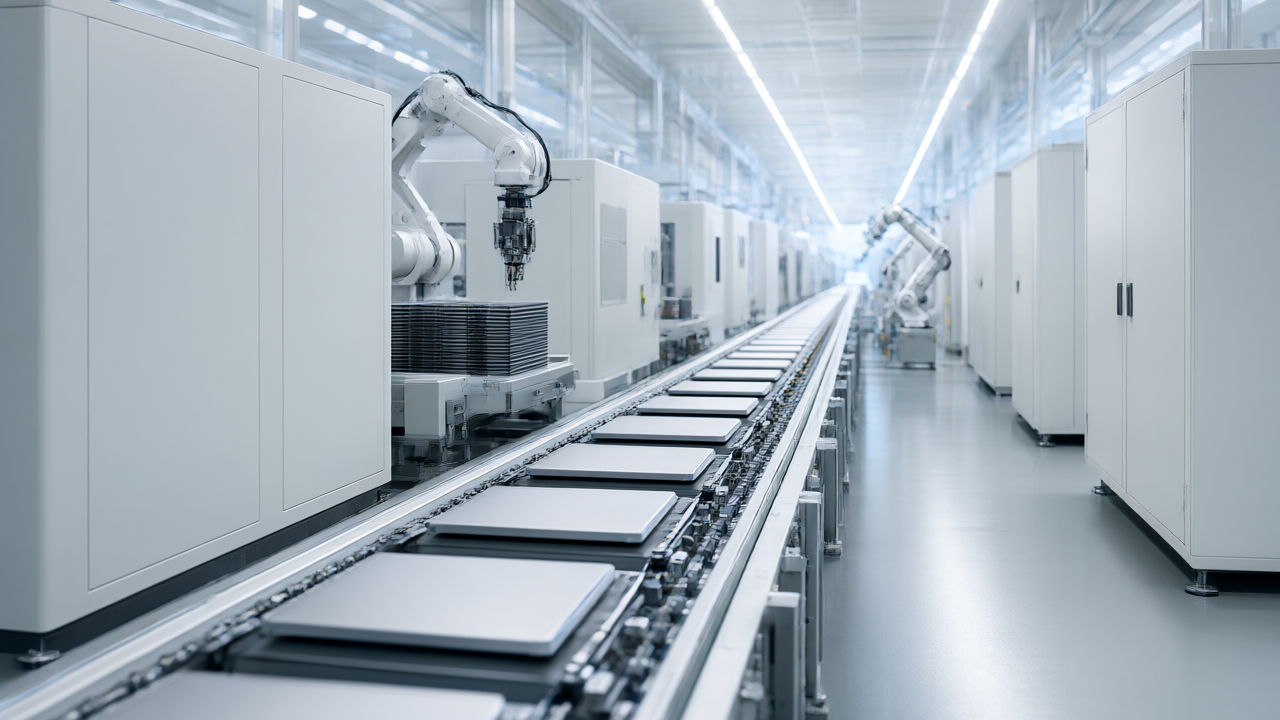
Saft has launched new production lines at its Bordeaux facility to manufacture self-developed solid-state batteries. The company is the first French manufacturer to produce these batteries using both sulphide and polymer electrolytes at room temperature. While Saft has not mentioned potential use in road vehicles, the primary target market is the aerospace sector, where gains in performance, safety, and energy density are highly valued.
Technical Details
The Bordeaux facility is designed to accommodate two specific technologies: polymer-based semi-solid-state batteries and sulphide-based solid-state batteries. Technical specifications provided by Saft include:
- Energy Density: Up to 50 per cent higher than conventional lithium-ion batteries.
- Manufacturing Process: Implementation of a dry electrode method, which is expected to reduce CO₂ emissions during production by up to 40 per cent.
- Operating Conditions: Facilities operate explicitly at room temperature.
Saft has previously delivered semi-solid-state cells in collaboration with partner Safran for aviation use.
Background & Context
Saft is a shareholder in the Automotive Cells Company (ACC) joint venture alongside Stellantis and Mercedes-Benz. While ACC originally planned plants in Germany and Italy, the venture is currently focusing solely on the ramp-up phase of its single cell factory in France. Additionally, Saft is involved in several research initiatives, including the SUBLIME project focusing on sulphide-based solid-state batteries and the TALISSMAN project developing lithium-sulphur batteries for electric vehicles. It is also collaborating with Stellantis on batteries with integrated charging and inverter functions.
Significance & Outlook
CEO Cédric Duclos stated that these production lines transition years of research into industrial capacity, aiming to position France and Europe as leaders in strategic battery technology. This development occurs while another French producer, Blue Solutions (part of the Bolloré conglomerate), is restructuring its lithium-metal-polymer (LMP) technology following issues in serial applications, specifically in buses.
Get our weekly technology intelligence — free
Receive an infographic that lets you judge at a glance whether each field’s analysis report is worth reading.
Subscribe Free — Weekly Tech Intelligence
By subscribing, you’ll receive Troy-Technical’s weekly technology intelligence newsletter.
- Your email and selected fields are used only to deliver the newsletter.
- We never share your information with third parties.
- You can unsubscribe anytime via the link in each email.
See our Privacy Policy for details.
Takes about a minute · Unsubscribe anytime