Key Findings
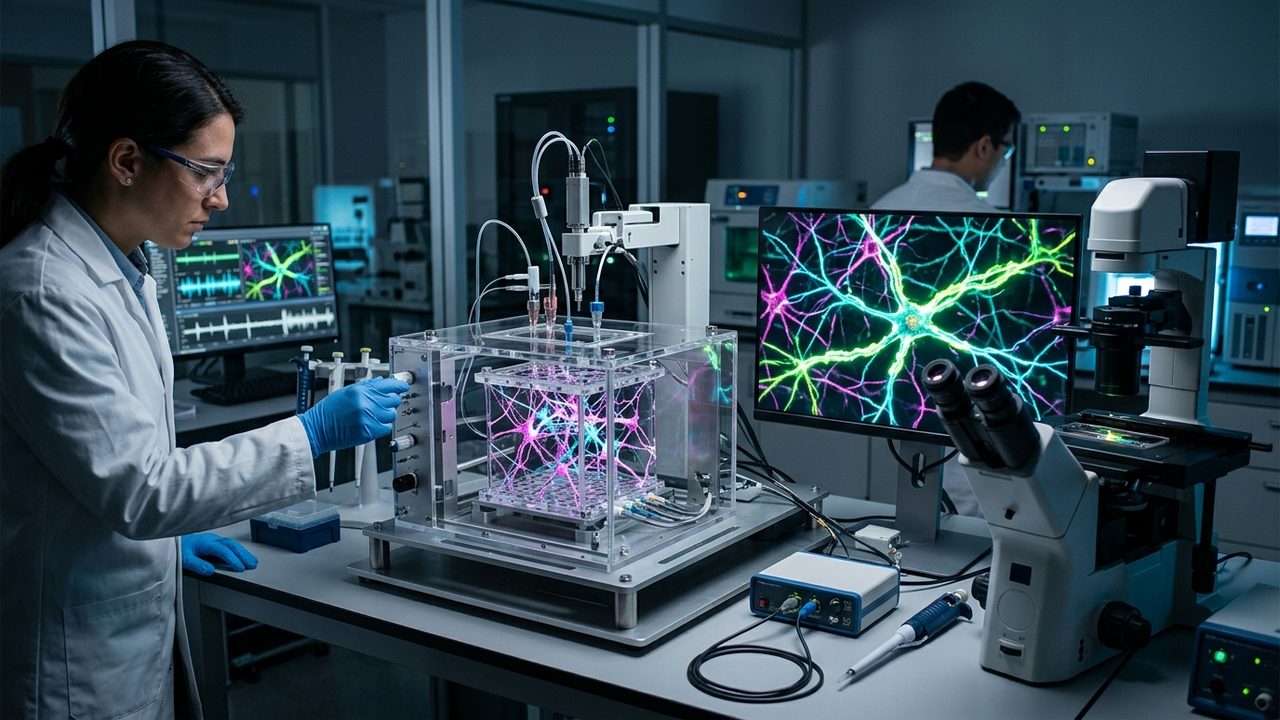
A collaborative research team from Rice University and ETH Zurich has developed ‘hydroMEA,’ an innovative 3D platform capable of culturing human nerve and Schwann cells to functionally form myelin, the protective coating around nerve fibers. This groundbreaking platform integrates human cells, tissue-like biomaterials, and high-precision electrical measurements into a single system, allowing for real-time monitoring of myelin development kinetics, injury mechanisms, and the effects of therapeutic interventions like drug treatments or electrical stimulation. This advance is expected to significantly contribute to understanding myelin-related disorders and developing new therapeutic strategies.
Technical / Clinical Details
The ‘hydroMEA’ platform’s primary feature is its multifunctionality. The system uses biocompatible hydrogels and other tissue-like materials to create an environment where nerve cells and Schwann cells can interact and form physiologically relevant 3D structures. Compared to conventional flat 2D culture plastics, this 3D environment more accurately mimics the in vivo microenvironment, leading to extended cell survival and enabling observation of more complex intercellular interactions. Minute electrode arrays are integrated within the platform, allowing for non-invasive, time-resolved measurements of neuronal action potentials and changes in electrical properties associated with myelin formation. This real-time electrical impedance spectroscopy serves as a powerful tool for quantitatively assessing myelin maturation and the extent of damage. Furthermore, the platform directly facilitates the screening of novel drugs and the evaluation of how specific genetic manipulations impact myelin formation. This capability provides insights directly applicable to understanding the pathophysiology of demyelinating neurological disorders such as multiple sclerosis and Charcot-Marie-Tooth disease, and to the development of innovative treatments.
Background & Context
Myelin, an insulating sheath of lipids and proteins that encases neuronal axons, is crucial for rapid nerve signal transmission. Damage or loss of myelin is a fundamental cause of many severe neurological conditions, known as demyelinating diseases. Historically, research into these diseases has largely relied on animal models and limited 2D cell culture models, which often struggle to fully replicate human pathophysiology. Human cell-based 3D models like hydroMEA offer a more clinically relevant system, potentially reducing the need for animal testing in drug discovery and enabling more predictive assays. The progress in organoid and 3D culture technologies within regenerative medicine represents a significant trend towards more accurate disease modeling and personalized medicine, and hydroMEA is at the forefront of this innovation.
Strategic Significance & Outlook
The hydroMEA platform has the potential to introduce a new paradigm in myelin regeneration research. Moving forward, this technology will likely be leveraged to construct more refined disease models for various neurological disorders. For instance, using nerve cells derived from patient-specific iPSCs, personalized disease models could be developed to tailor therapeutic approaches, advancing the field of precision medicine. Furthermore, the platform will serve as a powerful tool for discovering new compounds that promote myelin formation, repurposing existing drugs, and evaluating the efficacy of non-pharmacological interventions, such as electrical stimulation for neural regeneration. In the long term, this technology is strongly anticipated to lead to more effective and safer treatment options for patients suffering from demyelinating diseases.
Get our weekly technology intelligence — free
Receive an infographic that lets you judge at a glance whether each field’s analysis report is worth reading.
Subscribe Free — Weekly Tech Intelligence
By subscribing, you’ll receive Troy-Technical’s weekly technology intelligence newsletter.
- Your email and selected fields are used only to deliver the newsletter.
- We never share your information with third parties.
- You can unsubscribe anytime via the link in each email.
See our Privacy Policy for details.
Takes about a minute · Unsubscribe anytime






Comments