Key Findings
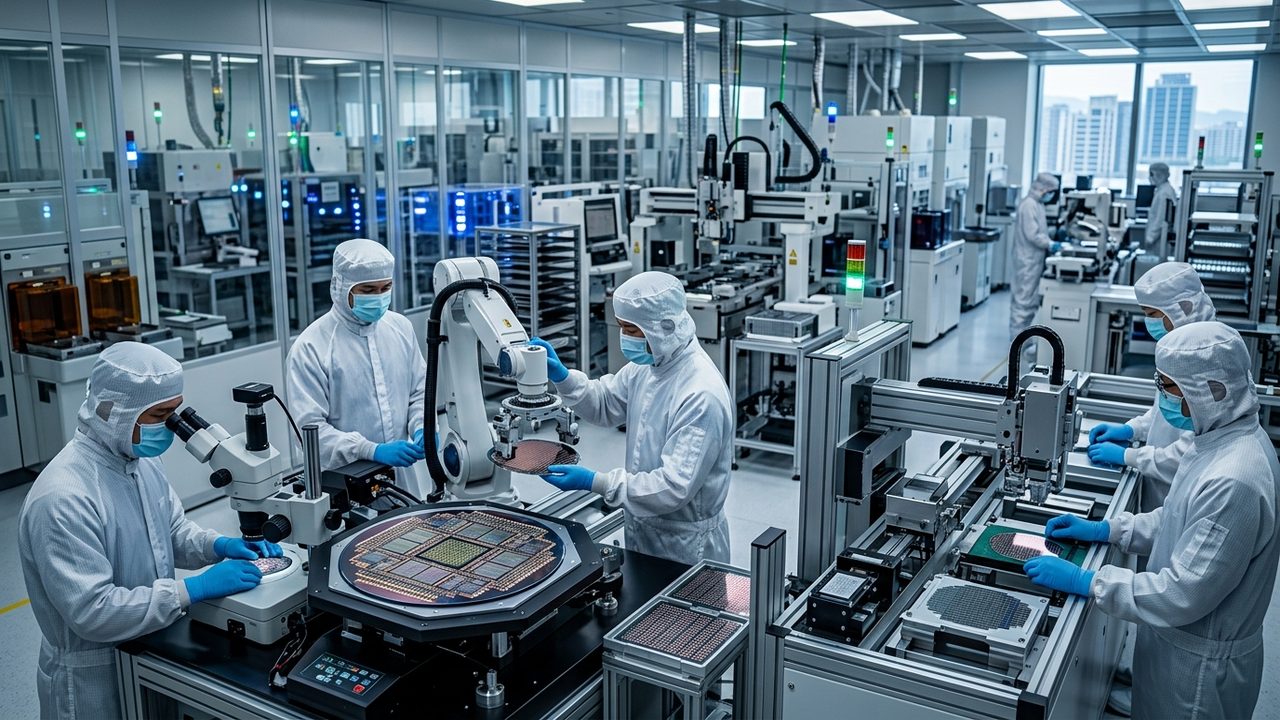
TSMC’s CoWoS (Chip-on-Wafer-on-Substrate) advanced packaging technology is a powerful driver for the demand in AI accelerators and High-Bandwidth Memory (HBM) semiconductors. In response to this surge in AI-related chip demand, leading Japanese material suppliers, including Namics for underfill and Fujifilm for CMP slurry, are actively expanding their operations in Taiwan, thereby strengthening TSMC’s critical ecosystem.
Technical & Industry Details
CoWoS is a 2.5D packaging method that integrates multiple logic chips and HBM stacks onto a silicon interposer, which is essential for boosting the processing power of high-performance AI chips. The sophistication of this technology places significant demands on material science:
- Underfill Materials: High-performance underfills, such as those provided by Namics, are critical for protecting flip-chip solder bumps and mitigating thermal stresses caused by coefficient of thermal expansion (CTE) mismatches. With the high heat generated by AI chips, superior thermal conductivity and reliability are increasingly required.
- CMP Slurry: Chemical mechanical planarization (CMP) slurries, supplied by Fujifilm, are vital for planarizing interposer and wafer surfaces, enabling precise circuit patterning and high manufacturing yields.
- Other Japanese Materials: Key components for CoWoS, such as Ajinomoto Build-up Film (ABF) laminated materials, are areas where Japanese chemical manufacturers hold strong competitive advantages. These specialized materials are currently a bottleneck in CoWoS scaling, indicating that material availability, rather than equipment, is the limiting factor.
Japanese material manufacturers are demonstrating technological leadership in these advanced packaging processes. Their expansion in Taiwan directly translates into strengthening the supply chain and boosting production capacity for AI semiconductors through close collaboration with TSMC.
Background & Context
The explosive growth in AI demand is transforming the semiconductor industry. AI chip leaders like NVIDIA heavily rely on advanced packaging technologies such as CoWoS for the supply of high-performance AI accelerators. However, current production capacity is constrained by the availability of specialized materials including ABF, underfill, and thermal interface materials (TIMs). This situation underscores the increasing strategic importance of material suppliers within the AI ecosystem. Japanese companies have long been global leaders in high-functional materials for semiconductor manufacturing, making this expansion in Taiwan a logical strategic move.
Strategic Significance & Outlook
As long as TSMC’s CoWoS technology remains central to AI semiconductors, Japanese material suppliers will continue to play an indispensable role in the growth of this ecosystem. Their expansion and technical partnerships in Taiwan are key to alleviating AI chip supply constraints and accelerating global AI technological development. With demand for 2.5D/3D packaging and chiplet integration projected to grow further, material innovation and stable supply will be critical factors determining the overall competitiveness of the semiconductor industry. Japanese companies are expected to maintain their advantage through continued technological development and investment in this new era.
Source: https://economy.ac/news/2026/09/202609295295
Get our weekly technology intelligence — free
Receive an infographic that lets you judge at a glance whether each field’s analysis report is worth reading.
Subscribe Free — Weekly Tech Intelligence
By subscribing, you’ll receive Troy-Technical’s weekly technology intelligence newsletter.
- Your email and selected fields are used only to deliver the newsletter.
- We never share your information with third parties.
- You can unsubscribe anytime via the link in each email.
See our Privacy Policy for details.
Takes about a minute · Unsubscribe anytime





Comments