


Key Findings
Drug Discovery News has shed light on the escalating complexity inherent in manufacturing advanced therapeutics, including biologics, cell-based therapies (such as CAR-T), viral vectors, and oligonucleotides. The article identifies critical challenges like product instability, contamination risks, process variability, and a shortage of skilled labor. To address these issues, it strongly advocates for embedding ‘manufacturability’ into the product design from the earliest stages, making substantial investments in raw material quality, deploying sophisticated characterization tools, and implementing rigorous process intensification strategies.
Technical / Clinical Details
- Product Instability: Complex biological molecules are highly sensitive to environmental factors like temperature, pH, and shear forces, making them prone to degradation or aggregation during manufacturing and storage. Designing for inherent stability is paramount to ensure efficacy and safety.
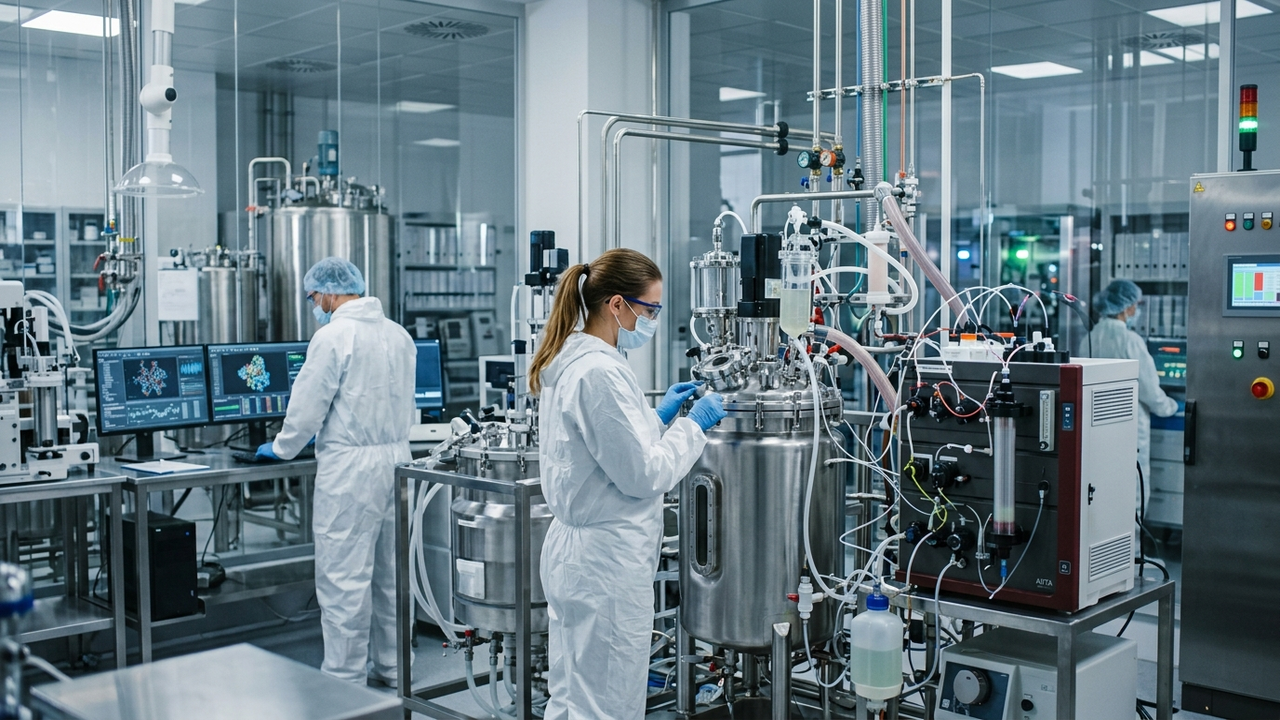
- Contamination Risks: Cell culture and viral vector production are particularly vulnerable to microbial contamination. The adoption of closed-system technologies, automation, and stringent environmental control protocols are essential to mitigate these risks and ensure product sterility.
- Process Variability: Biological processes are intrinsically variable, which can lead to inconsistencies in product quality between batches. Real-time monitoring and control using process analytical technologies (PAT) and digital twin approaches are key to enhancing reproducibility and robustness, moving towards more predictable outcomes.
- Skilled Workforce Shortage: The advanced nature of biopharmaceutical manufacturing demands highly specialized scientific and engineering expertise. A persistent shortage of this skilled workforce impedes industry capacity and innovation. Automation and AI integration are explored as partial solutions to this gap.
- ‘Manufacturability by Design’ Imperative: Integrating manufacturing considerations into the early design and development phases of a therapeutic allows for proactive identification and resolution of potential production challenges. This approach leads to cost reductions, shortened development timelines, and optimized product quality.
Background & Context
The biopharmaceutical market continues its rapid expansion, driven by the emergence of novel modalities such as gene therapy, cell therapy, and RNA therapeutics. Unlike conventional small-molecule drugs, these advanced therapies involve far more complex manufacturing processes, requiring specialized technologies, facilities, and stringent quality control. For the industry to accelerate the clinical development and deliver these ‘next-generation therapies’ to a broader patient population, overcoming manufacturing bottlenecks is a top priority. This article provides a clear exposition of the key challenges within this evolving manufacturing landscape and outlines strategic approaches to tackle them.
Strategic Significance & Outlook
Implementing ‘manufacturability by design,’ improving raw material quality, adopting advanced characterization tools, and intensifying processes are indispensable for enhancing the efficiency and success rate of biopharmaceutical development. These strategic investments will ultimately contribute to reducing time-to-market, lowering manufacturing costs, and ensuring product quality and safety. Crucially, the integration of advanced technologies like automation, AI, and digital twins will transform biopharmaceutical manufacturing into a more intelligent and predictable endeavor, accelerating the commercialization of next-generation therapeutics. This trajectory promises to unlock the full potential of regenerative and precision medicine for the future.
Source: https://www.drugdiscoverynews.com/rna-therapeutics-grow-up-as-manufacturing-catches-up-17490
Get our weekly technology intelligence — free
Receive an infographic that lets you judge at a glance whether each field’s analysis report is worth reading.
Subscribe Free — Weekly Tech Intelligence
By subscribing, you’ll receive Troy-Technical’s weekly technology intelligence newsletter.
- Your email and selected fields are used only to deliver the newsletter.
- We never share your information with third parties.
- You can unsubscribe anytime via the link in each email.
See our Privacy Policy for details.
Takes about a minute · Unsubscribe anytime