Key Findings
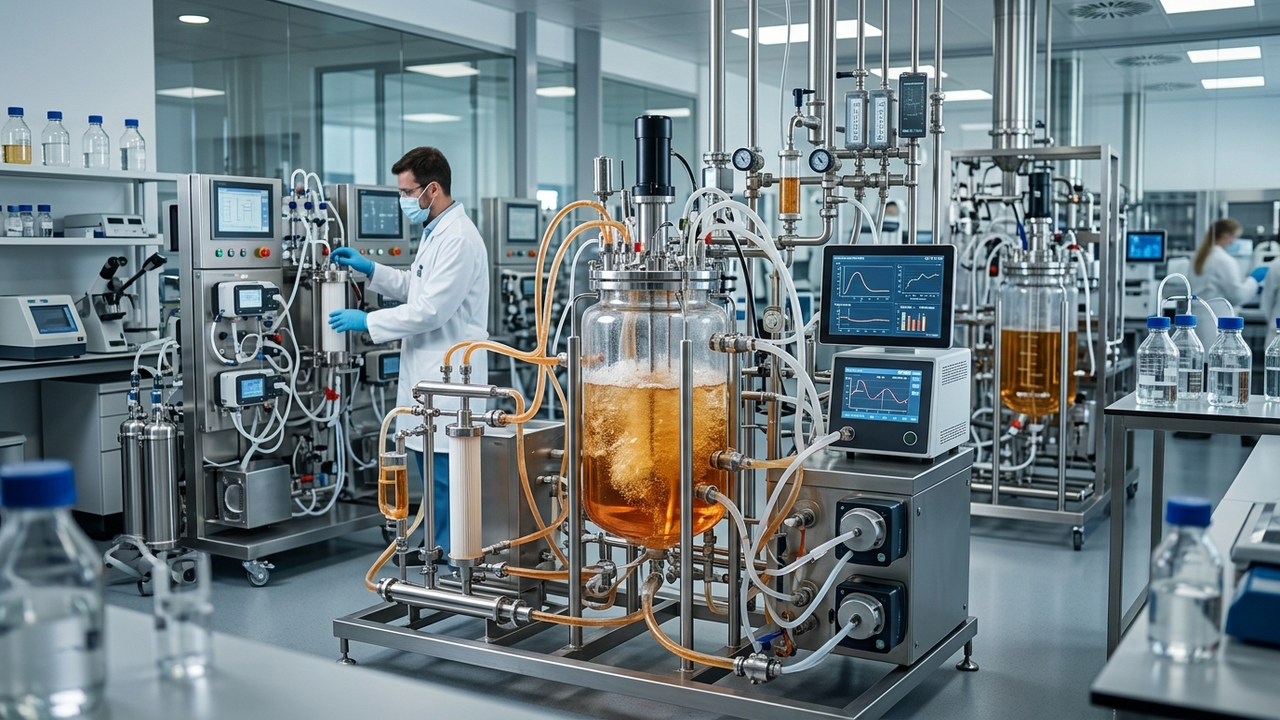
Dynamic perfusion technology represents a groundbreaking method that significantly intensifies upstream operations in cell culture, streamlining continuous cell culture processes. This approach demonstrably improves product quality, production yield, and manufacturing facility utilization, while also offering substantial benefits by reducing the operational burden of process management.
Technical and Clinical Details
Compared to conventional perfusion culture, dynamic perfusion possesses the ability to autonomously adapt to changes in cell concentration and media composition. This eliminates the need for routine manual adjustments to cell bleed and perfusion rates. In-process sensors and advanced control algorithms continuously monitor cell growth and metabolic activity in real-time, automatically executing optimal perfusion strategies. For example, when cell concentration exceeds a predefined threshold, the system automatically initiates cell bleed to maintain an optimal culture environment. This automated control reduces the risk of human error and enhances process robustness and reproducibility. Consequently, bioreactor uptime is maximized, leading to a substantial increase in volumetric productivity compared to traditional batch culture and static perfusion.
Background and Industry Context
Driven by increasing market demand and pressure for cost reduction, the biopharmaceutical manufacturing industry is accelerating its transition towards process intensification and continuous manufacturing. Perfusion culture has contributed to this trend by enabling high-cell-density cultivation and improving productivity per reactor volume. However, conventional perfusion systems often require complex operation and frequent intervention, which can be barriers to adoption. Dynamic perfusion addresses these operational challenges, making the benefits of continuous biomanufacturing more accessible and thus driving industry transformation. Its application is particularly anticipated in the manufacturing of expensive cell and gene therapy products and biosimilars, where efficient production is critical.
Strategic Significance and Outlook
Dynamic perfusion technology holds the potential to become a cornerstone of future biopharmaceutical manufacturing platforms. Further development of this technology will facilitate easier integration into fully continuous, end-to-end processes, enabling reduced manufacturing footprints, optimized capital expenditures (CAPEX), and flexible production scale-up. Furthermore, the combination of real-time process data with AI and machine learning is expected to lead to even greater process optimization and predictive capabilities. This will enable faster market entry for new drugs and broader patient access, contributing to the overall competitiveness of the biopharmaceutical industry.
Get our weekly technology intelligence — free
Receive an infographic that lets you judge at a glance whether each field’s analysis report is worth reading.
Subscribe Free — Weekly Tech Intelligence
By subscribing, you’ll receive Troy-Technical’s weekly technology intelligence newsletter.
- Your email and selected fields are used only to deliver the newsletter.
- We never share your information with third parties.
- You can unsubscribe anytime via the link in each email.
See our Privacy Policy for details.
Takes about a minute · Unsubscribe anytime









Comments