Key Findings
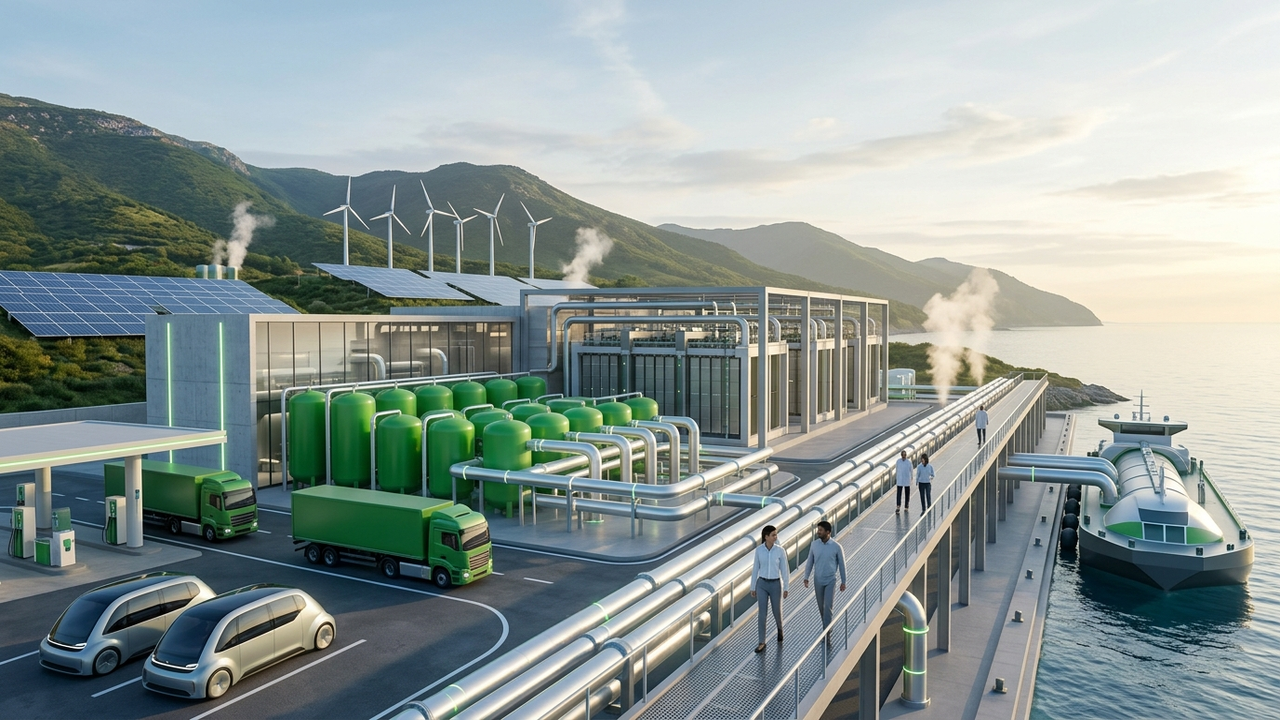
Industrial green hydrogen holds the potential to fulfill up to 100% of global industrial hydrogen demand by 2050, emerging as a paramount solution for drastically reducing greenhouse gas emissions and combating climate change. Achieving this ambitious target would establish a clean, fossil-fuel-independent hydrogen supply, making a substantial contribution to global warming mitigation efforts.
Technical & Economic Details
Currently, industrial hydrogen is predominantly produced from natural gas (grey hydrogen), a process that generates significant CO₂ emissions. Green hydrogen, conversely, is manufactured through water electrolysis powered by renewable energy, resulting in virtually zero greenhouse gas emissions during production. As of 2024, green hydrogen accounts for less than 1% of industrial hydrogen demand, facing a cost disadvantage compared to grey hydrogen. However, advancements in electrolyzer technology and expanded production scale are projected to enhance cost competitiveness, narrowing the price differential. Large-scale projects, particularly in regions with abundant renewable energy resources like wind and solar, are key to driving down costs.
Background & Industry Context
Industrial hydrogen is an indispensable raw material in diverse sectors, including ammonia production (fertilizers), petroleum refining, steel manufacturing, and methanol synthesis. Decarbonizing these heavy industries presents significant challenges, and green hydrogen is seen as a crucial solution. With numerous countries setting net-zero targets, the adoption of green hydrogen is a strategic imperative for achieving decarbonization in heavy industry. Project Drawdown underscores the deployment of green hydrogen as one of the most effective climate solutions, highlighting the critical roles of policy support and technological innovation.
Strategic Significance & Outlook
The target of meeting 53% to 100% of industrial hydrogen demand with green hydrogen by 2050, while ambitious, could lead to multi-gigaton CO₂ emission reductions annually. Attaining this goal necessitates a substantial increase in electrolyzer manufacturing capacity, expansion of renewable energy sources, and the development of robust hydrogen transport and storage infrastructure. Policy mechanisms such as carbon pricing, green hydrogen subsidies, and regulatory streamlining will be instrumental in accelerating adoption. In the long term, green hydrogen is expected to serve as a foundational technology for decarbonization across a broad spectrum of applications, including power storage, fuel cell vehicles, and the aviation and maritime sectors.
Source: https://www.drawdown.org/solutions/deploy-industrial-green-hydrogen
Get our weekly technology intelligence — free
Receive an infographic that lets you judge at a glance whether each field’s analysis report is worth reading.
Subscribe Free — Weekly Tech Intelligence
By subscribing, you’ll receive Troy-Technical’s weekly technology intelligence newsletter.
- Your email and selected fields are used only to deliver the newsletter.
- We never share your information with third parties.
- You can unsubscribe anytime via the link in each email.
See our Privacy Policy for details.
Takes about a minute · Unsubscribe anytime







Comments