Key Findings
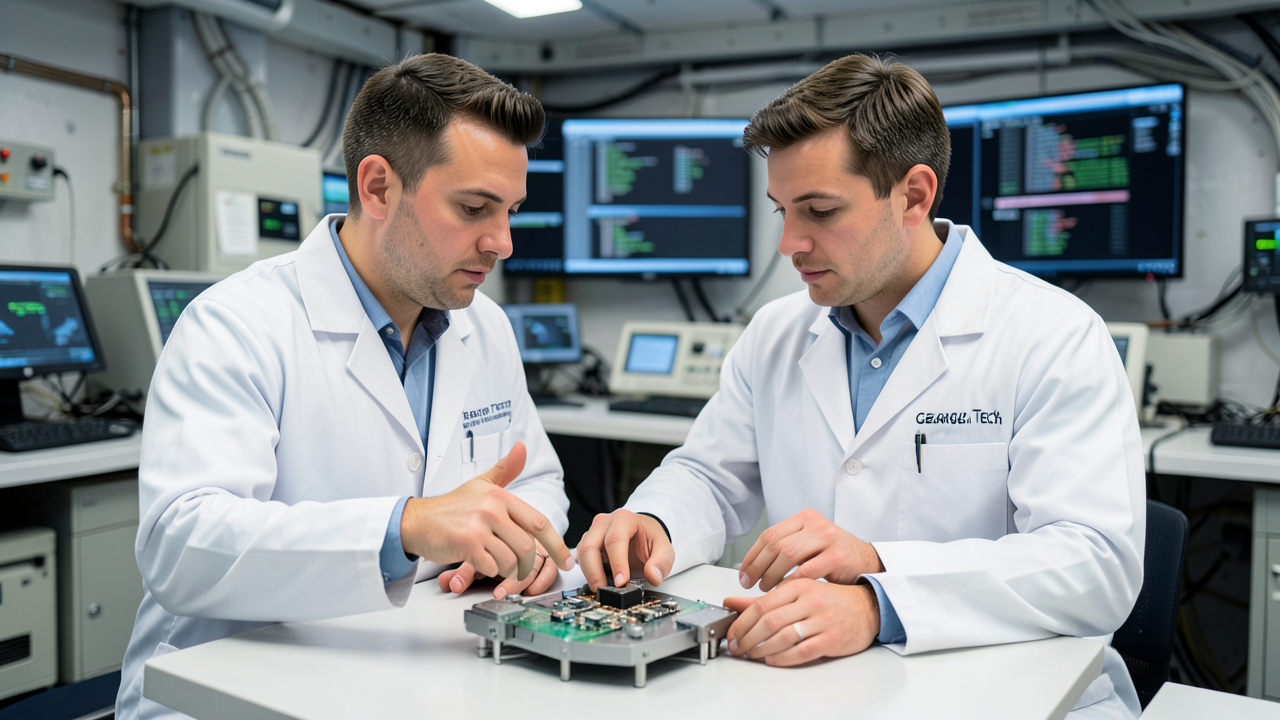
Two researchers at Georgia Institute of Technology have been honored with National Science Foundation (NSF) CAREER Awards, enabling them to pursue groundbreaking materials research using AI and computational science. Professor Laura G. Garten is leading efforts to systematically fine-tune the crystal structure, electric field response, and light absorption properties of semiconductor ferroelectric materials. This fundamental research is expected to underpin new classes of ferroelectric transistors, highly sensitive medical sensors, efficient solar cells, and next-generation computer memory. Separately, Professor Kumar is developing novel computational models to decipher how the internal structure of composite materials influences their failure and breakdown, with the goal of leveraging AI to design significantly more robust and reliable composites.
Technical / Clinical Details
Professor Garten’s research combines first-principles calculations with machine learning to accurately predict the atomic-level structure and response of semiconductor ferroelectrics to external stimuli. This approach allows for the targeted design of materials with specific functionalities. For instance, controlling dielectric permittivity and light absorption spectra could accelerate the development of solar cells with higher photoelectric conversion efficiency and medical sensors capable of detecting faint biological signals. Professor Kumar’s work focuses on developing advanced multi-scale models that simulate how defects and interfaces in material microstructures propagate under stress, leading to ultimate failure. AI will learn patterns from these simulation results to predict the strength and lifespan of unknown composites and suggest optimal manufacturing parameters, thereby drastically enhancing material reliability and safety.
Background & Context
Semiconductor ferroelectrics are smart materials with diverse applications, including information storage (non-volatile memory) and converting energy into electricity (sensors, energy harvesting). However, their complex properties present challenges for efficient design and manufacturing. Similarly, composite materials, widely used in aerospace, automotive, and construction, offer advantages like lightweight and high strength, but predicting their internal failure mechanisms has been difficult, creating a design bottleneck. Advances in AI and computational science are enabling a deeper understanding and optimization of these complex material systems, potentially revolutionizing traditional trial-and-error approaches. The NSF CAREER Awards acknowledge the potential of this fundamental research to drive future technological innovations.
Strategic Significance & Outlook
Professor Garten’s research, through AI-driven material design, holds the potential to significantly advance next-generation electronic devices, sensors, and energy conversion systems. Enhanced non-volatile memory performance will boost the efficiency of AI chips and edge devices, while improved medical sensor accuracy will contribute to early diagnosis and personalized medicine. Professor Kumar’s work on composite materials will directly contribute to lighter and safer aircraft and spacecraft, as well as extended lifespans for infrastructure. These research outcomes are expected to further elevate the importance of AI in materials science and engineering, fostering collaboration between academia and industry to deliver substantial economic and technological impacts on society.
Source: https://coe.gatech.edu/news/2026/09/nsf-recognizes-8-engineering-researchers-career-awards
Get our weekly technology intelligence — free
Receive an infographic that lets you judge at a glance whether each field’s analysis report is worth reading.
Subscribe Free — Weekly Tech Intelligence
By subscribing, you’ll receive Troy-Technical’s weekly technology intelligence newsletter.
- Your email and selected fields are used only to deliver the newsletter.
- We never share your information with third parties.
- You can unsubscribe anytime via the link in each email.
See our Privacy Policy for details.
Takes about a minute · Unsubscribe anytime



Comments