Key Findings
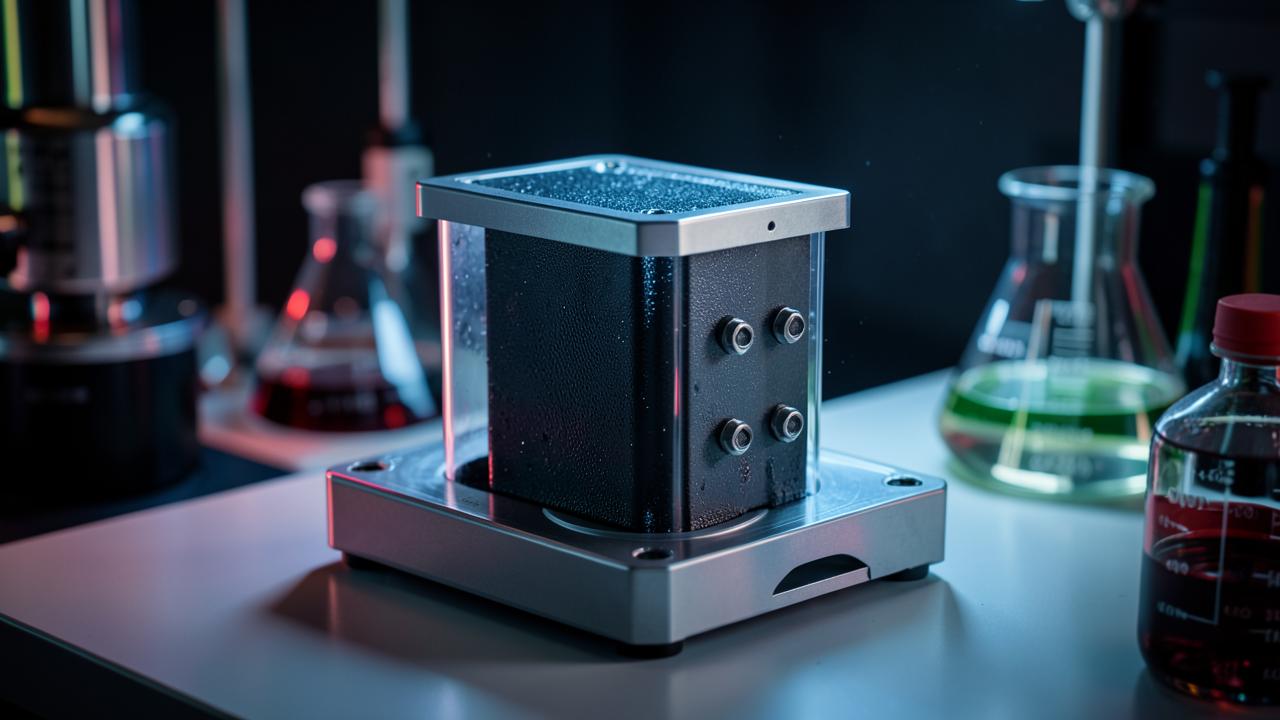
A collaborative research effort by the National Institute of Standards and Technology (NIST) and the University of California San Diego (UCSD) has yielded a novel modeling technique capable of precisely predicting the cure behavior and thermal endurance of highly-filled epoxy underfills used in advanced semiconductor packaging. This breakthrough is poised to significantly enhance the mechanical integrity and reliability of flip-chip and other fine-pitch interconnect architectures by optimizing stress redistribution within these critical components.
Technical / Clinical Details
The innovative modeling approach integrates data obtained from sophisticated thermal analysis techniques, specifically Differential Scanning Calorimetry (DSC) and Thermogravimetric Analysis (TGA), into a comprehensive kinetic model that incorporates diffusion effects. DSC provides detailed insights into the curing kinetics, reaction heat, and glass transition temperatures, while TGA evaluates the material’s thermal decomposition behavior and overall thermal stability. By leveraging these experimental inputs, the researchers developed a robust model that accurately forecasts both the rate of cure during processing and the long-term thermal degradation of the underfill material under operational conditions. This predictive capability allows for quantitative assessment of how effectively the underfill mitigates thermomechanical stresses on solder joints and maintains package reliability over its expected lifespan. Consequently, this tool offers a powerful means to tailor underfill materials precisely to specific application requirements, ensuring optimal performance.
Background & Context
In advanced semiconductor packaging, particularly for flip-chip and 2.5D/3D integration, underfill materials are indispensable. They fill the gap between the chip and the substrate, primarily to mitigate stresses arising from the coefficient of thermal expansion (CTE) mismatch between dissimilar materials. As chip miniaturization and integration density continue to increase, these thermomechanical stresses become a primary driver of device failure. Highly-filled epoxy underfills, with their high filler content, are designed to tune CTE and bolster mechanical strength. However, optimizing their curing process and ensuring long-term thermal endurance have remained persistent challenges. The research from NIST and UCSD provides a scientific framework to predict and address these critical issues.
Strategic Significance & Outlook
This predictive modeling technology is anticipated to dramatically shorten the research and development cycles for advanced packaging materials, thereby accelerating the market introduction of higher-performance and more reliable semiconductor devices. Material manufacturers can reduce the need for extensive trial-and-error experimentation, enabling more efficient design of underfills with targeted thermomechanical properties. Furthermore, this technique will become an indispensable tool for optimizing thermal management and reliability design in next-generation packaging for AI chips and High-Performance Computing (HPC). Ultimately, this research is expected to contribute to the realization of more robust, durable, and long-lasting electronic devices across the semiconductor industry.
Get our weekly technology intelligence — free
Receive an infographic that lets you judge at a glance whether each field’s analysis report is worth reading.
Subscribe Free — Weekly Tech Intelligence
By subscribing, you’ll receive Troy-Technical’s weekly technology intelligence newsletter.
- Your email and selected fields are used only to deliver the newsletter.
- We never share your information with third parties.
- You can unsubscribe anytime via the link in each email.
See our Privacy Policy for details.
Takes about a minute · Unsubscribe anytime







Comments