Key Findings
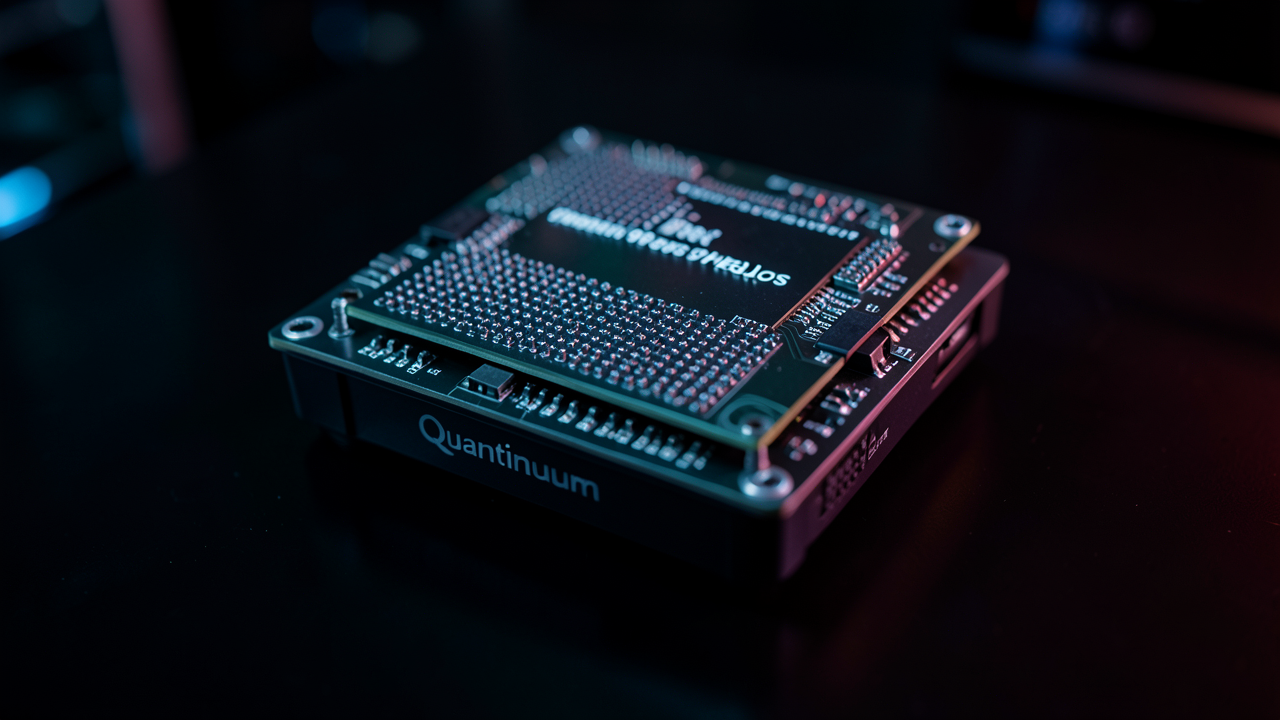
Quantinuum has achieved a significant milestone by experimentally validating its novel Helix quantum error correction (QEC) architecture on its 98-qubit Helios commercial processor. This demonstration confirms that a complete fault-tolerant stack, encompassing protected logical memory, high-speed logical Clifford operations, and inter-code logical entanglement, performs superiorly to unencoded physical baselines. This represents a pivotal step forward in the quest for practical quantum computers.
Technical Details
The core innovation of the Helix architecture lies in its ability to reduce spatial qubit overhead by a factor of 3.5 compared to conventional rotating surface codes. This efficiency gain is crucial for constructing larger-scale fault-tolerant quantum computers, as it allows for the implementation of more logical qubits with fewer physical resources. The experimental validation on the Helios system successfully showcased the architecture’s capacity to protect quantum information from environmental noise at the logical level, ensuring accurate execution of quantum operations. This capability is paramount for achieving the precision required for complex quantum computations.
Background & Context
Quantum error correction is an indispensable technology for overcoming the inherent fragility of quantum bits (qubits) to external noise. While traditional surface codes provide a robust framework for QEC, their substantial physical qubit requirements have posed a significant hurdle to scaling. Quantinuum’s Helix architecture directly addresses this overhead challenge, dramatically lowering the resource cost and removing a major barrier to the development of useful fault-tolerant quantum machines. This achievement further solidifies Quantinuum’s leadership in ion-trap quantum computing, building upon its foundation from the merger of Honeywell Quantum Solutions and Cambridge Quantum Computing.
Strategic Significance & Outlook
The successful demonstration of the Helix architecture marks a profound leap towards realizing fault-tolerant quantum computing. The reduction in spatial overhead fundamentally alters the cost-benefit analysis for building scalable quantum systems, opening new avenues for applications in chemistry, materials science, and financial modeling that demand high accuracy and large numbers of logical qubits. Quantinuum is poised to leverage this technology to enhance the performance and reliability of its commercial quantum processors, accelerating the timeline for the widespread adoption and practical application of quantum computing across various industries. This positions the company and the field closer to unlocking quantum’s full transformative potential.
Get our weekly technology intelligence — free
Receive an infographic that lets you judge at a glance whether each field’s analysis report is worth reading.
Subscribe Free — Weekly Tech Intelligence
By subscribing, you’ll receive Troy-Technical’s weekly technology intelligence newsletter.
- Your email and selected fields are used only to deliver the newsletter.
- We never share your information with third parties.
- You can unsubscribe anytime via the link in each email.
See our Privacy Policy for details.
Takes about a minute · Unsubscribe anytime







Comments