Key Findings
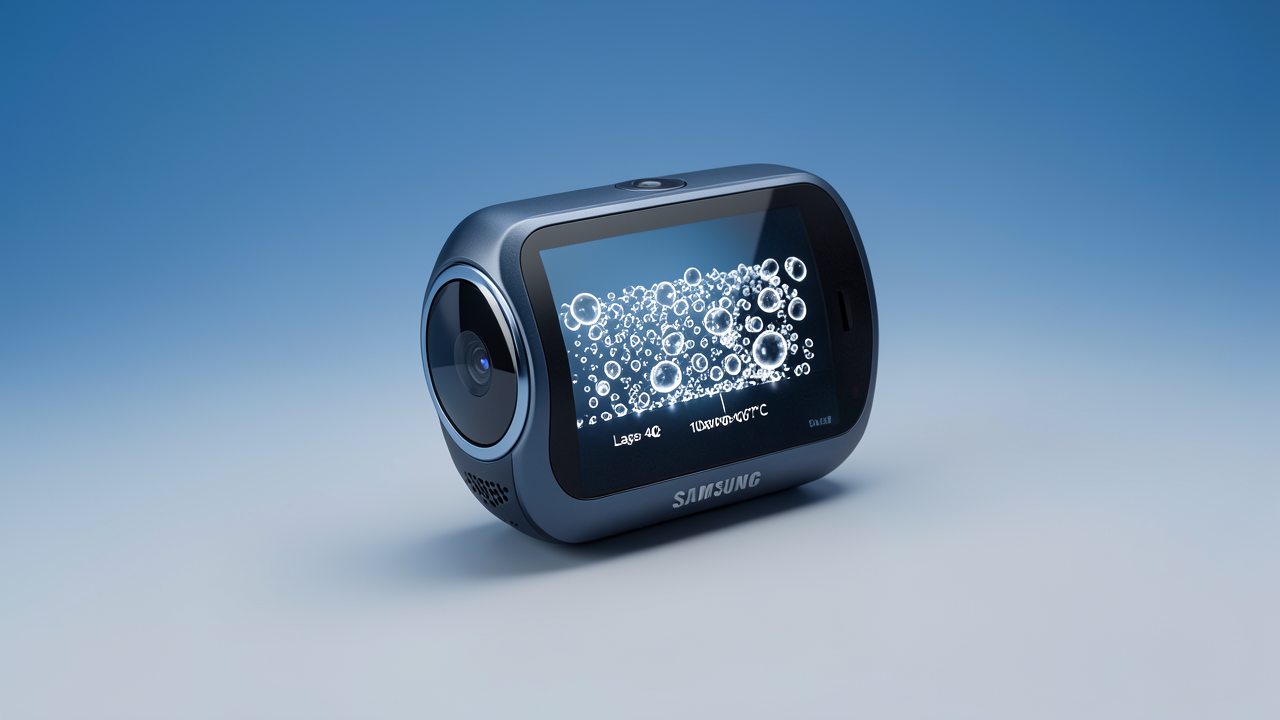
Samsung has filed a patent for an innovative wearable electronic device that integrates a polarizing structure, prominently featuring a specific optical layer (Layer 406) engineered with a remarkably low coefficient of thermal expansion (CTE) of less than 10×10^-6/°C. This advancement is pivotal for overcoming dimensional stability challenges in miniaturized, high-performance electronic devices. By mitigating thermal stress caused by temperature variations, this technology promises enhanced long-term reliability and superior optical performance, particularly for precision-demanding wearable applications.
Technical Details
The patented wearable electronic device comprises multiple layers, including optical components such as displays and sensors, with Layer 406 forming part of the polarizing structure. The low CTE material technology applied to this layer represents a significant improvement over common organic materials, which typically exhibit CTEs ranging from tens to hundreds of 10^-6/°C. A reduced CTE minimizes stress and distortion between layers when the device heats and cools due to environmental changes or self-generated heat. This reduction in thermal mismatch prevents optical misalignment, display quality degradation, and potential structural damage, thereby extending product lifespan and improving overall user experience.
Background & Context
As wearable electronic devices continue to shrink and become more sophisticated, thermal management and dimensional stability of internal components have emerged as critical design challenges. For devices incorporating optical systems like displays, cameras, and sensors, even minor thermal expansion can severely impact performance. Traditional materials often lead to thermal distortions that degrade optical performance and increase failure rates. Samsung’s patent offers a direct solution to these challenges, positioning it as a key enabler for developing next-generation wearable devices that require high-precision optical components.
Strategic Significance & Outlook
This low-CTE material technology holds potential applications beyond wearables, including smartphones, VR/AR devices, and automotive displays. It is particularly crucial for devices featuring high-resolution displays and complex optical modules, serving as a foundational technology for ensuring long-term reliability and high performance. Samsung’s patent signifies a vital step towards realizing more robust and advanced electronic devices through the convergence of material science and electronics engineering, and it is expected to play a significant role in establishing a competitive edge in future product development.
Source: https://patent.nweon.com/44797
Get our weekly technology intelligence — free
Receive an infographic that lets you judge at a glance whether each field’s analysis report is worth reading.
Subscribe Free — Weekly Tech Intelligence
By subscribing, you’ll receive Troy-Technical’s weekly technology intelligence newsletter.
- Your email and selected fields are used only to deliver the newsletter.
- We never share your information with third parties.
- You can unsubscribe anytime via the link in each email.
See our Privacy Policy for details.
Takes about a minute · Unsubscribe anytime









Comments