Key Findings
The Toric Code represents a groundbreaking concept in quantum error correction. As a prominent topological framework, it provides a robust foundation for the long-term protection of quantum information. Introduced by Alexei Kitaev in 1997, its unparalleled fault-tolerance characteristics have positioned it as a critical component in the design of future practical quantum computers.
Technical / Clinical Details
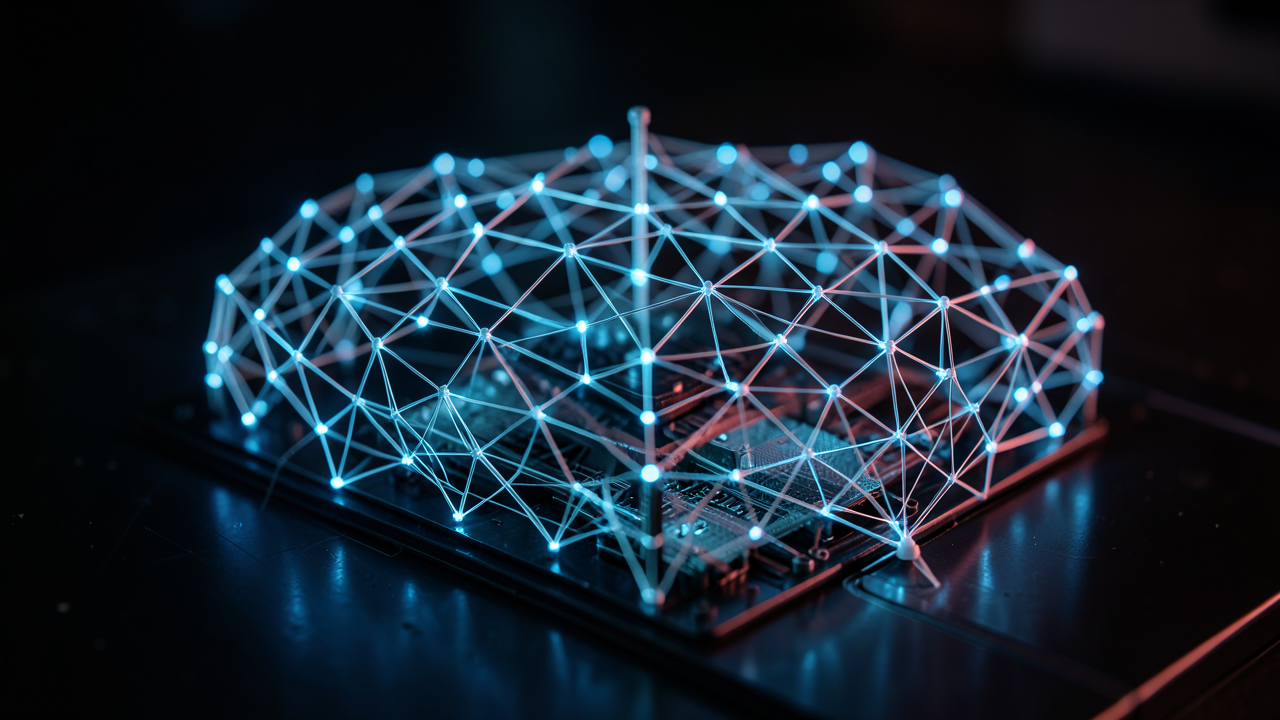
The Toric Code is a type of stabilizer code distinguished by its unique architecture, where physical qubits are arranged on the edges of a two-dimensional square lattice, forming a torus through periodic boundary conditions. This topological arrangement effectively insulates logical information from local noise and errors prevalent in quantum computing systems. Crucially, logical information is encoded not in individual qubits but in the degenerate ground states of the entire lattice. This means that even if a single physical qubit errs, the overall encoded information remains protected, offering the exceptionally high degree of fault tolerance required for large-scale quantum systems. This non-local information storage method makes the Toric Code resilient to localized perturbations.
Background & Context
Quantum computers are inherently fragile and highly susceptible to environmental noise, which can easily destroy qubit states and introduce computational errors. Building a practical quantum computer necessitates robust mechanisms for detecting and correcting these errors, driving extensive research into Quantum Error Correction (QEC). The Toric Code is one of the most influential theoretical models in QEC, forming the basis for numerous subsequent studies into topological QEC codes. Its potential for physical implementation and its efficiency in protecting logical qubits with fewer physical resources make it a vital guiding principle for hardware developers.
Strategic Significance & Outlook
The Toric Code remains at the forefront of ongoing quantum error correction research projects, particularly in efforts to implement it on physical platforms such as superconducting qubits and ion traps. The strong fault tolerance it offers is indispensable for the realization of large-scale quantum computers, which will eventually require integrating millions of physical qubits to form stable logical qubits. The primary challenges involve physically constructing such complex topological structures and efficiently performing error-correction operations. Despite these hurdles, research into the Toric Code continues to pave the way for more robust and scalable quantum computing systems, pushing the boundaries of what is possible in quantum information processing.
Source: https://www.quera.com/glossary/toric-code
Get our weekly technology intelligence — free
Receive an infographic that lets you judge at a glance whether each field’s analysis report is worth reading.
Subscribe Free — Weekly Tech Intelligence
By subscribing, you’ll receive Troy-Technical’s weekly technology intelligence newsletter.
- Your email and selected fields are used only to deliver the newsletter.
- We never share your information with third parties.
- You can unsubscribe anytime via the link in each email.
See our Privacy Policy for details.
Takes about a minute · Unsubscribe anytime





Comments