Key Findings
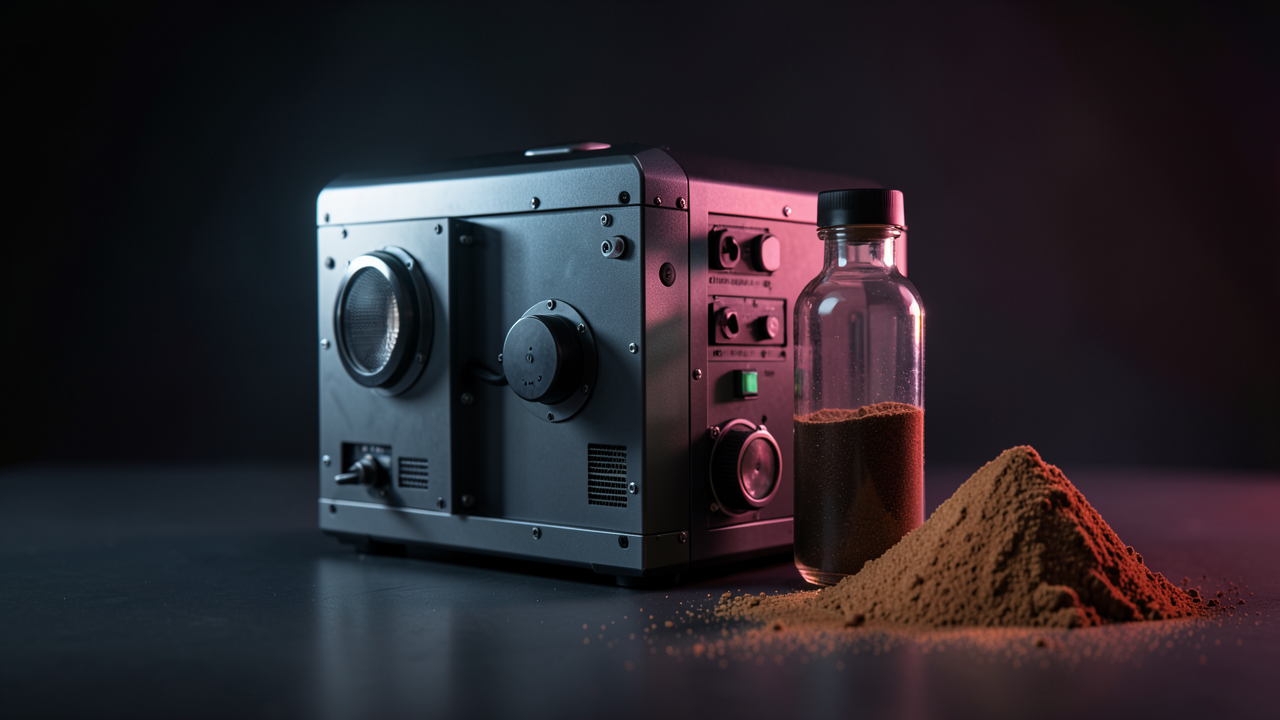
The World Economic Forum anticipates that ‘Physical AI,’ specifically world models, will exert a significant influence on engineering, robotics, and scientific discovery. Reinforcing this prediction, Atinary’s self-driving lab has demonstrated its capability to design, execute, and learn from real-world chemical and materials experiments in a closed-loop system. This groundbreaking efficiency allowed the lab to generate data that would typically take scientists five years to acquire, in a mere five days. This innovation signifies that AI can generate hundreds of hypotheses, which autonomous labs then simultaneously test and validate, dramatically accelerating discovery processes across pharmaceutical research, materials science, and environmental science.
Technical / Clinical Details
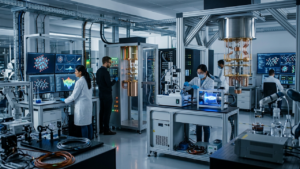
Atinary’s self-driving lab is a sophisticated integration of AI algorithms, robotics, and advanced sensor technologies, effectively functioning as an intelligent laboratory. For a given scientific challenge, the system autonomously generates hypotheses, devises experimental plans based on these hypotheses, and then executes chemical mixing, reactions, and analyses using robotic systems. The experimental results are immediately fed back to the AI, which learns from them to optimize subsequent experimental conditions, thereby achieving continuous ‘closed-loop learning.’ This iterative process dramatically reduces the number of trial-and-error cycles compared to traditional human-led experimentation, exponentially increasing discovery efficiency. For instance, the AI can efficiently explore multidimensional parameter spaces, such as material composition ratios, reaction temperatures, and catalyst types, to identify optimal conditions in a short timeframe.
Background & Context
The process of scientific discovery has historically been time-consuming and labor-intensive. Particularly in drug discovery and the search for new materials, the necessity to test a vast number of candidate substances and experimental conditions has presented a significant bottleneck. The evolution of AI, especially the convergence of machine learning and robotics, is fundamentally transforming this landscape. Physical AI and world models, with their ability to simulate and predict complex real-world physical phenomena, streamline the experimental design phase. Atinary’s success story clearly demonstrates that such AI concepts are already being applied in the real world, beginning to revolutionize the nature of scientific research.
Strategic Significance & Outlook
Technologies like Atinary’s self-driving lab are poised to accelerate research and development across diverse sectors, including pharmaceuticals, materials, catalysts, food, and agriculture. By reducing experimental timelines from years to days, companies can bring new products to market more rapidly, and research institutions can tackle complex scientific problems previously considered intractable. In the future, it is plausible that ‘AI-driven science’ will become dominant, where humans define fundamental research directions, and AI and robots autonomously manage the entire cycle of experimental planning, execution, analysis, and learning. This is expected to lead to a continuous stream of unprecedented scientific breakthroughs.
Source: https://theinnovator.news/ai-gets-physical/
Get our weekly technology intelligence — free
Receive an infographic that lets you judge at a glance whether each field’s analysis report is worth reading.
Subscribe Free — Weekly Tech Intelligence
By subscribing, you’ll receive Troy-Technical’s weekly technology intelligence newsletter.
- Your email and selected fields are used only to deliver the newsletter.
- We never share your information with third parties.
- You can unsubscribe anytime via the link in each email.
See our Privacy Policy for details.
Takes about a minute · Unsubscribe anytime



Comments